

 Travel Essentials
 Travel Essentials

Explore Oslo’s Deichman Bjørvika, a striking waterfront library blending bold architecture, multilingual collections, makerspaces, and culture.
 Travel Essentials
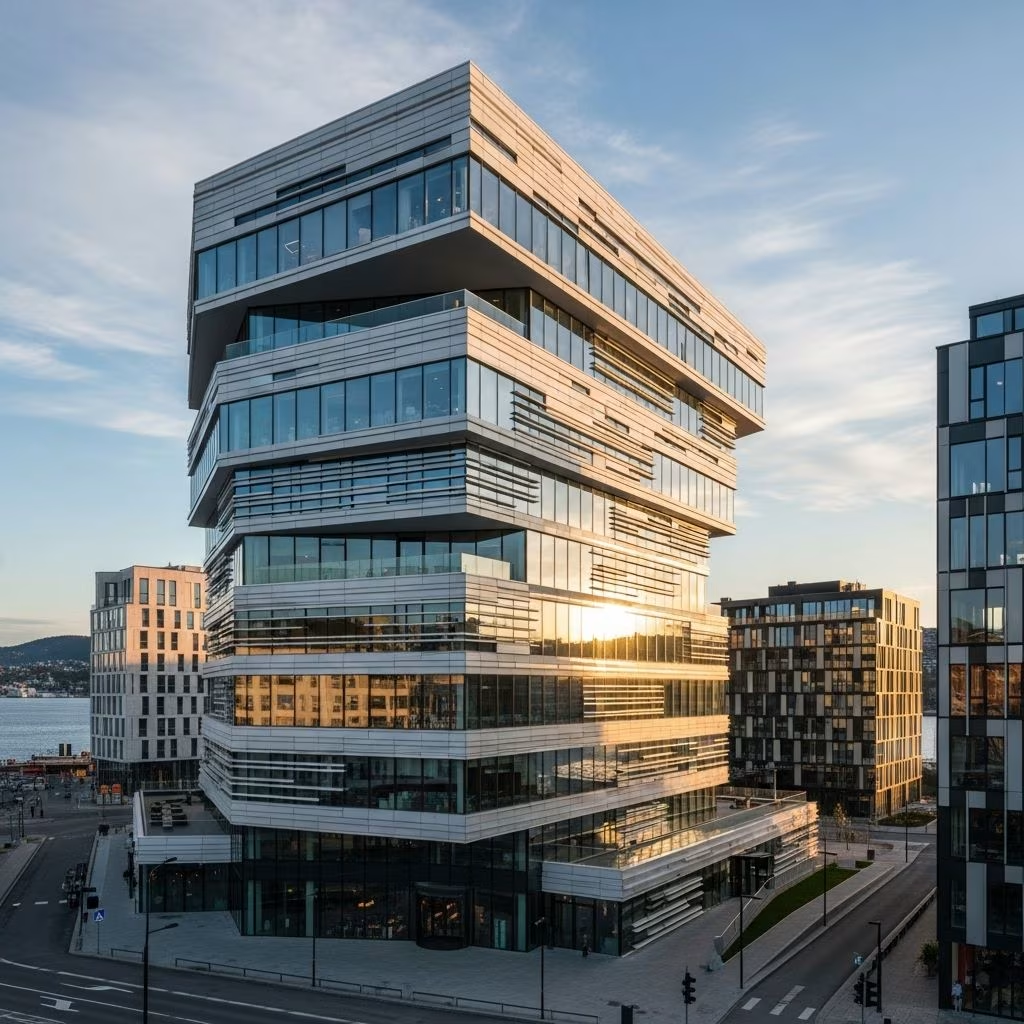
When Oslo unveiled its reimagined central library in 2020, the city introduced far more than a building designed to house books. The Deichman Bjørvika stands as a testament to contemporary Scandinavian architecture and urban planning philosophy, positioned strategically within the Bjørvika waterfront district alongside the opera house and the newly renovated Munch Museum. This six-story facility has fundamentally reshaped how Oslo residents and international visitors engage with public spaces and cultural institutions, generating unprecedented enthusiasm that has translated into a 700 percent increase in library visitation since its opening.
The structure itself defies conventional expectations of what a library building should look like. Rather than adhering to classical symmetrical designs common in American urban libraries, this facility embraces postmodern principles through its asymmetrical layout and striking absence of right angles. The exterior presents itself as a deceptively understated glass-clad structure that initially may resemble an office building, yet the interior reveals an entirely different character.
The internal design philosophy merges seemingly contradictory elements into a cohesive whole. Brutalist monumentality manifests through massive, exposed concrete slabs that create a sense of permanence and strength. Simultaneously, the architects embedded airiness throughout the structure using generous natural light and a soaring central atrium. This juxtaposition creates an environment that feels both substantial and welcoming. Three multistory columns organize the collection and private study spaces around the center of the building, a functional approach that simultaneously preserves unobstructed sightlines toward the Oslo Fjord.
The construction process itself presented considerable challenges that delayed the project by more than eighteen months. Foundation complications in the waterfront location combined with unforeseen circumstances forced planners to refine their approach, yet the extended timeline allowed for refinement of the building’s technical systems and sustainability features.
Within this architecturally significant structure resides an extraordinary collection spanning more than 450,000 volumes, making it a resource of considerable depth and breadth. The library’s approach to collection development emphasizes accessibility across languages and communities. The world language collection encompasses materials in 33 different languages, reflecting the demographic diversity of contemporary Oslo. Unlike some international libraries that segregate non-English materials, Deichman Bjørvika integrates English-language resources directly into the main collection, facilitating browsing across linguistic boundaries.
The collection prioritizes quality and browsability. Staff members have intentionally preserved older, rebound volumes that may not circulate frequently, recognizing that research and discovery often happen through serendipitous encounters with materials that haven’t been checked out in years. This curatorial approach acknowledges that libraries serve not only as lending institutions but as spaces for intellectual exploration and unexpected discovery.
The facility includes more than half a million individual items when accounting for additional materials beyond traditional books. This expanded count reflects the contemporary library’s role as a multimedia institution housing digital resources, periodicals, maps, and other formats alongside traditional monographs.
Beyond housing collections, Deichman Bjørvika functions as a multifaceted community institution offering diverse programming and amenities. The building incorporates a bustling makerspace equipped with sewing machines and fitting rooms, enabling residents to engage in creative production. This integration of maker culture within library walls reflects contemporary understanding of public institutions as spaces for creation rather than passive consumption alone.
The children’s section deserves particular attention as a destination within the larger facility, designed with imaginative environments that encourage young readers to engage with literature and learning. Educational programming, storytelling sessions, and age-appropriate technology access serve families across the community.
Additional amenities enhance the visitor experience beyond traditional library functions. The facility houses a cinema, accommodating both film presentations and community cultural events. An on-site cafe provides refreshment and encourages extended stays, creating gathering spaces where visitors can linger and engage with the institution as a social hub rather than a transactional service point.
The Deichman Bjørvika was deliberately constructed with ecological principles at its foundation. The institution maintains an explicit commitment to sustainable operations through energy-efficient systems, responsible material selection, and environmental management practices. This eco-friendly approach aligns with Oslo’s broader municipal sustainability agenda and Norway’s commitment to environmental stewardship.
The waterfront location, while presenting foundation challenges during construction, ultimately supports sustainable urban planning by clustering cultural institutions in a compact, pedestrian-accessible district served by public transportation. This configuration reduces transportation impacts and encourages walking and transit use among visitors.
Among the Deichman Bjørvika’s most distinctive features is the permanent installation of “Future Library,” a breathing sculptural work created by Scottish artist Katie Paterson. Located on the fifth floor, this conceptual art piece invites contemplation about literature’s role in imagining possible futures and represents how contemporary libraries function as spaces for artistic expression and philosophical inquiry alongside their traditional informational roles.
The Deichman Bjørvika serves as the centerpiece of Oslo’s 22-library system, operating within a network model that facilitates resource sharing across the municipality. Patrons can borrow materials at the central facility and return them to branch libraries throughout the city, promoting accessibility and reducing barriers to library use. This network approach reflects sophisticated understanding of how public institutions can serve diverse populations across geographic and demographic boundaries.
One distinctive characteristic of Deichman Bjørvika that distinguishes it from many contemporary urban libraries in North America involves its inclusive and welcoming social environment. The facility demonstrates a notably near-total absence of the homelessness and associated disorder that characterizes downtown libraries in many American cities. This difference reflects broader Norwegian social policy approaches and demonstrates how institutional design, community support services, and public investment create fundamentally different experiences of shared civic spaces.
The library’s design prioritizes accessibility for diverse visitor populations. The building was developed through years of intentional planning specifically focused on creating spaces that felt inclusive, engaging, and welcoming for everyone—international tourists as well as Norwegians from across the country. Accessible facilities, multilingual signage, intuitive wayfinding, and thoughtfully designed environments support visitors with varying abilities and backgrounds.
| Feature | Details |
|---|---|
| Location | Bjørvika waterfront district, adjacent to Oslo Opera House and Munch Museum |
| Building Height | Six stories including basement level |
| Collection Size | 450,000+ books and over 500,000 total items |
| Language Resources | Materials available in 33 languages |
| Special Spaces | Makerspace, cinema, children’s section, multiple study areas |
| Opening Date | 2020 |
| Visitation Increase | 700% rise since opening |
The Deichman Bjørvika emerged from a strategic decision during political negotiations between Oslo city government and the Norwegian Ministry of Culture. Rather than developing cultural institutions in isolation, planners determined to locate both the central library and the newly reimagined Munch Museum within the same Bjørvika precinct. This clustering strategy creates a cultural destination that encourages visitors to engage with multiple institutions during single visits, generating synergies and broader cultural impact.
The deliberate contrast between this Norwegian approach and traditional American library design philosophies highlights different cultural values regarding public institutions. Oslo’s architectural statement embraces asymmetry, postmodernism, and transparency—reflecting contemporary Scandinavian confidence in novel design approaches and public investment in cultural infrastructure.
The development of Deichman Bjørvika represented a culmination of extensive planning and intentional design work extending over many years. Rather than rushing to completion, stakeholders prioritized thoughtful development that balanced aesthetic innovation with practical functionality. This patient approach allowed architects and planners to imagine entirely new possibilities for what a contemporary public library could become in the twenty-first century.
The previous central library facility had served Oslo for decades, yet evolving community needs and changing technological landscapes demanded a facility designed for contemporary purposes. The Bjørvika location represented a significant urban revitalization initiative, transforming a former industrial waterfront into a vibrant cultural and residential district.
The public enthusiasm for Deichman Bjørvika exceeded even optimistic projections. The 700 percent increase in library visitation since opening demonstrates that the facility successfully attracted not only traditional library users but also new audiences who may not have previously engaged with centralized library spaces. This expanded constituency reflects the building’s success in positioning the library as a cultural destination rather than a specialized institutional service.
The staff reported that visitors appreciated the library’s incredible array of spaces, services, and resources, along with the approachable, helpful, and friendly demeanor of personnel. Training and hiring practices emphasizing hospitality and community engagement contributed significantly to the visitor experience beyond what architecture alone could accomplish.
The library houses 450,000+ volumes, a working makerspace with sewing equipment, a cinema, multiple study areas, the “Future Library” art installation, and comprehensive children’s programming facilities.
The facility was specifically designed to welcome international tourists alongside Norwegian residents. Materials in 33 languages, intuitive wayfinding, accessible facilities, and helpful multilingual staff support diverse visitor populations.
Yes, the library functions within Oslo’s 22-library system, allowing patrons to borrow materials at Deichman Bjørvika and return them to branch libraries throughout the city.
The postmodern design features asymmetrical layouts with minimal right angles, massive exposed concrete elements balanced with natural light, and a soaring central atrium preserving fjord views.
As a year-round facility, the library operates throughout all seasons, though winter months may offer quieter periods for focused study or browsing.
The Deichman Bjørvika functions as both a practical information resource and a cultural destination worthy of extended exploration. Visitors should allocate time to move beyond functional library use and instead appreciate the spatial experience, engage with the collection, and participate in programming or community activities. The location adjacent to the Opera House and Munch Museum facilitates comprehensive cultural engagement within a walkable district.
The facility’s integration of maker culture, cinema, children’s programming, and visual art alongside traditional library functions means that visitors with varied interests can discover relevant experiences. Families seeking enrichment, artists exploring creative equipment, film enthusiasts, researchers, and casual browsers all find purposes within the multifaceted institution.
Deichman Bjørvika represents a significant achievement in contemporary cultural institution design, demonstrating how thoughtful planning, architectural innovation, and commitment to community accessibility can create spaces that transcend traditional expectations. The facility’s 700 percent increase in visitation since opening suggests that urban communities possess substantial appetite for well-designed, welcoming, and multifunctional public institutions that serve both practical and aspirational purposes. For Oslo residents and international visitors alike, the library stands as an exemplar of how cities can invest in cultural infrastructure that enriches civic life and establishes gathering spaces for diverse populations to engage with information, creativity, and one another.
