

 Travel Essentials
 Travel Essentials

Discover the key differences between Delhi and Mumbai, from climate and culture to infrastructure and opportunities, to choose your ideal destination.
 Travel Essentials
When planning a journey through India, two cities inevitably emerge as top contenders: Delhi and Mumbai. Both serve as vital gateways to Indian culture, commerce, and creativity, yet they represent dramatically different expressions of modern India. Delhi, the capital, pulses with political significance and historical grandeur, while Mumbai, the commercial hub, radiates entrepreneurial energy and cosmopolitan flair. Understanding their distinct characteristics helps travelers and potential residents make informed decisions about which city best aligns with their interests and expectations.
The physical arrangement of these two cities reflects fundamentally different approaches to urban planning and geography. Delhi sprawls across a vast, arid plain, creating a horizontally expansive metropolis where neighborhoods stretch outward in all directions. This horizontal growth pattern means visitors and residents can find breathing room, with green spaces and tree-lined avenues offering respite from urban intensity.
Mumbai, by contrast, grows vertically due to geographical constraints. Situated on a peninsula jutting into the Arabian Sea with limited available land, the city builds upward, creating a dramatic skyline dominated by skyscrapers and high-rise apartments. This vertical development creates a distinctly different urban texture—one that appears more densely packed and architecturally modern.
The contrast extends to infrastructure development patterns. Delhi’s spreading geography means infrastructure must cover greater distances, while Mumbai’s concentrated geography allows for more intensive development in smaller areas. Visitors exploring Delhi will find themselves traveling across considerable distances to reach various neighborhoods and attractions, whereas Mumbai’s compact center condenses many experiences into walkable or easily accessible zones.
Climate represents one of the most significant differences between these cities, directly impacting daily life and travel planning. Delhi experiences four distinct seasons, offering dramatic climatic variation throughout the year. Summers are intensely hot, with temperatures regularly exceeding 40°C (104°F), while winters bring bitter cold that can drop near freezing. Spring and autumn provide pleasant interludes between these extremes, creating a dynamic seasonal rhythm that reshapes the city’s character throughout the year.
Mumbai maintains relatively consistent weather year-round, staying hot and humid throughout the year. Maximum temperatures typically hover in the mid-30s Celsius (mid-90s Fahrenheit), rarely reaching Delhi’s extreme highs. However, this consistency comes at a humidity cost, particularly from June through September, when the city experiences intense monsoon rains that transform streets into temporary rivers and test the resilience of the urban drainage system.
| Weather Aspect | Delhi | Mumbai |
|---|---|---|
| Summer Temperature | Mid-40°C (extreme heat) | Mid-30s°C (moderate) |
| Winter Experience | Freezing temperatures | Warm year-round |
| Seasonal Variety | Four distinct seasons | Essentially one climate pattern |
| Monsoon Impact | Minimal | Severe (June-September) |
The climatic difference significantly affects visitor experience. Those seeking seasonal variety and cooler weather will appreciate Delhi’s temperate winter months (November-February). Travelers sensitive to humidity and extreme heat should avoid Mumbai’s summer months (April-May) and monsoon season.
Environmental quality substantially influences quality of life in both cities, though neither city excels in this regard. Delhi faces severe air pollution challenges, earning recognition as one of the world’s most polluted cities with average Air Quality Index (AQI) readings around 200. Pollution levels fluctuate dramatically by season, remaining relatively manageable from March through September but deteriorating significantly from October through February, when stubble burning in surrounding agricultural regions and meteorological conditions trap pollutants over the city.
Mumbai’s air quality, while better than Delhi’s, remains problematic, with average AQI readings hovering near 180. The coastal location and year-round moisture provide some natural air circulation benefits compared to Delhi’s landlocked position. However, this modest advantage offers limited comfort to residents and visitors with respiratory sensitivities.
Travelers with health concerns should consider these environmental factors carefully. Those planning extended stays in Delhi should prioritize the healthier winter months and monitor daily AQI readings. Mumbai presents more consistent, though still suboptimal, air quality throughout the year.
Culture flows differently through these two cities, shaping distinct identities and visitor experiences. Delhi represents a synthesis of ancient Indian heritage and modern national governance. The city blends Mughal influences, Punjabi culture, and broader North Indian traditions, creating a cultural palette centered on tradition, history, and political significance. Historical monuments, ancient ruins, and cultural institutions define much of the visitor experience.
Mumbai embodies commercial dynamism and cultural cosmopolitanism. Marathi, Gujarati, Muslim, and Parsi cultural traditions interweave with Bollywood’s ubiquitous influence, creating a city more focused on contemporary entertainment, business, and cultural hybridity. The city pulses with creative energy, entrepreneurial ambition, and a more relaxed attitude toward experimentation and change.
Food culture reflects these broader differences. Delhi’s culinary scene emphasizes robust North Indian flavors and traditional recipes, offering substantial portions at reasonable prices with considerable variety. Mumbai’s food scene skews more cosmopolitan and expensive, with smaller portions and emphasis on contemporary dining experiences.
For those considering relocation, employment prospects vary significantly between these cities. Mumbai dominates India’s commercial and financial sectors, accounting for 6.16 percent of India’s GDP, 40 percent of foreign trade, and 25 percent of industrial production. The city hosts thriving film, media, IT, communications, tourism, and healthcare industries. With numerous industrial complexes including specialized parks for IT, gems and jewelry, textiles, chemicals, and electronics, Mumbai truly functions as the nation’s economic engine.
Delhi, as the political capital, emphasizes government employment and administrative opportunities, supplemented by growing IT and service sectors. While offering substantial economic opportunities, Delhi’s job market tends to be more politically influenced and bureaucratic compared to Mumbai’s merit-based commercial environment.
Entrepreneurs and ambitious professionals typically find Mumbai more conducive to rapid advancement and financial success, while those seeking stable government employment or political involvement gravitate toward Delhi.
Getting around these cities presents markedly different experiences. Delhi boasts India’s most comprehensive metro rail system, widely recognized as among the world’s best public transportation networks. The metro covers the city comprehensively, operates efficiently and professionally, and provides comfortable, safe travel across the sprawling metropolis. This modern transportation backbone makes navigating Delhi relatively straightforward for visitors and residents.
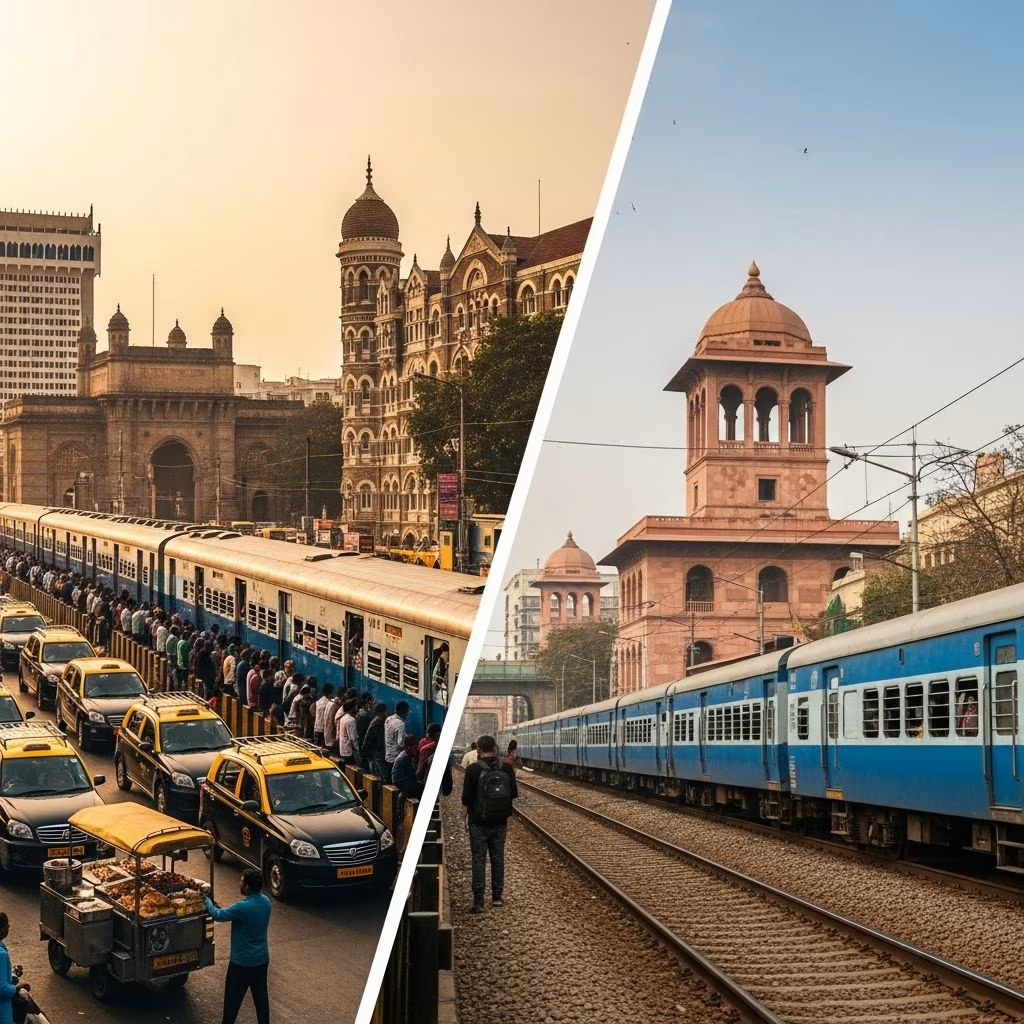
Mumbai relies primarily on its local train system, affectionately known as the city’s lifeline. While extensive, this system experiences chronic overcrowding and safety concerns during peak hours. The concentration of transport infrastructure in specific corridors makes travel outside these main lines more complicated. Additionally, certain premium areas restrict auto-rickshaws, forcing residents and visitors toward expensive taxi services.
For travelers prioritizing ease of movement and transportation comfort, Delhi’s metro system provides a clear advantage. Business professionals and daily commuters in Mumbai must adjust to more challenging transportation conditions, particularly during rush hours.
Financial considerations prove crucial for anyone contemplating relocation or extended stays. Housing costs represent the most dramatic difference between these cities. Mumbai’s accommodation expenses run approximately 52 percent higher than Delhi’s, with even modest one-bedroom apartments commanding premium prices due to land scarcity. Finding affordable housing in core Mumbai areas presents a genuine challenge.
Delhi offers substantially more affordable housing options, with two-bedroom apartments available at reasonable rates in central Delhi neighborhoods. This affordability advantage makes Delhi attractive for cost-conscious relocators and families needing multiple bedrooms.
Overall cost of living in Mumbai runs about 4 percent higher than Delhi, though food costs remain comparable between cities. Transportation and entertainment prove cheaper in Mumbai, while housing tips the scales decisively in Delhi’s favor. For budget-conscious travelers, Delhi presents the more economical choice.
Personal safety influences travel comfort and residential decisions significantly. Delhi historically reports higher crime rates, corruption, and bribery levels compared to Mumbai. Women travelers and solo visitors should exercise heightened caution in certain areas. While many neighborhoods remain perfectly safe, the city’s reputation for safety concerns warrants realistic assessment.
Mumbai generally maintains a friendlier, safer atmosphere, though urban precautions remain necessary. The commercial orientation and cosmopolitan nature of the city tend to encourage a more tolerant, less predatory environment compared to Delhi’s sometimes harder edges.
Beyond mere statistics, daily quality of life differs substantially. Delhi offers superior infrastructure and urban planning, with wider, cleaner roads, better sanitation, and more abundant green spaces compared to Mumbai. Renovation efforts in areas like Old Delhi have modernized previously neglected neighborhoods. The extensive tree canopy and garden culture provide Delhi residents with more natural breathing room and environmental amenities.
Mumbai increasingly resembles a concrete jungle, with limited green space and more intense urbanization. The visual environment feels more dominated by commercial development and high-rise construction. However, coastal areas like Marine Drive offer unique natural beauty during monsoon season when heavy rains transform the waterfront into spectacular scenery.
This depends on personal preference. Delhi offers seasonal variety and cool winters (ideal November-February) but punishing heat in summer. Mumbai maintains consistent warmth with humidity; its monsoons (June-September) can disrupt travel plans but create beautiful coastal scenery. Winter months (November-February) work well for both cities.
Mumbai generally presents a safer, more welcoming atmosphere, particularly for solo female travelers. However, standard urban precautions apply to both cities. Stay aware of surroundings, avoid isolated areas late at night, and use registered transportation services.
Both cities excel in different ways. Delhi provides robust North Indian cuisine with generous portions at reasonable prices. Mumbai offers more cosmopolitan dining but at higher costs with smaller servings. Choose based on culinary interests and budget.
Delhi’s superior metro system makes it easier to navigate without a private vehicle. Mumbai’s train system serves specific corridors well but leaves other areas less accessible. For transportation-dependent travelers, Delhi provides more comprehensive options.
This depends on career goals and lifestyle preferences. Mumbai works better for entrepreneurship and commercial careers but offers expensive housing. Delhi suits those seeking government employment or political involvement, with more affordable living costs and better infrastructure quality.
Selecting between Delhi and Mumbai ultimately depends on individual priorities. Choose Delhi for historical richness, seasonal variety, infrastructure quality, affordability, and political significance. Choose Mumbai for commercial opportunity, cosmopolitan energy, safety, cultural dynamism, and Bollywood glamour.
Both cities represent authentic India in their own ways—Delhi celebrates the nation’s historical grandeur and governmental heart, while Mumbai embodies India’s contemporary economic aspirations and creative vitality. Rather than declaring one city objectively superior, recognize that each offers distinct advantages for different travelers and residents.
