

 Travel Essentials
 Travel Essentials

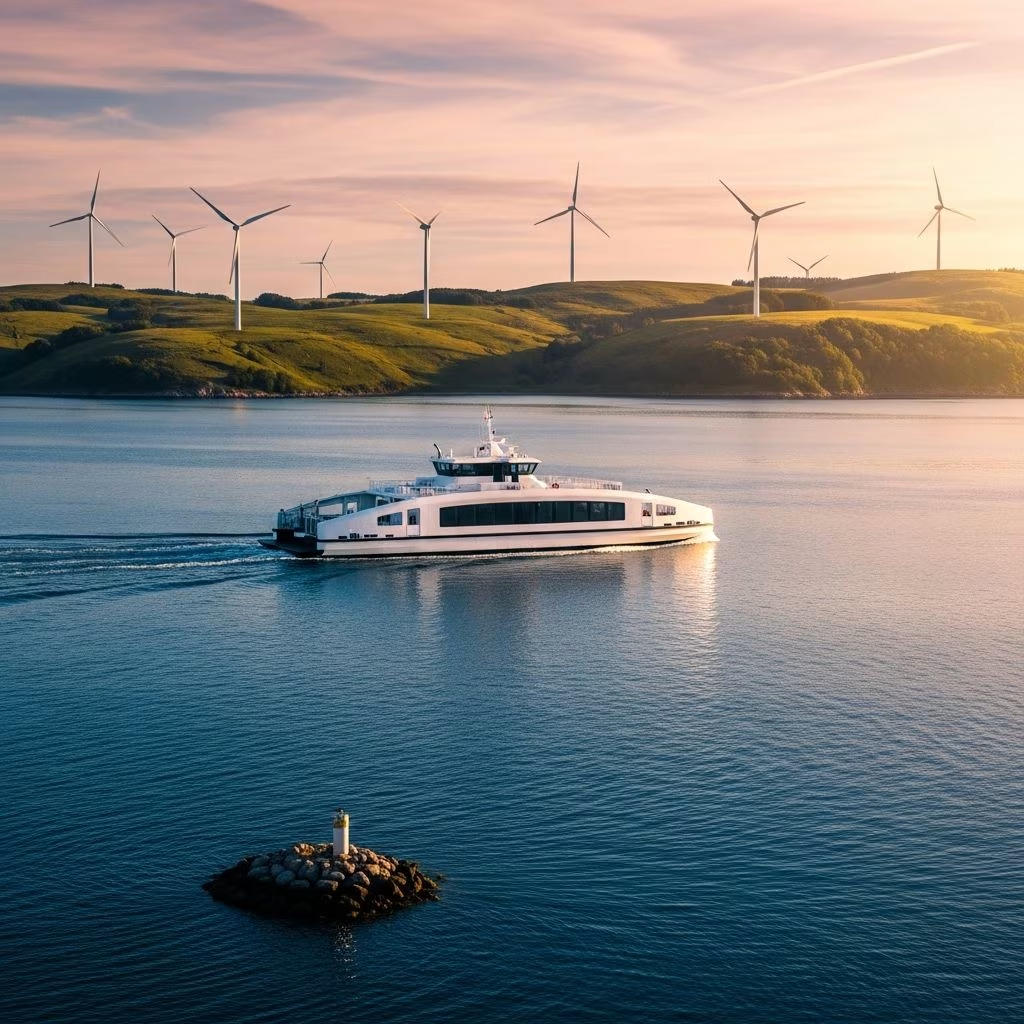
Denmark pioneers electric ferries like Ellen, Hamlet, and Copenhagen's harbor buses, cutting emissions dramatically while connecting islands and cities sustainably.
 Travel Essentials
Denmark stands at the forefront of sustainable maritime innovation with its fleet of electric ferries transforming coastal and island transport. These battery-powered vessels eliminate direct emissions, rely on renewable energy sources, and demonstrate scalable solutions for global shipping decarbonization.
The island of Ærø exemplifies Denmark’s commitment to green energy, producing surplus renewable electricity and operating district heating from solar power. In 2019, Ærø Municipality launched the E-ferry Ellen, setting a world record for the farthest fully electric ferry voyage at 40 km per charge, completed up to seven times daily on the Søby-Fynshav route.
Ellen, built in collaboration with European partners and funded by the EU Horizon 2020 program, carries 200 passengers and 30 vehicles using batteries equivalent to 57 Tesla units. Its operation prevents over 2,500 tons of CO2 and half a ton of particulate matter annually when charged from Denmark’s grid, which derives nearly 80% of energy from renewables.
Öresundslinjen’s route between Helsingborg, Sweden, and Helsingør, Denmark, now features three fully electric ferries: Aurora, Tycho Brahe, and the recently converted Hamlet. Initiated in 2018 with battery retrofits on the first two, the fleet uses automated charging systems powered by wind, water, and solar energy.
Annual CO2 emissions dropped from 37,800 tons to 10,200 tons by 2024 after the initial conversions, projected to fall further to 2,500 tons with Hamlet’s full electrification. This modernization saves 35,300 tons of CO2 yearly, achieved via Echandia battery systems and quick port charges.
| Ferry | Conversion Year | CO2 Reduction Contribution |
|---|---|---|
| Aurora & Tycho Brahe | 2018 | ~27,600 tons/year |
| Hamlet | 2025 | ~7,700 tons/year |
| Total Fleet | – | 35,300 tons/year |
Robot arms charge batteries in 8 minutes per stop, enabling frequent 20-minute crossings without direct emissions, reducing overall impact by 65%.
In Copenhagen, aiming for climate neutrality, Movia and Damen deployed fully electric harbor buses. These vessels outperform biodiesel or hybrid options with zero emissions, silent operation, and low maintenance over 12 years.
Stäubli’s quick-charging connectors enable 6-minute charges during passenger stops along the seafront, supporting high-frequency service. Powered by green electricity, they align with the city’s transport electrification goals.
Sønderborg replaced diesel ferries with fully electric ones like Ellen and Nerthus, powered by certified renewables from wind, hydro, and solar. These emit no CO2, air, or noise pollution, advancing ProjectZero’s fossil-fuel-free ambitions.
A Siemens study highlights Denmark’s 42 domestic routes served by 52 ferries, with full electrification potential saving 50,000 tons of CO2 annually—equivalent to removing vast diesel consumption.
Electric ferries integrate advanced batteries, fast-charging infrastructure, and automation. Ærø’s Ellen uses high-capacity packs for extended range; Øresund employs laser-guided arms; Copenhagen leverages harbor-tough connectors.
Retrofitting older vessels, as with Hamlet, proves cost-effective, minimizing new-build needs while slashing operational costs through cheaper electricity versus diesel.
Beyond CO2 cuts—2,000+ tons from Ellen alone—benefits include reduced NOx (41,500 kg/year) and SO2 (1,350 kg/year). Passengers enjoy quieter, vibration-free rides; operators gain predictable energy costs.
Europe-wide, 70%+ of short-sea routes suit electrification, positioning Denmark as exporter of expertise.
Scalability requires grid upgrades and battery advances, yet Denmark’s renewable surplus and policy support mitigate hurdles. By 2030, Öresundslinjen targets emission-free ops; national goals eye full fleet conversion.
Global replication, from Norway’s Ampere to emerging Asian pilots, draws from Danish models.
Ærø’s Ellen covers 40 km per charge, operating multiple daily trips.
Examples: 2,500 tons/year (Ellen), 35,300 tons/year (Øresund fleet).
Both: New like Ellen; retrofits like Aurora, Hamlet.
Renewables: wind, solar, hydro via green grid electricity.
Yes, suitable for 70-900+ European routes; great short-sea potential.
