

 Travel Essentials
 Travel Essentials

Explore Desierto Florido National Park, Chile's 45th protected area in the Atacama, safeguarding the desert's iconic flowering phenomenon amid rising tourism.
 Travel Essentials
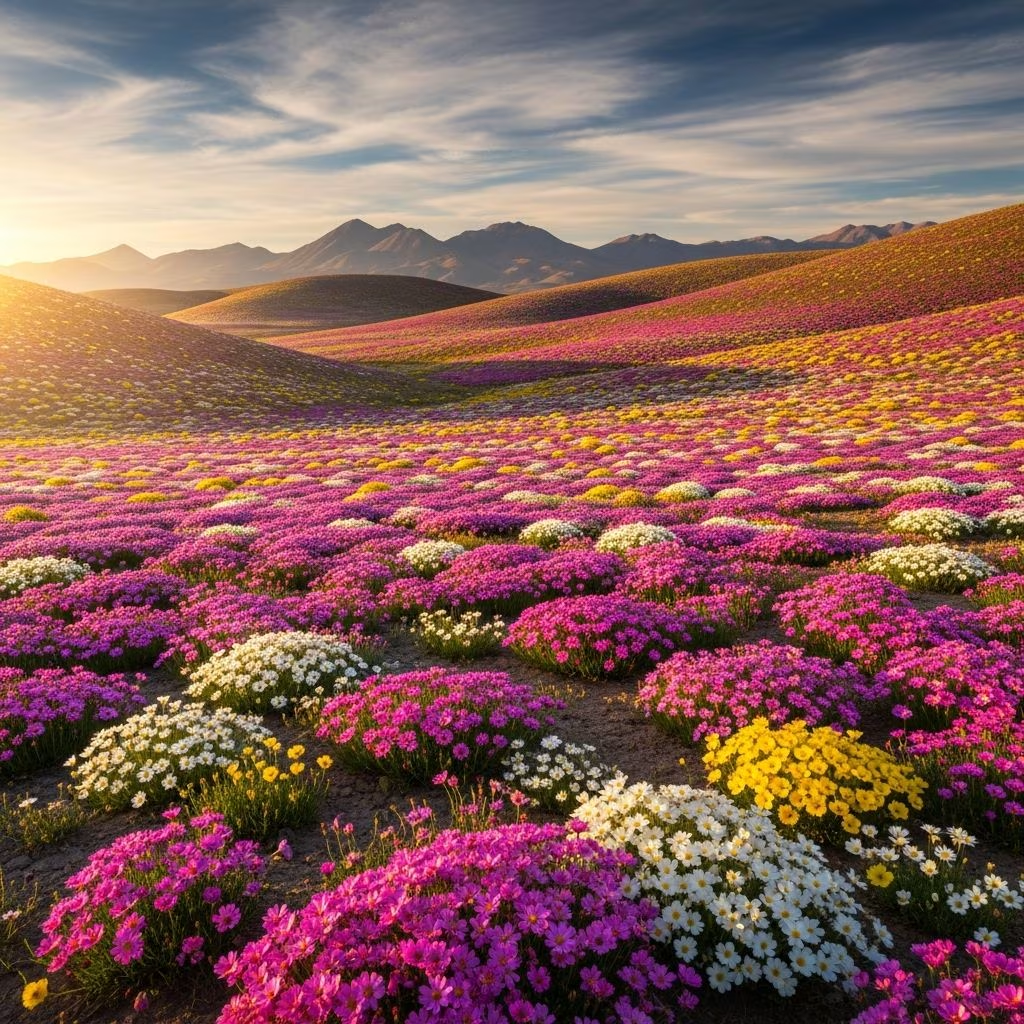
Chile’s Atacama Desert, renowned as the driest place on Earth, hides a secret transformation. When rare rains arrive, vast expanses burst into color with the Desierto Florido phenomenon, now protected as the country’s 45th national park. Announced by President Gabriel Boric on October 2, 2022—Chile’s Day of the Environment—this new reserve spans sectors near Copiapó and Vallenar, preserving fragile ecosystems for future generations.
Desierto Florido National Park officially launched in 2023, covering approximately 57,000 hectares in the Atacama region’s southern reaches. Located about 30 km south of Copiapó and 80 km north of Vallenar, it stands apart from tourist hotspots like San Pedro de Atacama, roughly 850 km to the north. This strategic positioning allows visitors to experience an untouched slice of desert magic without the crowds.
The park’s establishment responds to growing threats from climate shifts and tourism. By elevating the area to national park status, Chile commits to stricter regulations, ensuring habitats remain intact. Officials emphasize sustainable practices, guiding visitors to tread lightly amid the blooms.
The Atacama receives less than 1 mm of rain annually in some spots, making any precipitation a rarity. Yet, every 3-7 years—or sometimes more frequently due to unusual weather patterns—enough rain falls to awaken dormant seeds. This triggers the Desierto Florido, or Flowering Desert, typically from August to November.
Recent events highlight the phenomenon’s unpredictability. In 2024 and 2025, back-to-back blooms painted the landscape in whites, purples, yellows, and pinks, drawing botanists and adventurers alike. Videos from 2025 show carpets of flowers transforming barren plains, a sight that occurs only under exceptional conditions like El Niño-influenced rains.
Over 200 plant species thrive here, many endemic and adapted to extreme aridity. These resilient bloomers include ground-hugging herbs and succulents that store water for years. Key highlights:
| Plant Name | Description | Bloom Color |
|---|---|---|
| Garra de León | Lion’s Claw; spiky petals mimic claws | Yellow-White |
| Pata de Guanaco | Guanaco’s Foot; delicate, foot-shaped blooms | Purple |
| Añanuca | Fragile desert lily relative | White-Pink |
| Schizopetalon | Intricate, fringed flowers | Violet |
| Alstroemeria | Peruvian lily variant; vibrant clusters | Orange-Red |
These species not only dazzle visually but support local fauna like insects and rodents, forming a delicate food web.
Situated in the Atacama’s lesser-visited south, the park lies between the coastal range and Andean foothills. Access is straightforward:
Rent 4×4 vehicles for rugged trails, but stick to marked paths to avoid seed trampling.
Timing is everything for Desierto Florido. Monitor weather forecasts for rainfall in the Atacama region.
Avoid peak summer (December-February) when heat scorches remnants.
As popularity surges, responsible tourism is paramount. The park enforces rules to safeguard this ephemeral wonder:
Chile’s government prioritizes biodiversity, blending conservation with economic benefits for nearby communities.
Beyond flowers, the park hosts foxes, vizcachas, and birds like the miner and rufous-collared sparrow. Rare sightings include guanacos roaming the llanos. These elements create a thriving, if subtle, biodiversity hotspot amid desolation.
| Region | Frequency | Key Species | Area Size |
|---|---|---|---|
| Desierto Florido, Chile | 3-7 years | Garra de León, Alstroemeria | 57,000 ha |
| Death Valley, USA | 5-10 years | Desert Gold, Larkspur | ~200,000 ha (park) |
| Namaqualand, South Africa | Annual | Daisies, Aloes | ~300,000 ha |
Desierto Florido’s rarity sets it apart, offering a purer wilderness experience.
Prepare for extremes: days hit 30°C (86°F), nights drop to 5°C (41°F). Bring:
Lodging options include Copiapó hostels or Vallenar eco-lodges. Day trips suit most itineraries.
Botanists study these blooms to understand desert resilience amid climate change. Seeds’ longevity—up to 30 years—offers clues for arid agriculture. Recent 2025 expeditions documented expanded species ranges, signaling shifting patterns.
Check forecasts; 2025 rains suggest possible early signs, but blooms are unpredictable.
About 57,000 hectares, focused on Llanos and Chañarcillo.
Yes, but flowers appear only post-rain. Entry is free; follow guidelines.
Yes, with easy access roads, but supervise kids on trails.
Explore Chañarcillo ghost town or nearby Humboldt penguins.
This park embodies nature’s defiance, turning impossibility into beauty. As Chile’s protected gem, it invites mindful exploration, blending adventure with awe. Whether chasing petals or pondering ecosystems, Desierto Florido redefines desert travel.
