

 Travel Essentials
 Travel Essentials

Discover the key strategies for building sustainable, resilient cities with renewable energy, green infrastructure, smart mobility, and inclusive design.
 Travel Essentials
Urban areas are expanding rapidly, with projections indicating that over 68% of the global population will reside in cities by 2050. Crafting these spaces requires a forward-thinking approach that prioritizes sustainability, resilience, and human well-being. This article outlines essential strategies for building cities that thrive in harmony with the environment, leveraging renewable resources, innovative infrastructure, and inclusive design.
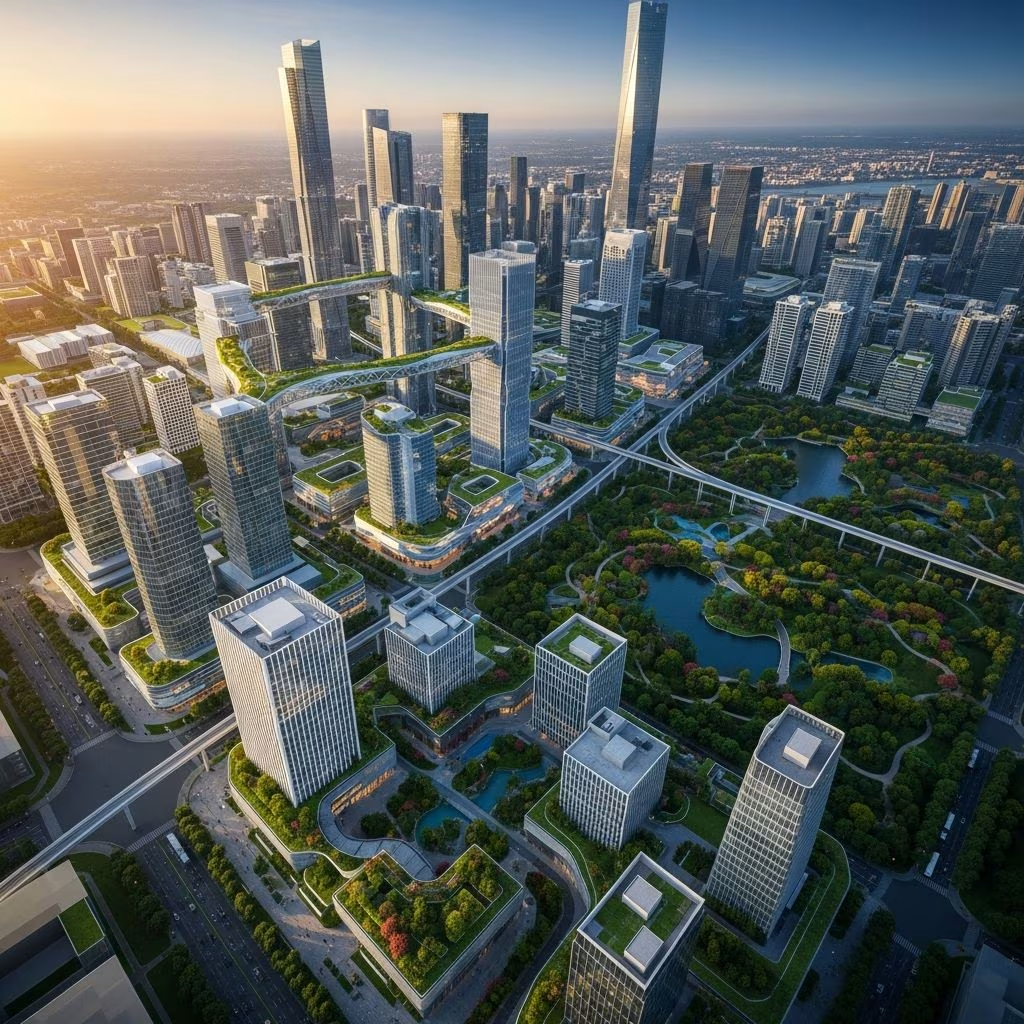
Future cities must embed ecological principles from the ground up, treating natural features as foundational elements rather than obstacles. By aligning development with local ecosystems, urban planners can safeguard biodiversity while minimizing environmental disruption. Compact, high-density layouts reduce sprawl, preserving surrounding habitats and promoting efficient land use.
Restoration projects, such as reviving wetlands and implementing sponge-city techniques, enhance water management and flood resilience. These measures absorb excess rainfall, filter pollutants, and create vibrant habitats that support urban wildlife. Green roofs, vertical gardens, and permeable surfaces further integrate nature, cooling cities naturally and improving air quality.
Achieving 100% renewable energy is non-negotiable for tomorrow’s metropolises. Cities will generate sufficient power locally through solar panels on facades, wind turbines, and geothermal systems, ensuring self-sufficiency. Shared energy grids among buildings balance supply and demand, with excess stored for peak times.
Advanced materials and smart technologies optimize consumption. High-performance HVAC systems, LED lighting, and real-time sensors minimize waste, while passive designs harness natural light and ventilation. The United Nations Sustainable Development Goal 11 emphasizes safe, resilient cities, underscoring the need for clean energy transitions that cut CO2 emissions dramatically.
| Energy Strategy | Benefits | Implementation Example |
|---|---|---|
| Solar Integration | Reduces fossil fuel reliance | Facade panels on all buildings |
| Smart Grids | Balances load efficiently | Neighborhood energy sharing |
| Passive Techniques | Lowers cooling needs | Optimized orientation and shading |
Water scarcity demands innovative conservation. Rainwater harvesting, greywater recycling, and low-flow fixtures capture and reuse every drop. Rigorous stormwater treatment protects aquifers, while wastewater processing enables safe irrigation or potable reuse.
Waste transforms from burden to asset. Zero-waste systems convert organics into biogas for energy and recyclables into construction materials. Remediation turns landfills into parks, closing loops in urban metabolism. These closed-loop approaches align with ecological sustainability, fostering resource efficiency.
Mobility redefines urban life through pedestrian-priority designs and high-capacity transit. High-speed rail hubs serve as vibrant activity centers, slashing commute times and emissions. Electric vehicles dominate, supported by widespread charging networks and grid upgrades for home solar integration.
Concepts like 15-minute cities ensure essentials—work, shops, schools—are reachable on foot or bike, inspired by dense models in Tokyo and Singapore. Superblocks limit car access, prioritizing public spaces. Inclusive designs accommodate aging populations and disabilities with ramps, smart signals, and autonomous shuttles.
Livability hinges on green spaces, recreation, and social equity. Ample parks and nature preserves boost mental health and biodiversity. Robust social planning provides universal access to amenities, making cities inclusive for all demographics.
Cultural preservation blends heritage sites with modern innovation. Virtual and augmented reality share arts globally, while flexible workspaces adapt to AI-driven economies. Diverse, dense populations thrive in mixed-use zones that support flexible hours and remote work.
Resilience counters climate threats like floods and heatwaves. Rotterdam’s model embraces water through adaptive designs rather than barriers. Flexible infrastructure with redundancy withstands disasters, incorporating disaster-resistant materials and modular construction for quick repairs.
Smart cities like Songdo use sensors for real-time optimization of services, from traffic to waste collection. However, privacy safeguards are crucial amid pervasive tech. Zoning evolves to mixed-use formats, integrating residential, commercial, and industrial without silos.
| City Model | Key Features | Real-World Example |
|---|---|---|
| Compact City | Smart density, short commutes | Tokyo/Singapore |
| Resilient City | Disaster adaptation | Rotterdam |
| Smart City | Tech optimization | Songdo |
Economies align with ecology, leveraging automation for flexible labor markets. Sustainable land use outside city borders supplies food via urban farming and vertical agriculture, reducing transport emissions. Policies incentivize green jobs in renewables, creating three times more employment than fossil fuels.
Eco-architecture uses durable, natural materials with minimal waste. Retrofitting existing structures with efficient windows and insulation targets buildings’ high carbon footprint. By 2030, the EU aims for 3.4 million EV chargers, spurring infrastructure economies.
Transitioning demands multi-pronged efforts: policy shifts, public buy-in, and tech investment. Challenges include high upfront costs, but long-term savings in health and efficiency outweigh them. Collaborative planning with stakeholders ensures equitable outcomes.
A model where daily needs are met within a 15-minute walk or bike ride, reducing car dependency and emissions.
They insulate buildings, manage stormwater, enhance biodiversity, and lower urban heat islands.
Yes, through retrofits like energy-efficient upgrades, expanded transit, and green space additions.
AI optimizes traffic, energy use, and services via sensors, improving efficiency while raising privacy concerns.
It cuts CO2 emissions, creates jobs, and ensures energy independence amid climate volatility.
