

 Travel Essentials
 Travel Essentials

Learn what Germany’s Deutschland-Ticket covers, what it excludes, how to buy it, and when it’s worth €63 for travelers and commuters.
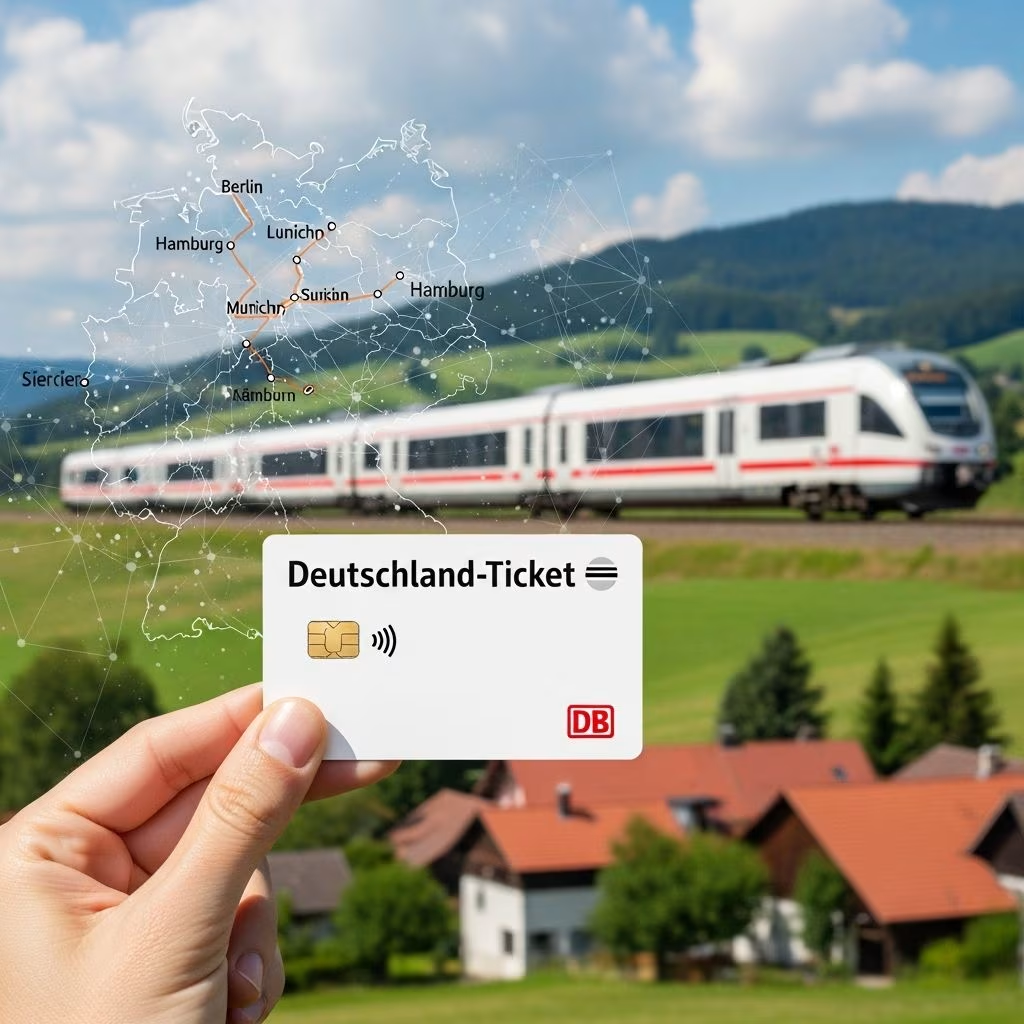 Travel Essentials
Germany’s public transportation system stands out for its efficiency and accessibility, and the Deutschland-Ticket—often called the D-Ticket—has transformed how people navigate the country. Launched as an affordable monthly subscription, this pass grants unlimited access to a vast network of local and regional services for a fixed price of €63 as of 2026. Whether you’re a tourist hopping between cities or a resident commuting daily, understanding this ticket unlocks seamless travel without the hassle of individual fares.
The D-Ticket encompasses all standard local public transport options throughout Germany, making it a versatile choice for everyday journeys. This includes buses that weave through urban streets, trams gliding along dedicated tracks, underground metros known as U-Bahn, suburban overground S-Bahn lines, and regional trains labeled RE (Regional Express) and RB (Regionalbahn). Certain ferries on approved routes also qualify, adding flexibility for waterfront areas.
Key inclusions at a glance:
Importantly, the ticket operates nationwide, so a pass bought in Hamburg works equally well in Bavaria or the Rhineland. It covers second-class seating on all eligible trains, ensuring broad accessibility.
While comprehensive, the Deutschland-Ticket has clear limits to keep costs low. It excludes high-speed long-distance trains like ICE (InterCity Express), IC (InterCity), and EC (EuroCity), which require separate tickets for faster intercity travel. Private operators such as FlixTrain or FlixBus fall outside its scope, as do tourist-oriented services like cable cars, museum railways, or scenic mountain lines.
| Eligible Services | Ineligible Services |
|---|---|
| RB, RE, S-Bahn, U-Bahn, buses, trams | ICE, IC, EC, FlixTrain, tourist railways |
| Local ferries | High-speed long-distance trains |
| 2nd class regional travel | Private buses/trains |
This distinction encourages combining the D-Ticket with point-to-point bookings for longer hauls, often via the DB Navigator app, which highlights compatible routes.
Acquiring a Deutschland-Ticket is straightforward, with options catering to digital natives and traditionalists alike. The primary method is a monthly subscription via the official DB Navigator app or website from Deutsche Bahn, auto-renewing at €63 unless canceled. Tourists without German bank accounts can opt for paper versions at DB ticket machines, Reisezentren (travel centers), or authorized sales points like tobacco shops and newsstands. Digital tickets display as a QR code on your phone, instantly valid from the first of the month or a chosen start date.
Pro tips for buying:
Affordability extends beyond the base price through targeted reductions. Children under 6 ride free with an adult holding a valid ticket. Students, apprentices (Azubis), and low-income recipients often qualify for subsidized rates—down to €19-€34.80 in regions like Hamburg for social benefit holders. Employers may subsidize via job tickets, and some cities offer upgrades for youth or seniors. Always check local transport authority sites for specifics, as variations exist by federal state.
Germany’s honor-based system simplifies travel—no turnstiles or scanners at most stations. Simply board your bus, tram, U-Bahn, or S-Bahn and keep your ticket accessible for random inspections by plainclothes controllers. Digital versions refresh the QR code automatically; paper tickets require no stamping unless specified. Fines for non-compliance start at €60, so compliance is key.
On regional trains, present the ticket alongside ID if requested. The DB Navigator app not only validates eligibility but suggests optimal paths, factoring in D-Ticket coverage.
For visitors, the D-Ticket shines on trips over a week, outpacing day passes or singles. Base yourself in hubs like Berlin or Munich, using S-Bahn for airports and RE/RB for day trips to castles or lakes. Combine with occasional ICE bookings for Berlin-to-Frankfurt sprints. Residents save versus city-specific tickets, especially multi-city commuters.
Maximization strategies:
At €63, it pays off quickly. A Berlin day pass costs €9.90; four days exceed €39. Regional singles add up fast—€20+ for Munich-Regensburg. For expats or month-long tourists, it’s indispensable. Even partial months via subscription minimize waste.
| Trip Type | D-Ticket Equivalent Cost | Actual Single Fare |
|---|---|---|
| Daily city commute (5 days) | €10.50 | €39+ |
| Inter-regional day trip | €10.50 | €25-€40 |
| Airport roundtrip | €10.50 | €12-€20 |
Q: Can I use the D-Ticket for long-distance travel?
A: No, it’s limited to local/regional; book ICE/IC separately.
Q: Does it work on private operators?
A: Only public providers; Flix excluded.
Q: What’s the cancellation policy?
A: Monthly, with notice before renewal.
Q: Valid for groups?
A: Each person over 6 needs their own; no guest passes.
Q: English app available?
A: Yes, DB Navigator supports multiple languages.
Since inception, the price has edged up from €49 to €63 amid inflation, but value remains high. Expect annual adjustments; check official sites for 2026 updates. Integration with emerging e-mobility like bike-sharing enhances appeal.
