

 Travel Essentials
 Travel Essentials

Explore Día de los Muertos: from ancient roots and ofrendas to parades in Mexico City, candlelit cemeteries in Oaxaca, and unique regional festivities honoring the dead with joy and reverence.
 Travel Essentials
Día de los Muertos, celebrated primarily on November 1 and 2, transforms Mexico into a tapestry of remembrance, color, and communal joy. Unlike somber funerals elsewhere, this holiday welcomes departed souls back with elaborate altars, feasts, and parades, blending pre-Hispanic indigenous beliefs with Catholic All Saints’ Day and All Souls’ Day observances.
The origins of Día de los Muertos trace back over 3,000 years to Aztec, Maya, and other Mesoamerican civilizations, where death was viewed as a natural extension of life rather than an end. Ancient rituals involved offerings to guide spirits through the underworld, a concept echoed in modern practices. Spanish colonization merged these with Catholic traditions, creating a unique syncretic festival that emphasizes life’s cyclical nature.
At its core, the holiday affirms that death does not sever bonds; souls return annually to reconnect with families. This philosophy fosters celebration over mourning, with communities gathering in homes, cemeteries, and public spaces to honor ancestors through art, food, and music.
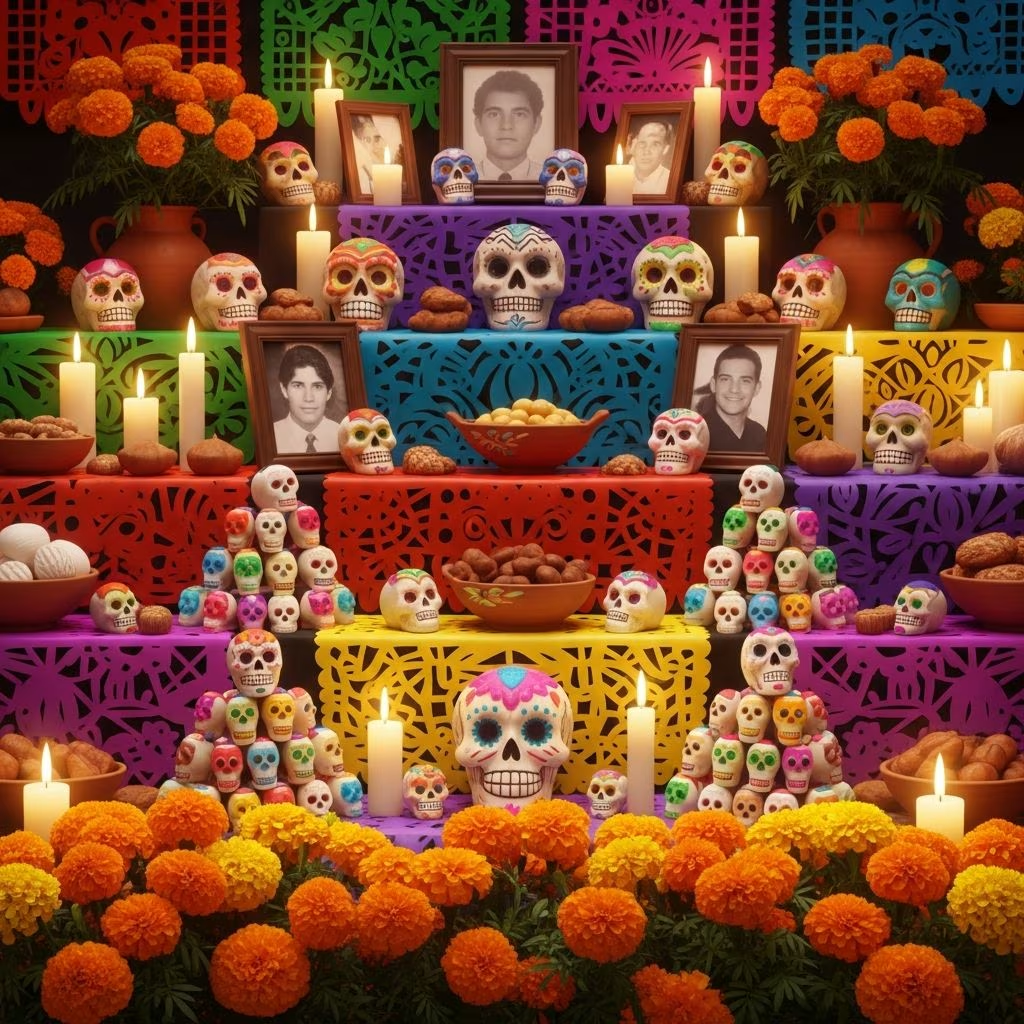
Central to every observance is the ofrenda, or altar, a multi-tiered display inviting spirits home. These structures typically feature four levels symbolizing the natural world: earth, wind, water, and fire.
These elements create a sensory bridge between realms, ensuring the dead feel welcomed and nourished.
Mexico City’s massive population amplifies Día de los Muertos into a metropolis-wide event. The highlight is the Desfile de Día de Muertos, a parade inspired by global interest and popularized further by films like Coco. Starting at Estela de Luz, it winds 3 miles down Paseo de la Reforma to the Zócalo, featuring colossal catrina puppets, dancers in skeleton face paint, floats with moving altars, and spiritual performers.
At the Zócalo, a mega ofrenda draws crowds with thematic installations by artists and families. Neighborhoods like Xochimilco offer nighttime trajinera boat rides with La Llorona performances retelling haunting legends amid marigold-strewn canals. In Mixquic, a UNESCO site, La Alumbrada sees thousands of candles illuminate the cemetery during vigils.
| Event | Location | Key Features |
|---|---|---|
| Desfile de Día de Muertos | Paseo de la Reforma to Zócalo | Parade with puppets, dancers, catrinas; lasts 2 hours |
| Mega Ofrenda | Zócalo | Annual themed altar with artisan displays |
| La Alumbrada | Mixquic | Candlelit cemetery tribute |
Oaxaca stands out for its profound indigenous influences, with celebrations starting weeks early in markets stocked with marigolds, alebrijes (vibrant carved fantasy creatures acting as spirit guides), and copal incense.
Pátzcuaro in Michoacán (often linked to Oaxaca circuits) hosts candlelit island vigils, but Oaxaca’s Xoxocotlán and Atzompa cemeteries glow with thousands of flames, live music, and comparsas—neighborhood street parades of masked dancers. Sand tapestries adorn streets, and the Mercado de Abastos buzzes with sugar skulls and pan de muerto.
Guanajuato’s La Catrina Vive Festival merges tradition with modernity through catrina parades, urban art, concerts, and workshops on papier-mâché skulls. Altars fill the Jardín Principal, while cemeteries host candlelit gatherings blending reverence and festivity.
In Mérida, Paseo de las Ánimas features locals as wandering spirits in candlelit processions. Maya villages blend cosmology with Catholic rites in cemetery blessings. On the Riviera, Xcaret’s Festival of Life and Death showcases state-specific traditions with theater, dance, and guest altars in Cancún and Playa del Carmen.
Food sustains both living and dead. Pan de muerto, a domed sweet bread dusted with sugar and topped with bone-shaped dough, symbolizes the skull. Tamales wrapped in corn husks, mole sauces, and atole (corn drink) fill ofrendas. Sugar skulls and chocolate coffins add whimsy.
Book accommodations and flights early, as crowds swell. October 31 to November 2 aligns with weekends in some years for extended festivities. Respect local customs: ask permission before photographing ofrendas or graves; participate humbly.
Halloween focuses on fear and costumes; Día de los Muertos honors ancestors with joy, altars, and family.
Yes, if done thoughtfully—observe, learn, avoid disrupting private rituals.
Centro Histórico or Reforma hotels offer prime views.
Absolutely; it’s family-oriented with kid-friendly crafts and sweets.
Officially November 1-2, but regions extend weeks.
UNESCO recognized Día de los Muertos as Intangible Cultural Heritage in 2008, boosting global interest. Films like Disney’s Coco and James Bond’s Spectre (which inspired the Mexico City parade) have amplified its visibility, drawing international visitors while locals preserve authenticity.
Celebrations now span U.S. cities like San Antonio and San Diego with Mexican-American communities, featuring ofrendas and parades.
(Word count: 1678)
