

 Travel Essentials
 Travel Essentials

Digital nomads are reshaping travel, boosting local economies, and challenging cities to balance flexibility, sustainability, and community impact.
 Travel Essentials
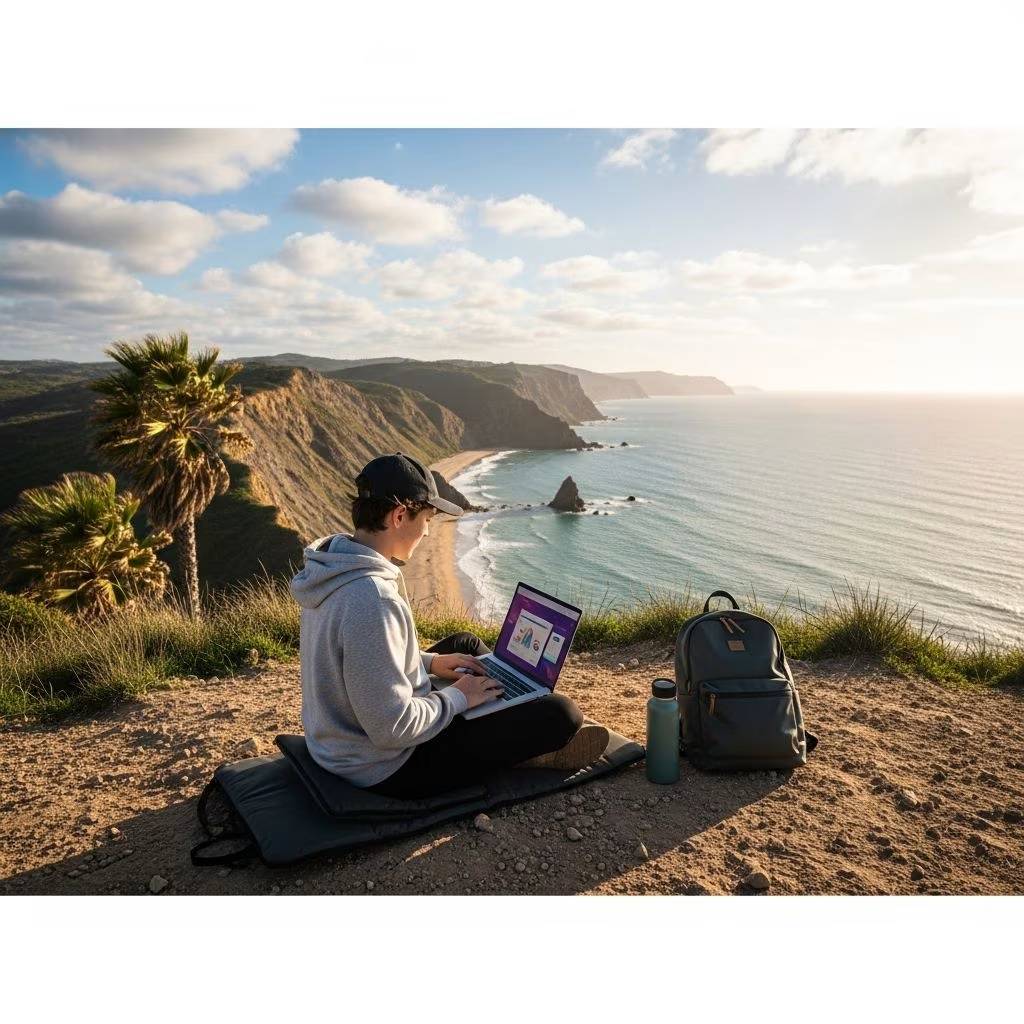
Remote work has unlocked a new era of mobility, where professionals trade office desks for beachside cafes and mountain retreats. This shift, accelerated by global events like the pandemic, has birthed a community of over 40 million digital nomads worldwide, with 18.1 million hailing from the United States alone—a 131% surge since 2019. These itinerant workers contribute nearly $800 million annually to the global economy, redefining how nations approach tourism and labor.
Digital nomadism merges professional responsibilities with exploratory adventures, allowing individuals to earn incomes untethered from fixed locations. No longer confined to tech sectors, this lifestyle spans marketing, consulting, writing, engineering, and even language teaching. Post-pandemic acceptance of remote arrangements propelled this trend, as companies embraced flexible policies and travelers sought novel experiences.
Participants often select destinations based on reliable internet, affordable living, and vibrant communities. They favor extended stays—weeks or months—over fleeting vacations, fostering deeper cultural immersion. Coworking spaces and home offices in rented accommodations have become staples, further stimulating local businesses.
Digital nomads inject substantial revenue into host economies. Their prolonged presence supports sectors beyond traditional tourism, including real estate, hospitality, and retail. Estimates peg their yearly global economic input at $787 billion, facilitating cross-border financial flows particularly beneficial to emerging markets.
Governments have responded with tailored policies. Countries like Portugal, Estonia, and Barbados offer digital nomad visas, streamlining entry for remote workers who commit to minimum stays and income thresholds. These initiatives aim to capture high-spending visitors who bolster off-peak seasons.
| Destination | Visa Perks | Economic Impact |
|---|---|---|
| Portugal | 1-2 year renewable visa | Boosts Lisbon and Porto rentals |
| Estonia | Digital residency for e-services | Enhances tech ecosystem |
| Thailand | Long-term elite visas | Supports island economies |
| Croatia | One-year nomad permit | Balances seasonal tourism |
This influx diversifies income streams, reducing reliance on short-term tourists and promoting year-round vitality.
While economically advantageous, digital nomadism poses environmental hurdles. Longer stays can lessen per-day carbon footprints compared to frequent flyers, and many nomads—over 40%—prioritize eco-conscious choices, opting for off-season travel to sidestep peak pressures. Their extended engagements allow lighter travel schedules, potentially easing infrastructure strain.
Yet, challenges persist. In idyllic spots like Bali or Lisbon, influxes strain housing markets, spike energy use, and amplify waste. Previously low-impact areas face overtourism risks as nomads demand constant connectivity and amenities, outpacing local capacities. Unregulated growth threatens ecosystems, from water scarcity in islands to urban congestion in cities.
Host populations experience mixed outcomes. Nomads enliven neighborhoods with diverse interactions and spending, yet rapid arrivals can inflate rents, displacing residents. In popular hubs, cafe cultures evolve into work-centric zones, altering social fabrics.
Cultural exchanges enrich both sides, but imbalances arise when nomads overlook local norms. Initiatives like community guidelines and integration events help mitigate tensions, encouraging respectful participation.
Travel sectors pivot to serve this demographic. Hotels introduce “workation” packages with ergonomic setups, high-speed internet, and communal areas. Coworking hubs proliferate, blending productivity with leisure. Airlines and apps cater to flexible itineraries, while advisors assist with visa logistics and community matchmaking.
AI advancements further enable this shift, automating tasks and amplifying remote viability, thus expanding nomad ranks.
To harness benefits while curbing downsides, stakeholders collaborate. Cities design policies for resilient infrastructure, promoting dispersed arrivals over concentrations. Sustainable practices—such as carbon offset programs and eco-certifications—attract conscientious nomads.
Education campaigns urge responsible behaviors: supporting local enterprises, minimizing waste, and embracing customs. Governments balance visas with caps to prevent overloads.
Digital nomadism will expand, propelled by tech evolution and work culture changes. Projections indicate sustained growth, with businesses embedding mobility into models. Destinations must innovate for inclusivity, ensuring nomads enhance rather than erode local life.
This movement heralds a redefined travel paradigm: purposeful, prolonged, and intertwined with productivity. By addressing pitfalls proactively, it promises mutual prosperity.
A digital nomad is someone who works remotely via digital tools while traveling frequently, prioritizing lifestyle flexibility over fixed residences.
They add approximately $787-800 billion yearly to the global economy through spending on housing, food, and services.
They offer benefits like longer stays reducing flight frequency, but unmanaged numbers can strain resources in sensitive areas.
Leaders include Portugal, Estonia, Croatia, Thailand, and Barbados with specialized visas.
Yes, if your job allows remote execution, with strong self-discipline and reliable internet access.
