

 Travel Essentials
 Travel Essentials

Discover El Salvador's thriving art scene from contemporary galleries to traditional craftsmanship, featuring museums, street art, and local artists.
 Travel Essentials
El Salvador, often overlooked as a travel destination, harbors a remarkably diverse and compelling artistic landscape that rivals more prominent cultural hubs throughout Latin America. From indigenous traditions preserved in village workshops to cutting-edge contemporary installations adorning urban neighborhoods, the nation’s creative output reflects centuries of cultural evolution, resilience, and innovation. For travelers seeking authentic cultural immersion beyond conventional tourism, El Salvador presents an extraordinary opportunity to encounter art forms that remain largely undiscovered by international audiences yet deeply rooted in the country’s identity and historical narrative.
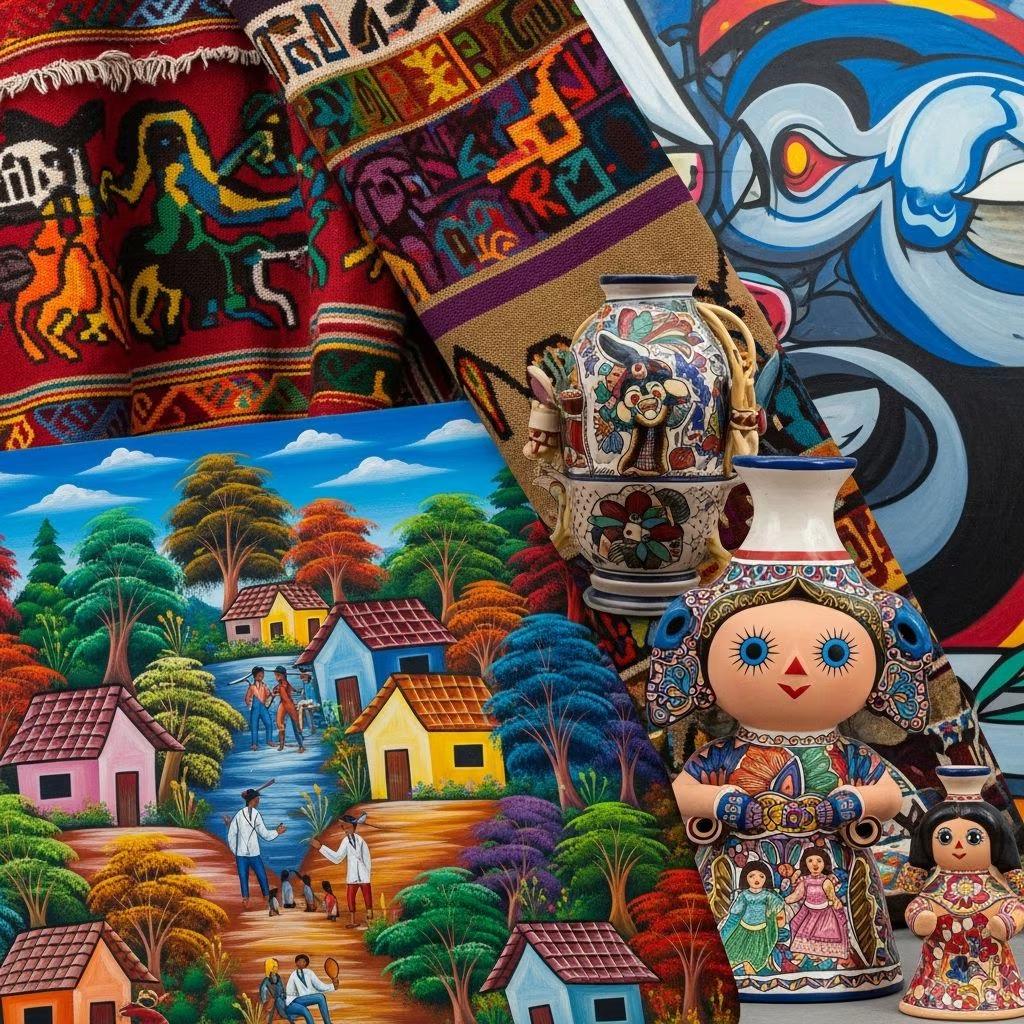
The artistic expression found throughout El Salvador encompasses a striking range of mediums, styles, and thematic concerns. Contemporary creators working in painting, sculpture, and mixed media engage with social commentary, historical reflection, and personal narratives that provide profound insights into Central American life. Simultaneously, traditional artisans maintain centuries-old techniques in textile production, ceramics, jewelry crafting, and woodworking—practices that continue to flourish in communities throughout the countryside. This coexistence of historical and modern artistic traditions creates a uniquely layered cultural environment where visitors can traverse vastly different creative worlds within short geographical distances.
The nation’s artistic development has been significantly shaped by its complex historical circumstances, including pre-Columbian civilizations, colonial influences, and more recent social and political transformations. These historical currents manifest visibly in contemporary artwork, whether through direct historical references or subtle thematic undercurrents that reflect the country’s collective experience. Understanding these contextual factors enhances appreciation for the depth and significance of works encountered throughout El Salvador.
San Salvador, the nation’s capital, serves as the primary hub for institutional art presentation, featuring several world-class museums that warrant extended visits. These establishments have become essential destinations for anyone seeking comprehensive understanding of Salvadoran artistic achievement across different periods and disciplines.
Beyond the capital’s major institutions, El Salvador offers numerous smaller museums and cultural centers dedicated to particular art forms or regional traditions. The Popular Art Museum, located at 125 Avenida San Jose, specializes in traditional craftsmanship and emerging artistic practices. Its permanent collection encompasses sculptures, paintings, weavings, jewelry, clay work, masks, and paper-based creations—representing the full spectrum of traditional Salvadoran artistic production. The institution actively engages families through regular workshops that enable participants to learn fundamental techniques in various crafts, making art education accessible to audiences of all ages and backgrounds.
Beyond formal museum structures, independent galleries throughout San Salvador and neighboring regions provide vital platforms for established and emerging artists. These privately operated spaces frequently feature works by both Salvadoran creators and Latin American master artists, creating international artistic dialogue within local contexts. Certain galleries have maintained consistent presence for decades, establishing themselves as essential resources for collectors, critics, and serious art enthusiasts.
The Salvadoran gallery scene often features curated exhibitions that spotlight particular artistic movements or thematic concerns. Annual events, such as comprehensive Latin American painting and sculpture exhibitions, attract international attention and facilitate exchange among regional artistic communities. These gatherings provide opportunities for established collectors to acquire significant works while simultaneously introducing emerging artists to broader audiences.
| Gallery Focus | Characteristics | Best For |
|---|---|---|
| Contemporary Salvadoran Works | Multi-media exhibitions, rotating displays, modern aesthetics | Understanding current artistic trends |
| Latin American Masters | Established artists, international scope, premium works | Serious collectors and museum-quality acquisitions |
| Traditional and Indigenous Arts | Textiles, ceramics, jewelry, folk art traditions | Cultural heritage and artisanal techniques |
| Street Art and Muralism | Community-based works, public installations, social themes | Contemporary urban culture exploration |
San Salvador’s urban landscape contains vibrant street art that provides accessible entry points for visitors interested in contemporary Salvadoran creativity. Graffiti, stencil work, poster art, and temporary sculptures transform ordinary architectural surfaces into dynamic galleries celebrating diverse themes ranging from social commentary to personal expression. Unlike commercial gallery spaces, street art operates within public domains, allowing spontaneous encounters with artistic content throughout daily urban navigation.
The street art scene reflects broader cultural conversations occurring within contemporary Salvadoran society. Artists working in these public mediums frequently address social issues, political concerns, and cultural identity questions that resonate deeply within local communities while remaining accessible to international observers. This democratic approach to artistic distribution ensures that creative expression reaches audiences regardless of museum access or financial resources dedicated to cultural consumption.
While San Salvador dominates institutional art presence, distinctive artistic communities throughout the countryside maintain specialized practices and regional identities. These communities continue producing work according to inherited traditions while simultaneously engaging with contemporary artistic developments.
The mountain village of La Palma has become synonymous with the artistic vision of Fernando Llort, a painter whose naive aesthetic and distinctive decorative approach profoundly shaped the community’s visual character. Despite Llort’s passing, residents continue expanding his artistic legacy through murals, architectural decorations, and craft productions that permeate virtually every surface throughout the village. Llort’s work appears on pavilions and park benches, residential walls, basketball backboards, lamp posts, and religious structures—creating an immersive visual environment where art functions as integrated environmental feature rather than museum-isolated object.
Suchitoto, located in northern El Salvador, has established itself as the country’s primary cultural center for traditional and contemporary artistic practices. The town hosts indigo workshops where artisans continue pre-Columbian dyeing techniques, museums preserving local cultural memory, and the Centro Arte para la Paz—an institution dedicated to artistic expression as vehicle for conflict resolution and social healing. Contemporary artists including Luis Lazo maintain active studios in Suchitoto, contributing public works such as murals and religious installations while simultaneously teaching emerging artists during weekend sessions. This combination of heritage preservation and contemporary artistic production makes Suchitoto an essential destination for visitors seeking comprehensive understanding of Salvadoran creativity across multiple temporal and cultural dimensions.
Strategic planning enhances art-focused travel experiences significantly. Allocating concentrated time within San Salvador permits thorough museum exploration while maintaining energy for detailed engagement with individual works. Weekend visits often coincide with special programming, additional workshop opportunities, and pedestrian fairs showcasing local artisans and musicians. Visitors interested in traditional craftsmanship should prioritize regional destinations including Suchitoto and La Palma, allowing extended interaction with artisans and observation of creative processes. Combining urban institutional visits with rural village experiences provides comprehensive perspective on El Salvador’s complete artistic spectrum.
MARTE in San Salvador offers the most extensive and professionally curated collection, featuring works by influential Salvadoran artists alongside international pieces. The institution’s modern facilities, diverse programming, and bilingual interpretation make it ideal for visitors seeking systematic artistic overview. However, combining MARTE with smaller specialized museums provides fuller understanding of El Salvador’s complete artistic landscape.
Yes, numerous galleries actively facilitate artwork acquisition, and many feature annual exhibitions specifically designed to attract collectors. Regional artisans in villages like Suchitoto and La Palma directly sell traditional crafts and contemporary works created by community members. This direct purchase model supports local creators economically while enabling visitors to own authentic pieces reflecting their travel experiences.
Indigenous techniques in textile production, ceramic creation, and indigo dyeing persist in communities throughout rural El Salvador, with contemporary artists frequently incorporating traditional methods into modern aesthetic frameworks. Museums and cultural centers actively preserve and document these practices, ensuring historical continuity while supporting artisans economically through cultural tourism and educational programming.
Institutional museums maintain professional standards including bilingual signage, physical accessibility accommodations, and family-oriented programming. Many offer educational workshops for visitors seeking hands-on artistic engagement. Visitor services staff provide guidance regarding exhibition highlights and optimal navigation through large collections.
El Salvador’s artistic landscape continues evolving as emerging creators engage contemporary global art discourse while maintaining connections to local cultural traditions and historical narratives. Digital media, installation art, and socially engaged practices increasingly characterize emerging artistic production, alongside persistent commitment to traditional mediums and heritage preservation. This dynamic creative environment ensures that El Salvador’s art scene remains vital, innovative, and compelling for visitors regardless of their specific artistic interests or expertise levels.
The strengthening international recognition of Salvadoran artists has facilitated increased cross-border artistic exchange, museum acquisitions by major institutions, and growing collector interest. This expanded exposure simultaneously challenges artists to maintain cultural authenticity while engaging contemporary global artistic conversations—a tension reflected throughout the most compelling contemporary work emerging from the nation’s creative communities.
