

 Travel Essentials
 Travel Essentials

Explore Matera's UNESCO-listed Sassi districts, historic rupestrian churches, and vibrant local culture in this comprehensive travel guide.
 Travel Essentials
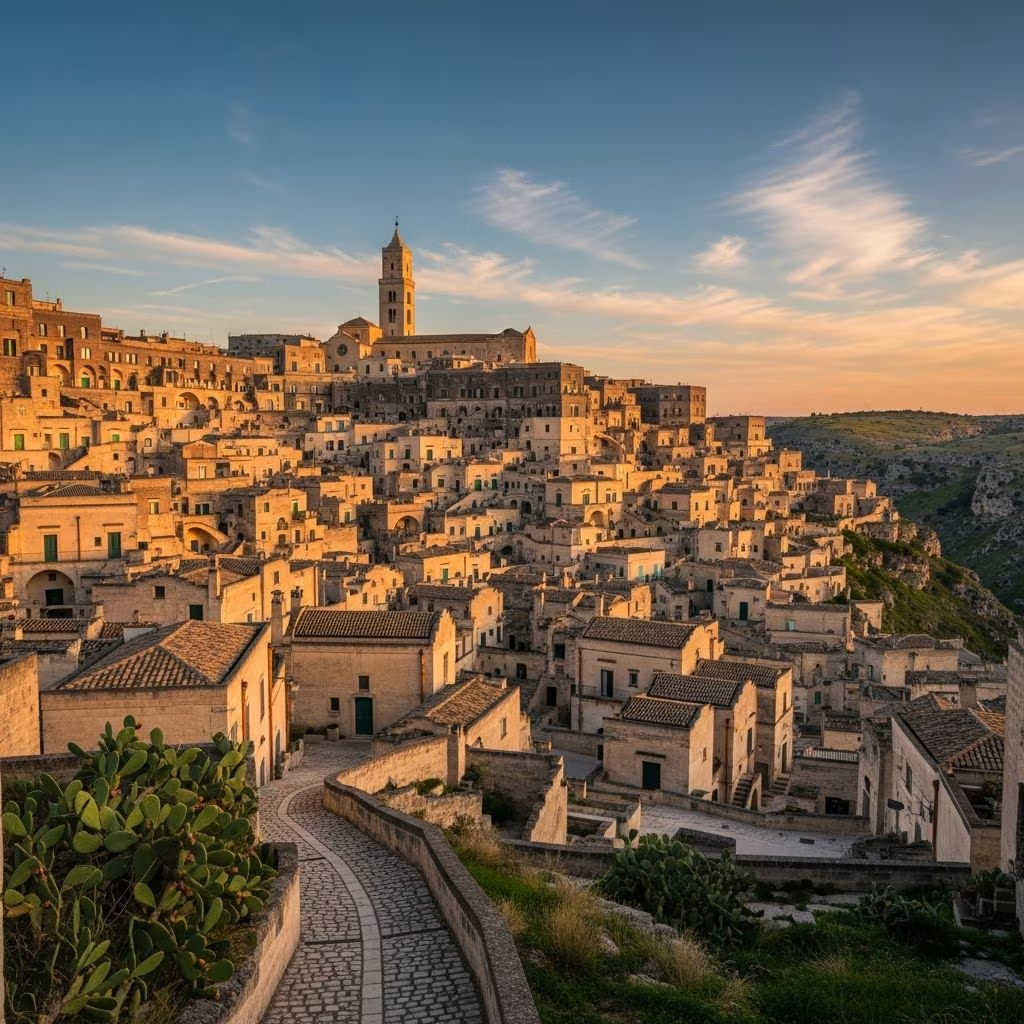
Perched dramatically on the edge of a ravine in the Basilicata region of Southern Italy, Matera represents one of Europe’s most extraordinary historical settlements. The city’s distinctive architecture, characterized by ancient dwellings carved directly into limestone cliffs, creates an otherworldly landscape that seems suspended between past and present. Once considered an embarrassment due to severe poverty and living conditions, Matera has undergone a remarkable transformation over the past four decades, evolving into one of Italy’s most compelling destinations for travelers seeking authenticity and historical depth.
Matera’s dramatic setting and cultural importance stem from its extraordinary geological features and millennia of human habitation. The city overlooks the Gravina River ravine, creating natural fortifications that made it an ideal settlement location since prehistoric times. Archaeological evidence suggests continuous habitation dating back to the Paleolithic era, making these cave dwellings among the oldest known human settlements in Europe.
The designation as a UNESCO World Heritage Site in 1994 acknowledged not only the architectural uniqueness of the Sassi districts but also their representation of a living continuum of human settlement spanning thousands of years. What makes Matera particularly significant is how it preserves the evolutionary progression of human habitation, from simple cave shelters to sophisticated domestic architecture, all within a remarkably compact urban area.
The city’s two primary districts—Sasso Barisano and Sasso Caveoso—each developed distinct characteristics. Sasso Barisano, positioned on the northern slope, features homes with entrances facing northward, while Sasso Caveoso on the southern slope presents homes oriented differently to maximize sun exposure. This sophisticated adaptation to geography and climate demonstrates the practical ingenuity of Matera’s inhabitants across centuries.
The term “Sassi” derives from the Italian word for stone, appropriately describing these districts composed entirely of carved rock architecture. Unlike traditional buildings constructed from exterior materials, Sassi dwellings integrate seamlessly with the landscape, carved from and into the natural stone formation itself. This construction method provided natural insulation, maintaining comfortable temperatures year-round and creating efficient living spaces.
The architectural evolution within the Sassi reveals changing construction techniques and social organization:
Many houses feature interconnected rooms extending deep into the hillside, with staircases leading to upper stories built atop earlier structures. Roofless connections between buildings create naturally occurring alleyways and passages, producing the characteristic warren-like street layout that both challenges and enchants visitors.
Beneath Matera’s surface lies a sophisticated hydraulic engineering achievement that sustained the city through centuries of variable rainfall. The Palombaro Lungo, dating to the sixteenth century, represents the largest of several underground cisterns constructed throughout the city. This enormous manmade cavern, excavated to collect and store rainwater, functioned as the municipal water supply system before modern utilities were introduced.
The cistern’s complex network of collection points, filtration systems, and distribution channels demonstrates remarkable engineering knowledge for its era. Visitors descending into this underground space encounter the architectural achievement firsthand—massive carved chambers designed to maximize water storage capacity while maintaining structural stability in the surrounding limestone formations.
Alongside Palombaro Lungo, numerous smaller cisterns throughout the Sassi districts show how water management shaped Matera’s development patterns. Communities organized settlement locations around available water sources, creating the organic urban layout that survives today.
The rupestrian churches scattered throughout Matera’s districts represent exceptional examples of religious architecture adapted to the local geological environment. These structures, carved from solid rock rather than constructed from building materials, combine the practical constraints of stone excavation with sophisticated theological symbolism.
Notable ecclesiastical sites include:
The artistic components of these churches, including frescoes, sculptural details, and architectural ornamentation, reflect multiple historical periods from Byzantine through Renaissance eras. The preservation of these artistic elements provides valuable evidence about religious practices, artistic conventions, and cultural continuity across centuries.
The most authentic Matera experience involves purposeful wandering through the intricate street network. Unlike modern urban planning organized around grid systems, Matera’s alleyways follow natural topography and historical development patterns. Narrow passages widen unexpectedly into small piazzas, dead-end staircases lead to viewpoints, and what appears as a wall often opens into a passageway.
This organic layout presents both navigational challenges and discovery opportunities. Travelers frequently find themselves retracing steps or discovering alternative routes between familiar locations. Rather than frustrating limitations, these “discoveries” constitute the primary attraction for many visitors. The physical movement through the Sassi—climbing irregular stone steps, ducking through low-ceilinged passages, emerging onto sudden panoramic vistas—creates an embodied connection to historical inhabitants’ daily experiences.
Comfortable footwear with secure grip proves essential, as the ancient stone surfaces, uneven after centuries of foot traffic and weathering, present legitimate hazards. The cumulative elevation changes, though not extreme individually, combine to substantial vertical movement throughout a day of exploration.
Several strategically positioned belvederes (viewing terraces) offer comprehensive perspectives of Matera’s landscape. These viewpoints serve multiple functions: they provide orientation for first-time visitors, offer photography opportunities, and create natural gathering spaces where locals and visitors congregate, particularly during evening hours.
Key observation points include:
| Belvedere Name | Location | Primary Views | Best Time to Visit |
|---|---|---|---|
| Luigi Guerricchio (Three Arches) | Near Piazza Vittorio Veneto | Panoramic Sassi overview, cathedral | Morning light |
| Piazza Giovanni Pascoli | Upper town area | Opposing ravine slope views | Afternoon |
| Madonna de Idris | Elevated church position | Both Sassi districts, ravine | Golden hour |
| San Pietro Caveoso Area | Southern Sasso district | Ravine interior, church details | Late afternoon |
The optimal viewing experience combines multiple vantage points at different times of day, as changing light conditions reveal new details and perspectives. Early morning light casts long shadows, accentuating the three-dimensional character of the carved architecture. Late afternoon golden light transforms the honey-colored stone into luminous gold, creating particularly photogenic conditions.
Matera’s cuisine reflects regional Southern Italian traditions adapted to local available resources. Historical dietary limitations created a distinctive culinary identity that contemporary restaurants both preserve and reinterpret.
Traditional local specialties include:
The dining experience in Matera often involves unique settings—many restaurants operate from cave dwellings, preserving the interior carved stone architecture while providing modern service and cuisine. This combination of historical authenticity and contemporary hospitality creates memorable meals that transcend purely gustatory dimensions.
Staying within the Sassi districts offers immersive historical experiences unavailable in conventional hotels. Cave dwellings converted into accommodations range from simple guesthouses to luxury boutique properties. Most retain original architectural features—vaulted ceilings, natural stone walls, interconnected rooms—while adding modern amenities including heating, electricity, and private bathrooms.
Accommodation styles vary significantly:
The experience of waking within a centuries-old carved chamber, observing morning light filtering through small windows positioned within thick stone walls, fundamentally alters how visitors understand Matera’s historical significance. This embodied historical experience extends beyond tourist documentation into genuine cultural engagement.
While the Sassi districts command primary attention, surrounding areas offer additional historical and natural attractions. The Parco della Murgina Materana contains an extensive collection of prehistoric caves carved into hillsides, representing habitation periods predating the developed Sassi architecture. These sites provide archaeological context for understanding settlement progression across millennia.
The modern town center, developed during urban expansion in the twentieth century, offers contemporary services and cultural venues including museums, galleries, and municipal facilities. Palazzo Lanfranchi houses collections of medieval and modern art, while the Museo Nazionale di Matera provides archaeological artifacts and historical documentation illuminating regional development.
The surrounding Basilicata countryside, featuring dramatic limestone formations and traditional agricultural landscapes, provides environmental context for understanding how geography shaped Matera’s historical development and contemporary character.
Planning a Matera visit requires attention to several practical factors distinct from typical urban tourism:
Matera’s evening culture reflects broader Italian social patterns adapted to local conditions. The “passeggiata”—leisurely evening stroll—constitutes important social ritual, particularly during warm months. Residents and visitors circulate through Piazza Vittorio Veneto and primary streets during early evening, greeting acquaintances and absorbing urban atmosphere.
Aperitivo hour, commencing around 18:00-19:00, draws crowds to terrace bars positioned at strategic viewpoints. These venues serve drinks with complementary snacks while providing social gathering spaces. The practice combines relaxation, social engagement, and appreciation for landscape views illuminated by late-day light.
Matera represents far more than a picturesque Italian destination. This ancient city embodies human resilience, architectural innovation, and cultural continuity across epochs. The physical navigation of its carved districts, observation of preserved religious art, consumption of traditional foods, and social participation in evening customs create comprehensive engagement with both historical narrative and contemporary community. Such multifaceted experiences distinguish Matera from more conventional heritage sites, generating the transformative cultural encounters that inspire travelers to reconsider their relationship with history, place, and human adaptation to environmental constraints.
