

 Travel Essentials
 Travel Essentials

Explore Tucson's world-famous cacti, from towering saguaros in national parks to specialized gardens and rare mutations, perfect for hikers and nature lovers.
 Travel Essentials
Tucson stands as a gateway to the Sonoran Desert’s most striking natural features: its extraordinary cacti. These resilient plants, particularly the towering saguaros, shape the region’s identity and attract visitors year-round for hiking, photography, and botanical exploration.
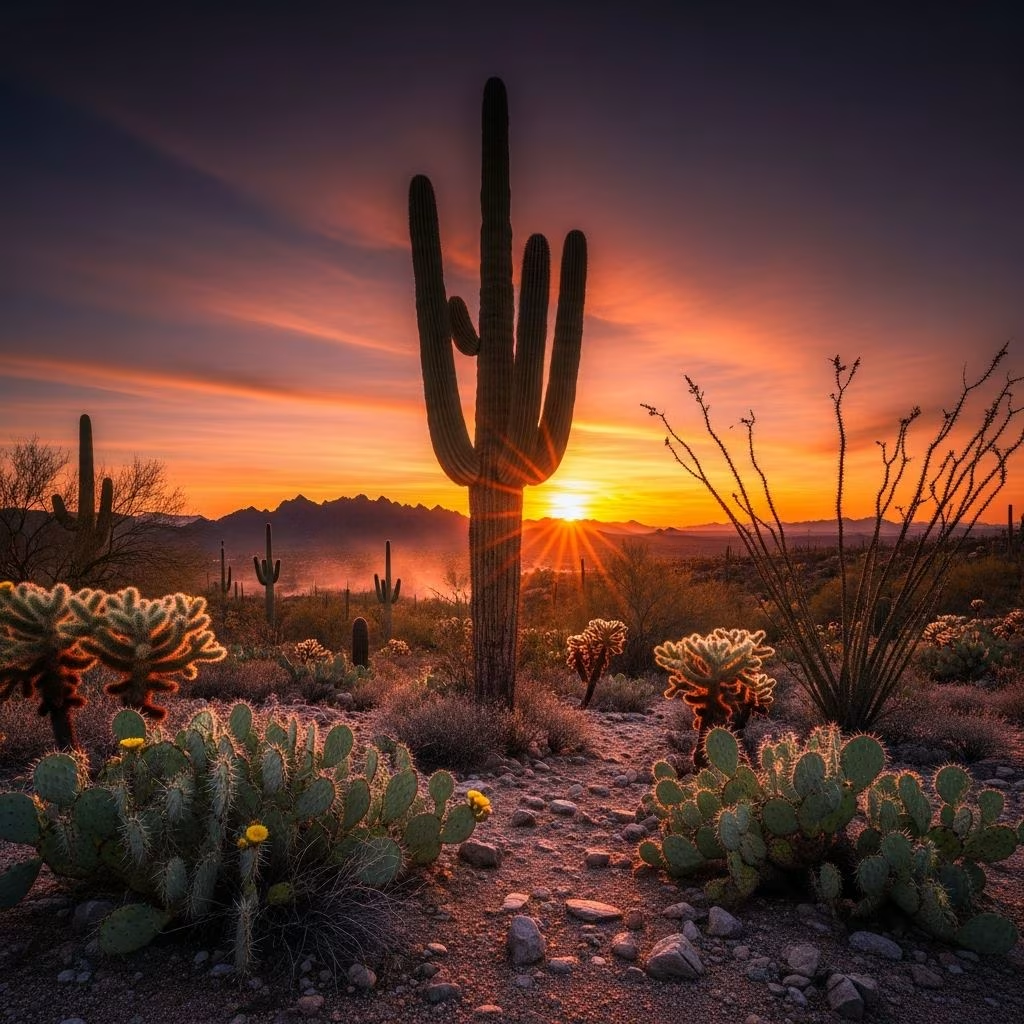
The saguaro (*Carnegiea gigantea*) dominates Tucson’s skyline, reaching heights of up to 50 feet and living over 200 years. These green giants thrive in the Sonoran Desert, storing water in their ribbed arms to survive prolonged droughts. Young saguaros start as small cylinders, slowly developing arms after 50-70 years, with full maturity taking a century.
Saguaros play vital ecological roles, providing nesting sites for over 150 bird species and shelter for mammals. Their white springtime blooms give way to red fruit harvested traditionally by Native American communities. In Tucson, these cacti are more than scenery—they’re living history.
Saguaro National Park, split into East and West districts around Tucson, offers unparalleled access to dense saguaro forests. Often ranked among America’s top national parks, it features trails winding through cactus-studded hills. The West District boasts the densest stands, while the East offers rugged drives like the Cactus Forest Loop.
Popular hikes include the Valley View Overlook Trail (0.8 miles, moderate) for panoramic vistas and the Hugh Norris Trail (9.7 miles, strenuous) through bajada landscapes. Sunset views here paint the cacti in vibrant hues, earning descriptions of ‘clementine sunsets.’ Visit in winter or shoulder seasons to dodge summer heat exceeding 100°F.
Among Tucson’s saguaros, crested or cristate forms captivate with fan-like crowns, occurring in roughly 1 in 10,000 plants. This anomaly, termed *cristate*, arises from genetic mutations, lightning strikes, or frost damage, causing terminal buds to split and grow horizontally.
The Crested Saguaro Society documents these rarities across the Sonoran Desert, with Tucson hosting several icons like the ‘Crowned Cactus.’ Spot them along roadsides or in parks—their sculptural shapes resemble alien krakens or abstract art.
| Crested Saguaro Features | Description |
|---|---|
| Occurrence Rate | 1 in 10,000 saguaros |
| Causes | Genetic mutation, physical damage |
| Notable Examples | Crowned Cactus in Tucson |
| Documentation Group | Crested Saguaro Society |
Tucson’s botanical legacy shines in dedicated gardens like the Haag Cactus Garden at the Arizona-Sonora Desert Museum. Opened in 1965, it honors ‘Cactus’ John Haag, founder of the Tucson Cactus & Succulent Society, showcasing 138 species including rare endemics from his personal collection.
These gardens educate on Sonoran Desert succulents, highlighting conservation of endangered varieties. Visitors learn propagation techniques and adaptations like spines for shade and water storage. Tucson’s dry climate suits these displays, blending education with aesthetic appeal.
Other spots include the Tucson Botanical Gardens, featuring xeriscape designs with cacti accents. Local enthusiasts, like the late Dan Bach—dubbed Tucson’s ‘Cactus Godfather’—advanced succulent cultivation until his passing in 2025.
Incorporate Tucson’s cacti into home landscapes for low-water beauty. Barrel cacti (*Ferocactus wislizeni*) offer golden spines and magenta blooms; golden torch (*Echinocereus* spp.) adds vertical drama. Pair spiky forms with softer textures like red yucca or desert marigold for contrast.
Xeriscaping saves water while creating year-round interest. Plants like penstemon provide purple hues against gravel, attracting pollinators.
Tucson pairs cacti hikes with dude ranches, mountain biking, and stargazing. Tanque Verde Ranch offers horseback rides amid saguaros. Catalina State Park blends biking trails with saguaro views.
Birders flock for saguaro-nesting species; personal stories highlight emotional bonds with these sentinels. Mount Lemmon’s ascent from desert to pine forests showcases cacti transitions.
Tucson is 10°F cooler than Phoenix, ideal October-April. Summer monsoons bring wildflower bursts around cacti. Pack water, sun protection; stick to trails to protect fragile soils.
May-June, with white flowers opening at night.
Yes, as rarities; observe without disturbing.
Yes, but they need full sun, minimal water, and take decades to mature.
Up to 200 years, growing slowly.
Entrance fees apply; America the Beautiful Pass covers entry.
