

 Travel Essentials
 Travel Essentials

Explore Diwali's rich traditions, from lighting diyas and creating rangoli to feasting and fireworks, symbolizing good over evil across India and beyond.
 Travel Essentials
The Festival of Lights, known as Diwali or Deepavali, transforms India into a sea of shimmering flames and vibrant colors each autumn, drawing over a billion participants into a joyous ritual of renewal and hope. This ancient celebration, rooted in Hindu mythology yet embraced across faiths, signifies the eternal victory of righteousness over malevolence, illumination over obscurity, and wisdom over ignorance.
Diwali’s origins trace back millennia, intertwined with epic tales from Hindu scriptures like the Ramayana. Central to many observances is the homecoming of Lord Rama, an incarnation of Vishnu, who returned to Ayodhya after 14 years of exile, having vanquished the demon king Ravana and rescued his wife Sita. Citizens lit countless oil lamps to guide his path through the night, a tradition echoed in today’s widespread illumination.
In other narratives, devotees honor Goddess Lakshmi, the deity of wealth and prosperity, believing she roams the earth on Diwali night to bless tidy homes with fortune. Jains commemorate Lord Mahavira’s attainment of nirvana, while Sikhs recall Guru Hargobind’s release from imprisonment alongside 52 princes. These diverse stories underscore Diwali’s unifying theme: the ascendancy of light and goodness.
The etymology of ‘Diwali’ derives from Sanskrit ‘deepavali,’ meaning ‘row of lights,’ perfectly capturing the festival’s visual essence—endless lines of clay diyas (lamps) flickering against the new moon sky.
Diwali spans five consecutive days, each with distinct customs that build anticipation and communal spirit. Families prepare weeks in advance, scrubbing homes to symbolize purification and inviting positivity.
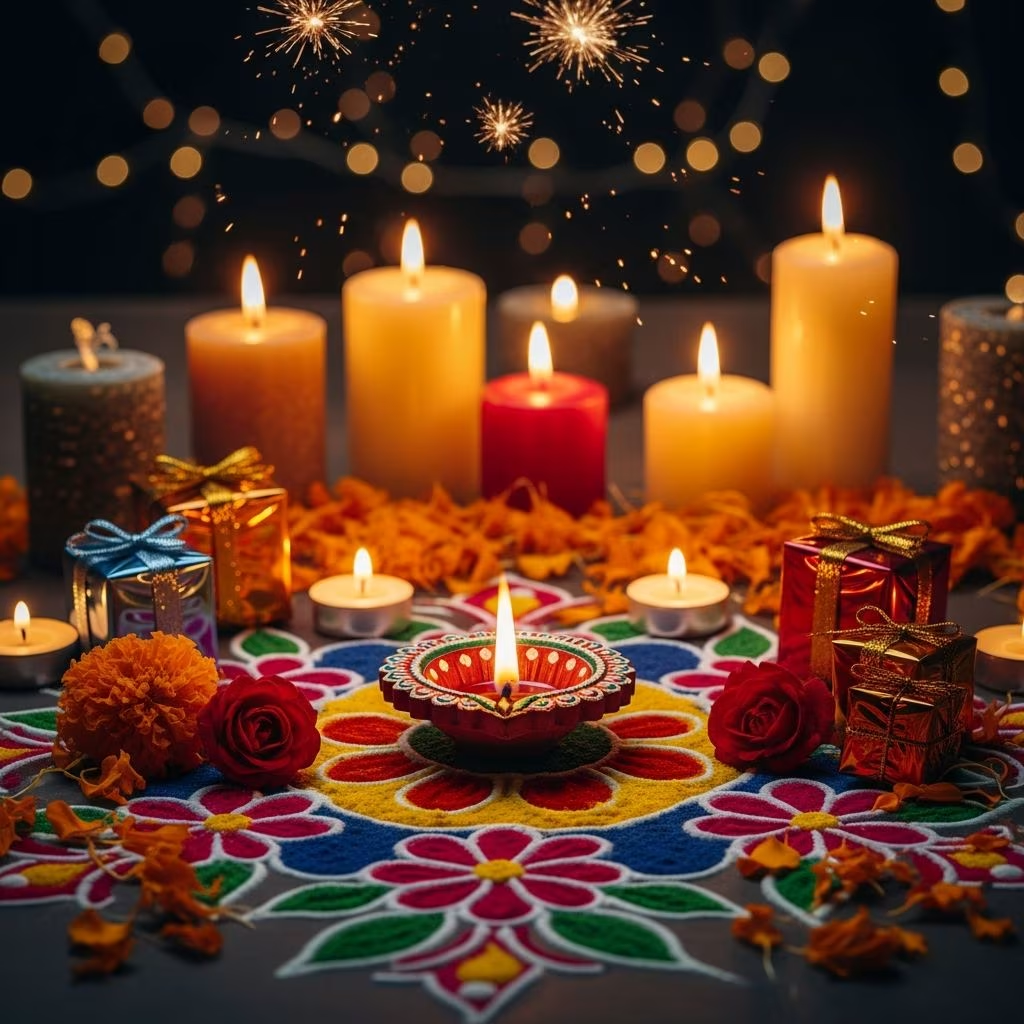
Visual artistry defines Diwali. Rangoli, intricate floor patterns crafted from colored powders, rice, or petals, grace entrances to welcome prosperity and ward off misfortune. Designs range from geometric motifs to floral mandalas, often incorporating Lakshmi’s footprints.
Diyas, small earthen lamps filled with ghee or oil and a cotton wick, are lit en masse—sometimes thousands per household—casting a golden aura. Sweet mithai like laddoos, barfis, and jalebi symbolize shared joy, exchanged alongside dry fruits and clothes.
Fireworks, though increasingly regulated for environmental reasons, remain a highlight, their bursts mimicking celestial battles between good and evil. Puja ceremonies invoke deities with incense, bells, and offerings, culminating in communal feasts of puri, sabzi, and kheer.
Diwali adapts vibrantly by region, reflecting local lore and cuisine. In Gujarat, best garba dances accompany goddess worship, with undhiyu stew and mathri snacks dominating tables. Bengal’s Kali Puja overlaps, featuring grand idol processions and fish curries.
South India’s Karnataka sees Yama Deepam, lighting lamps for Yama, while Tamil Nadu’s Marundhu Uzhavar Thirunaal emphasizes medicinal feasts. Rajasthan’s Jaipur dazzles from Nahargarh Fort, overlooking lit bazaars and Man Sagar Lake’s reflections. Northeastern states blend tribal customs, and Punjab’s Bandi Chhor Divas merges with Sikh commemorations.
| Region | Unique Custom | Signature Dish |
|---|---|---|
| Gujarat | Garba dances | Undhiyu |
| Bengal | Kali Puja | Bhapa Ilish (steamed hilsa) |
| Rajasthan | Fort viewpoints | Ghevar sweets |
| Tamil Nadu | Medicinal feast | Sweet pongal |
| Punjab | Bandi Chhor Divas | Kaddu ki sabzi |
Urban India pulses with mega events: Mumbai’s Marine Drive twinkles, Delhi’s markets overflow, and Hyderabad’s potters craft diyas industrially. Eco-conscious shifts promote LED lights and ‘green crackers’ to curb pollution.
Diaspora communities worldwide amplify Diwali’s glow. London’s Trafalgar Square hosts mela with rangoli contests; New York’s Times Square features Bollywood stars; Toronto’s streets light up with fireworks. In 2026, expect October 20 festivities per lunar calendar alignments.
Travelers should book ahead for peak season. Respect customs: remove shoes indoors, partake modestly in feasts, avoid single women during certain pujas. Safety first—fireworks are professional in public; pollution peaks, so asthmatics prepare. Shop ethically: support artisan diyas over plastic. Best spots: Varanasi’s ghats, Mumba’s Girgaon chowpatty, Goa’s beaches.
Diwali falls on the new moon of Kartik (October-November), varying yearly. In 2026, it’s October 20.
It represents light conquering darkness, good triumphing evil, and knowledge prevailing over ignorance.
Primarily Hindu, but Jains, Sikhs, and some Buddhists observe variations.
Cleaning symbolizes removing negativity, inviting Lakshmi’s blessings.
Traditional but increasingly eco-friendly; many opt for lamps and rangoli.
Yes! Homestays offer puja invitations; public events are inclusive.
Modern revelers prioritize environment: use natural dyes for rangoli, donate sweets to charities, choose noise-pollution crackers. Governments promote ‘Diwali Mela’ fairs for sustainable crafts, preserving traditions amid climate concerns.
Diwali’s enduring allure lies in its message of hope, uniting generations and cultures in luminous harmony.
