

 Travel Essentials
 Travel Essentials

Learn why Niagara Falls appears to freeze in winter, the science behind ice formations, and how to experience this rare natural phenomenon.
 Travel Essentials
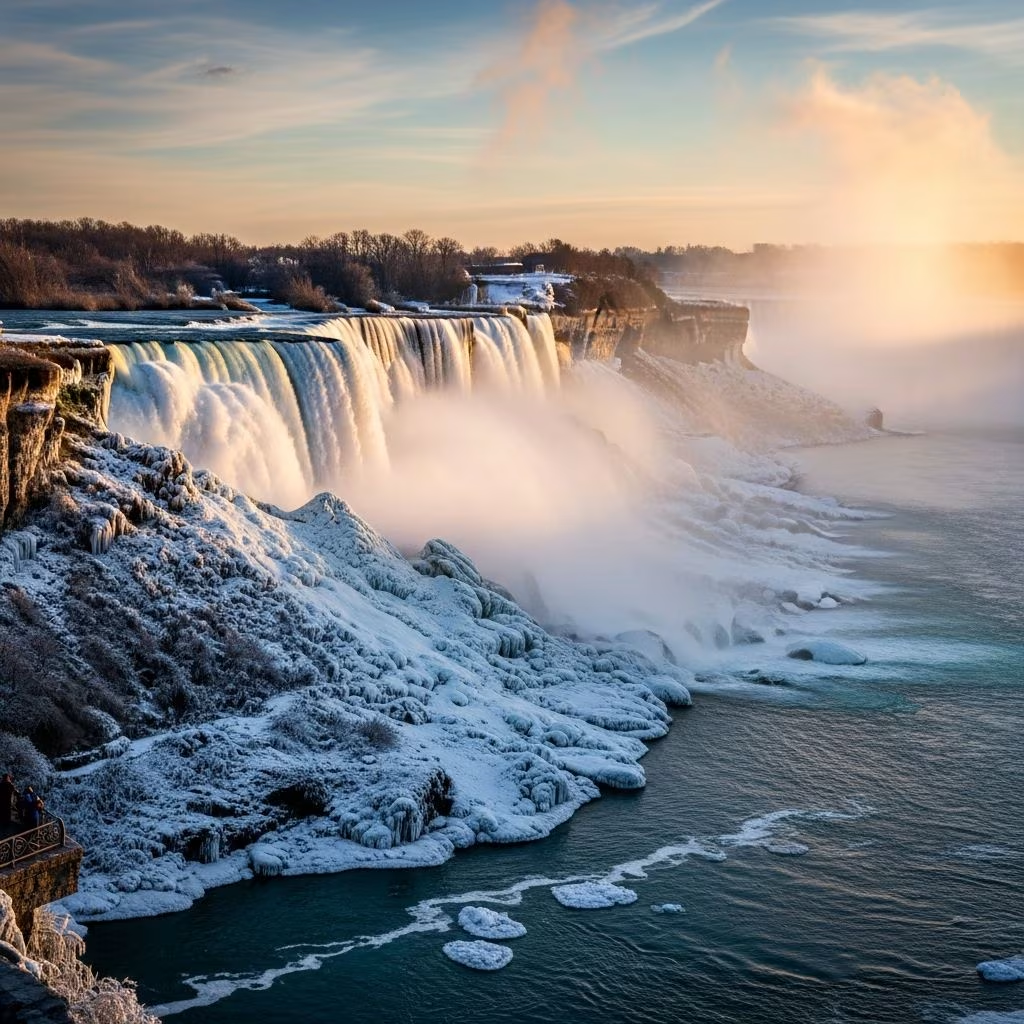
When temperatures plummet across the Niagara region during winter months, one of North America’s most iconic natural landmarks undergoes a breathtaking metamorphosis. The mighty cascade that continues flowing year-round takes on an appearance that seems almost impossible—a partially frozen wonderland of ice formations, crystalline structures, and frosted landscapes. Despite common misconceptions, Niagara Falls does not completely freeze solid, yet the winter spectacle it creates remains one of the most visually stunning seasonal displays in the natural world.
The transformation of Niagara Falls into what appears to be a frozen landscape involves complex physical processes. The falls do not actually freeze in the traditional sense where the entire water column solidifies. Instead, a combination of meteorological and hydrological factors creates an optical illusion of stillness while water continues its relentless journey downward.
At the core of this phenomenon lies a fundamental principle of physics: moving water resists freezing. The Great Lakes feed an enormous volume of water through the Niagara River—approximately 3,000 tons every single second during winter months. This tremendous flow carries significant kinetic energy that actively disrupts ice formation within the descending column. The speed and force of the water prevent the formation of stable ice throughout the main cascade, even when ambient temperatures drop far below freezing.
The visible ice formations that captivate winter visitors occur through a different mechanism than the main waterfall’s flow. As water transitions from liquid to mist and spray, these suspended droplets encounter brutally cold air temperatures. Upon contact with exposed surfaces and the frigid atmosphere, the droplets freeze instantly, accumulating in layers to create intricate ice structures.
This process builds ice formations in several distinct ways:
These ice formations can develop with remarkable speed when conditions align perfectly. The crystalline structures created by this process transform the landscape into something resembling a frozen fantasy, with ice crystals that sparkle brilliantly under winter sunlight.
During particularly harsh winters, a remarkable phenomenon called the ice bridge occasionally forms below the falls. This occurs when specific atmospheric and hydrological conditions converge. Typically happening in January during the transition from a mild spell to strong southwest winds, ice breaks loose from upstream sources and travels down the Niagara River, cascading over the falls.
The water that goes over the falls carries this ice downward with tremendous force. Below the falls, the ice is forced upward by the churning water and currents, where it refreezes into an enormous consolidated mass. This ice bridge can build to extraordinary heights—sometimes reaching up to 10 stories tall—creating what appears to be a glacier at the base of the cascade.
While a complete freeze of Niagara Falls seems nearly impossible under modern conditions, historical records document one extraordinary event that challenged this assumption. On March 29, 1848, the falls experienced an almost complete cessation of flow—a dramatic silence that lasted approximately 30 hours.
This unprecedented event resulted from a massive ice jam that formed at the eastern end of Lake Erie, the source of the Niagara River. High winds and frigid temperatures set the ice fields of Lake Erie in motion, and millions of tons of ice became lodged at the river’s source, completely blocking the channel. This natural blockage reduced water flow over the falls to a near standstill, creating a moment in geological history that seemed almost impossible to imagine.
Modern infrastructure and regulated water management systems make such an event highly unlikely to recur, as dams and channels help prevent ice from accumulating in ways that could completely obstruct flow.
An important factor influencing the winter appearance of Niagara Falls involves human water management. During winter months, approximately 75% of water flowing from Lake Erie along the Niagara River is diverted roughly one kilometer before the falls. This water travels through tunnels and canals for hydroelectric power generation purposes before being returned to the lower Niagara River downstream.
This diversion significantly reduces the volume visible cascading over the falls during winter. The winter flow—approximately 85 million liters per minute—represents substantially less water than the summer flow of 170 million liters per minute (when only 50% is diverted). Despite this reduction, the volume remains enormous, and the kinetic energy sufficient to prevent complete freezing.
Successfully viewing the frozen falls phenomenon requires understanding the specific meteorological conditions necessary for ice formation. Visitors planning winter trips should monitor several key factors:
| Condition | Impact on Ice Formation | Ideal Range |
|---|---|---|
| Air Temperature | Determines mist and spray freezing rate | Below 0°F (-18°C) or colder |
| Wind Speed | Affects ice accumulation and bridge formation | Moderate to strong southwest winds |
| Duration of Cold | Allows ice buildup to substantial heights | Multiple consecutive weeks below freezing |
| Humidity Levels | Influences mist production and freezing | High atmospheric moisture |
The frozen falls phenomenon offers photographers and visual enthusiasts extraordinary opportunities to capture scenes that appear more fantastical than realistic. The crystalline ice formations backlit by winter sunlight create ethereal landscapes that have captivated observers for generations.
Optimal photography occurs during clear winter days when sunlight directly illuminates the ice structures. The contrast between the white ice formations, dark water, and surrounding landscape creates striking compositional elements. Early morning hours often provide the most dramatic lighting angles for capturing the spectacle.
For travelers seeking to witness this rare natural display, timing and location selection prove crucial. The falls straddle the US-Canada border, offering multiple vantage points from both Niagara Falls, Ontario and Niagara Falls, New York.
Key considerations for planning include:
The frozen falls phenomenon represents more than merely an aesthetic display—it demonstrates fundamental principles of physics, hydrology, and atmospheric science in action. The refusal of moving water to freeze, combined with the rapid crystallization of suspended moisture, creates a natural demonstration of thermodynamics that fascinates scientists and casual observers alike.
The phenomenon attracts global attention whenever substantial ice formations develop, drawing photographers, nature enthusiasts, and curious travelers from around the world. Recent years have seen increasing tourism interest in experiencing this winter spectacle, particularly as social media amplifies images of the transformed landscape.
While Niagara Falls enters winter every year, the formation of visually dramatic ice structures does not occur with consistent regularity. Significant ice bridges and formations require specific combinations of sustained cold temperatures, appropriate wind patterns, and sufficient moisture in the atmosphere.
In some years, ice formations remain relatively minimal, while other winters produce spectacular displays that dominate news coverage and attract unprecedented numbers of visitors. This variability adds to the allure of the frozen falls—the unpredictability itself makes witnessing substantial formations feel like encountering something genuinely rare and remarkable.
The winter transformation of Niagara Falls into a frozen spectacle represents one of nature’s most compelling seasonal displays. Though the falls do not completely freeze, the combination of ice formations, crystalline structures, and frosted landscapes creates a visual experience that rivals any man-made wonder. Understanding the science behind this phenomenon—the physics of flowing water, atmospheric freezing, and ice accumulation—enhances appreciation for the natural processes at work.
For those fortunate enough to witness this rare winter expression of Niagara Falls, the experience typically remains unforgettable. The transformation serves as a reminder of the dynamic and ever-changing nature of this renowned natural landmark, shaped continuously by the interaction of water, ice, wind, and temperature.
