

 Travel Essentials
 Travel Essentials

Explore DR's ambitious plan for dry ports along Haiti border, complementing the physical wall to formalize trade and development while addressing migration and security challenges.
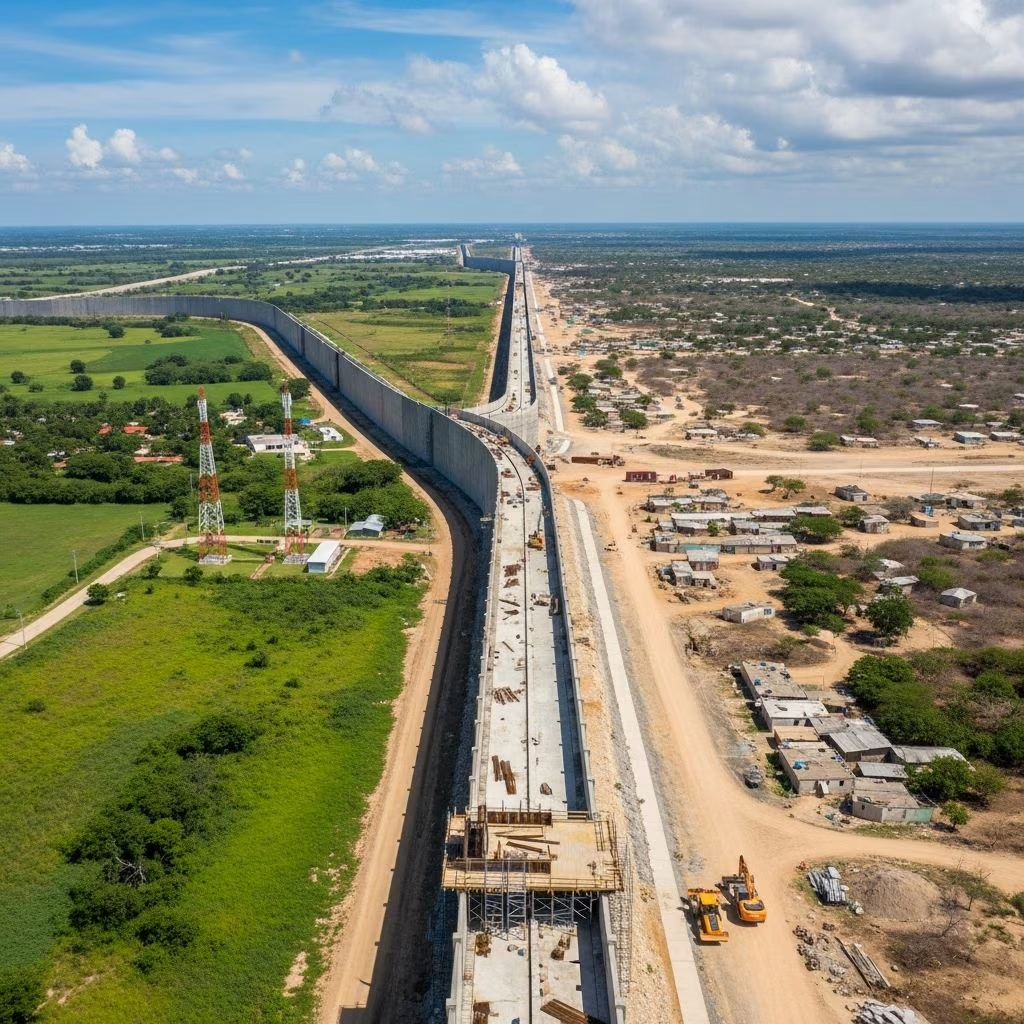 Travel Essentials
The Dominican Republic is advancing a major infrastructure project along its shared border with Haiti, shifting focus from physical barriers to economic development. Announced by President Luis Abinader, this initiative involves over $300 million in private investment for a network of dry ports operating under free trade zones, designed to formalize commerce, create jobs, and dismantle smuggling operations.
The 391-kilometer border between the Dominican Republic and Haiti, formalized by the 1929 Dominican-Haitian treaty, spans from the Caribbean Sea to the Atlantic Ocean, starting at Boca del Río Dajabón. This boundary has long been a hotspot for irregular migration, informal trade, and security concerns, exacerbated by Haiti’s ongoing crises including gang violence and food insecurity.
Haiti’s rural population faces severe challenges, with over 2.5 million people earning about $1.25 daily and relying on imports for more than 80% of their food, much from the Dominican Republic. Recent years have seen heightened tensions, including border closures in 2023 over a disputed canal on the Massacre River (Dajabón River), which Haiti built for irrigation but the DR viewed as a treaty violation.
Complementing the existing $32 million concrete border wall—164 km long, 3.9 meters high, equipped with sensors, cameras, and watchtowers—the new plan emphasizes economic measures. Construction on the wall began in 2023 to curb illegal migration, drug trafficking, and gang spillover, though critics argue it may foster bribery or escalate conflicts.
President Abinader, in his February 27, 2026, address marking the 182nd Independence anniversary, dubbed the dry ports “the most important logistics project ever conceived” for the region. These inland facilities will centralize customs, mirroring successful models at the US-Mexico border, to organize trade and foster stability through opportunity rather than surveillance alone.
This network aims to channel Haiti-Dominican trade formally, addressing the $ billions lost annually to smuggling while supporting Haitian farmers through regulated markets.
The project’s core aim is sovereignty via competitiveness: revitalizing provinces, facilitating legal trade, and ending smuggling networks. By formalizing exchanges at binational markets like Dajabón-Ouanaminthe, it seeks to mitigate Haiti’s food import dependency and DR’s security risks.
| Aspect | Current Challenges | Projected Benefits |
|---|---|---|
| Trade | Informal smuggling dominates | Formal channels via dry ports |
| Economy | Border poverty, job scarcity | Revitalization, 1000s of jobs |
| Security | Migration, gangs, drugs | Controlled borders, stability |
| Migration | Deportations (e.g., 100k+ in 2023) | Reduced pressure through prosperity |
International precedents, such as Mexico’s dry ports, demonstrate how such hubs centralize control and spur growth, potentially turning the DR-Haiti frontier into a development corridor.
Relations remain strained post-2023 border closures, when DR halted visas and deported ~22,000 Haitians monthly amid the canal dispute, leading to over 100,000 returns and worsening Haiti’s humanitarian crisis—gang violence, cholera, and food insecurity. Haitian protests at crossings like Ouanaminthe highlighted frustrations, with mediation efforts by bodies like CARICOM stalling.
The economic wall positions DR as proactive, offering Haiti structured trade access without unchecked migration. However, success hinges on cooperation, as unilateral wall patrols have sparked sovereignty claims from Haiti.
Border towns like Dajabón thrive on biweekly markets but suffer volatility; dry ports promise steady income. For Haitians, formalized trade could stabilize food prices, countering 22% spikes seen in 2017 amid production drops.
Challenges persist: environmental concerns from infrastructure, potential Haitian resistance, and ensuring benefits reach locals. Yet, with majority DR public support for security measures, the project advances amid cautious optimism.
Border crossings may see streamlined processes at modernized points, benefiting tourists exploring Hispaniola’s dual cultures. Expect enhanced security checks but improved trade facilitating local markets. Travelers should monitor updates via official advisories, as closures like 2023’s can disrupt plans.
A $300M+ network of dry ports to formalize DR-Haiti trade and boost border economies.
The concrete wall ($32M) focuses on security; dry ports emphasize development and anti-smuggling.
Aims to reduce irregular flows by creating jobs and legal trade pathways.
2023 canal dispute on Massacre River, leading to closures and deportations.
Announced February 2026; private investments mobilizing.
This initiative marks a pivotal evolution in DR-Haiti dynamics, blending security with prosperity to redefine a contentious border as an engine of growth.
