

 Travel Essentials
 Travel Essentials

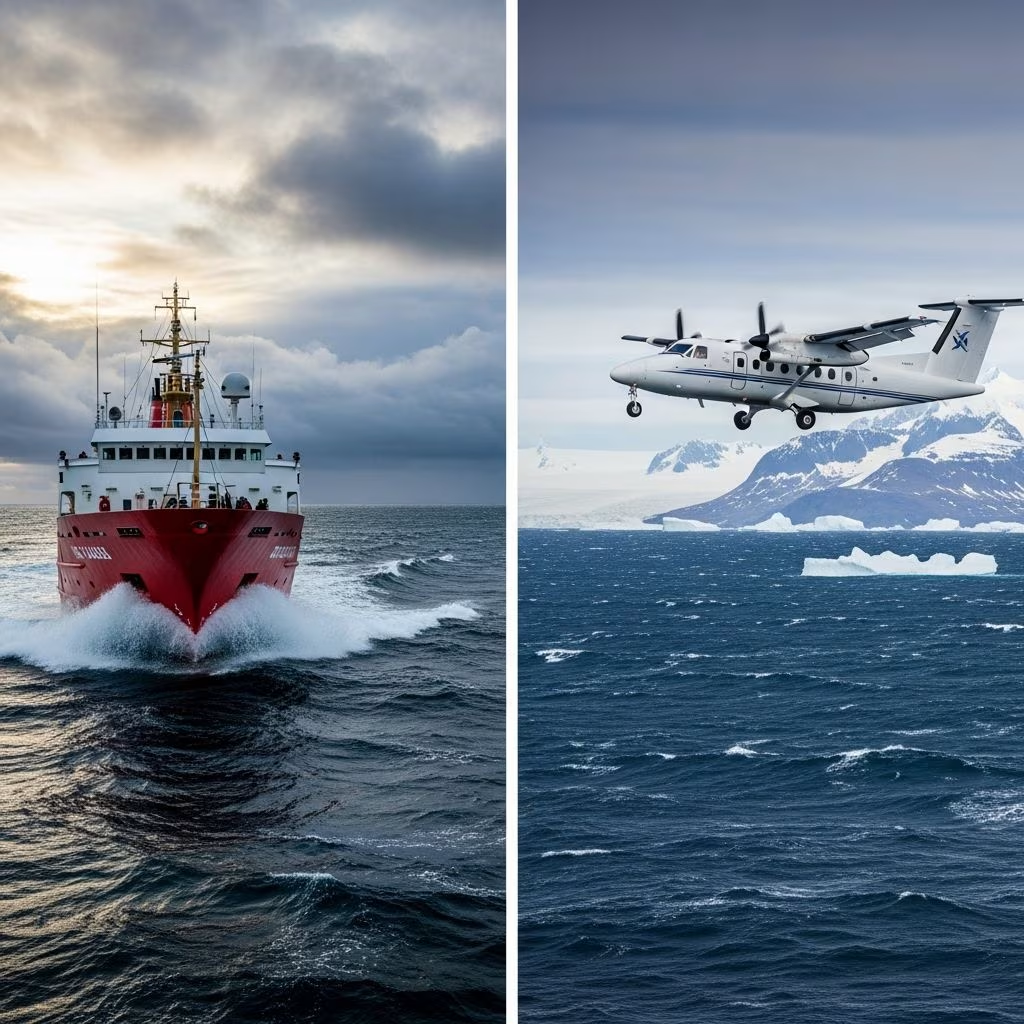
Explore options for crossing the Drake Passage to Antarctica: traditional ship voyages with their thrills and challenges, or fly-cruise trips that skip the rough seas. Compare costs, durations, pros, and cons.
 Travel Essentials
The Drake Passage stands as one of the planet’s most formidable ocean gateways, separating South America’s southern tip from the Antarctic Peninsula. This 600-mile stretch of water is renowned for its unpredictable conditions, drawing adventurers who seek the raw thrill of polar exploration while offering modern alternatives for those prioritizing efficiency. Travelers today face a pivotal choice: endure the multi-day ship crossing for an authentic experience or opt for a swift flight to bypass the notorious waves.
Named after the 16th-century English explorer Sir Francis Drake, this passage connects the Atlantic and Pacific Oceans through the stormy Southern Ocean. Strong westerly winds, known as the Roaring Forties and Furious Fifties, converge here, generating massive waves that can reach 25 to 35 feet during peak conditions—a phenomenon dubbed the “Drake Shake.” Yet, the passage isn’t always turbulent; calm periods, called the “Drake Lake,” allow for serene crossings with mirror-like seas.
These extremes make the Drake a rite of passage for many Antarctica-bound explorers. Ships typically take two days each way from Ushuaia, Argentina, to reach the peninsula, providing time for lectures, wildlife spotting, and acclimation. The variability adds excitement but also risk, particularly for those susceptible to motion sickness.
Sailing the Drake remains the classic route, favored by most Antarctic expeditions. Departing from Ushuaia, vessels navigate the passage southward, arriving at the peninsula after about 48 hours. This method immerses passengers in history, mirroring the journeys of Shackleton and Scott.
Modern expedition ships, ranging from 100 to 200 passengers, enhance comfort with stabilizers, lecture programs, and medical support. Larger ships offer superior stability in rough seas, reducing motion impact, though they may limit landing flexibility due to IAATO regulations capping 100 ashore at once. Smaller vessels provide agility for more sites but can feel the waves more acutely.
| Ship Size | Pros | Cons |
|---|---|---|
| Small (under 130 passengers) | More landings, intimate experience | Less stable in heavy seas |
| Large (130+ passengers) | Greater stability, amenities | Staggered landings, crowds |
Expect albatrosses wheeling overhead and potential whale sightings en route. Operators emphasize safety with experienced captains who time crossings for better weather windows.
For time-constrained or seasick-prone travelers, fly-cruises eliminate the passage entirely. Charter flights from Punta Arenas, Chile, to King George Island take roughly two hours, landing on a gravel runway near waiting ships. Providers like Antarctic Logistics & Expeditions (ALE) and partners such as Lindblad Expeditions facilitate these, turning 4-day sea transits into hours.
Itineraries often span 8 nights total, matching ship time on the peninsula while including hotel stays in Punta Arenas. This format suits executives or families, maximizing exploration without transit fatigue. However, flights face weather delays, sometimes stranding passengers a day or more.
Ship crossings start at around $10,000-$15,000 for 10-12 nights, covering full round-trip passage. Fly-cruises command premiums, often $20,000+, including flights and hotels—about 40% more per sailing night but with shorter overall trips. Budget travelers favor ships; luxury seekers lean toward flights.
| Option | Duration | Starting Price (per person) | Best For |
|---|---|---|---|
| Ship Crossing | 10-14 nights | $10,000-$15,000 | Adventure seekers |
| Fly-Cruise | 7-9 nights | $18,000-$25,000 | Time-poor, sensitive stomachs |
| Sail-Fly Combo | 10 nights | $15,000+ | Balanced pace |
Prices fluctuate seasonally (November-March peak); book early for deals.
Whether sailing or flying, preparation ensures success. For ships:
Fly-cruises require flexibility for delays; carry extra medications and entertainment. All trips mandate travel insurance covering evacuations—Antarctica’s remoteness demands it.
Health checks are standard; operators screen for conditions like heart issues. Zodiac transfers involve wet landings, so waterproof boots are essential.
Beyond transit, Antarctica dazzles with gentoo penguins, humpback whales, and icebergs rivaling cathedrals. Peninsula itineraries feature daily landings at sites like Paradise Harbor or Deception Island. Lectures on glaciology and ecology enrich visits.
Fly-cruises match these, often on similar vessels like the Ocean Adventurer, renovated for comfort. Single-share cabins appeal to solo travelers.
IAATO enforces strict protocols: Biosecurity cleans gear to protect fragile ecosystems. Ships use low-emission engines; fly ops minimize fuel via efficient charters. Choose operators committed to sustainability.
Veterans relish the Drake’s drama: “Rougher seas hit near the peninsula, but our crossing was smooth.” Fly reviewers praise efficiency: “Skipped nausea, straight to penguins.” Forums debate endlessly, with hybrids gaining favor.
Sail if craving tradition and time at sea; fly for swift immersion. Assess tolerance, schedule, budget. Both deliver Antarctica’s magic—ice, wildlife, isolation.
No, it varies from “Drake Shake” gales to “Drake Lake” calm.
Typically 36-48 hours each way.
Yes, full fly-cruises exist, weather permitting.
Austral summer: November-March, peak wildlife in February.
No, but comfort with small boats helps for Zodiacs.
