

 Travel Essentials
 Travel Essentials

Navigate Dresden's most significant landmarks, museums, and neighborhoods. From baroque palaces to contemporary art spaces, discover what makes this German city essential.
 Travel Essentials
Nestled along the Elbe River in the heart of Saxony, Dresden stands as one of Europe’s most architecturally significant cities. Once devastated during World War II, this resilient destination has rebuilt itself into a thriving cultural metropolis that seamlessly blends historical preservation with contemporary innovation. The city’s transformation serves as a testament to human restoration efforts, with meticulously reconstructed landmarks standing alongside cutting-edge cultural institutions. Whether you’re drawn to baroque splendor, world-class art collections, or vibrant street culture, Dresden offers layered experiences that appeal to diverse travelers.
The visual character of Dresden emanates from its commitment to preserving and restoring its baroque legacy. The city’s architectural identity was shaped during the 18th century when Saxony was a major European power, and this period left an indelible mark on the urban landscape. Sandstone buildings with intricate ornamentation define the streets, while palatial complexes demonstrate the ambition of royal patrons who sought to create a city rivaling other European centers.
The restoration philosophy that emerged after 1945 became particularly important, as the city chose to reconstruct damaged buildings rather than replace them with modern structures. This approach created an unusual urban environment where period architecture appears remarkably authentic despite being relatively recent reconstructions. Walking through Dresden’s streets, visitors encounter buildings that are simultaneously historical and modern—preserving original designs while incorporating contemporary engineering and materials.
Dresden’s palace architecture represents the zenith of Saxon ambition and aesthetic refinement. The most prominent example, the Zwinger, exemplifies baroque design principles taken to their most elaborate expression. This sprawling complex features interconnected palatial wings, theatrical courtyards, and meticulously maintained gardens that create a harmonious environment for both art appreciation and leisurely strolling. The Zwinger functions as an architectural frame for cultural institutions rather than a residential space, with its internal courtyards hosting multiple galleries and museums.
The palace permits free exploration of its outer courtyards and grounds, though accessing the interior museums requires purchased tickets. The complex houses four distinct museums within a unified ticket system, allowing visitors to structure their museum experience according to personal interests and time constraints. The surrounding gardens provide respite from gallery viewing, with fountains and landscaping offering visual breathing room between cultural engagements.
Another significant palatial complex, the Residenzschloss (Royal Palace), sits prominently in Dresden’s central district. This fortress-palace hybrid served as the residence of Saxon rulers and represents a different architectural evolution than the purely aesthetic Zwinger. The palace occupies a commanding position in the cityscape, dominating views from multiple vantage points and serving as an anchoring visual reference throughout the city.
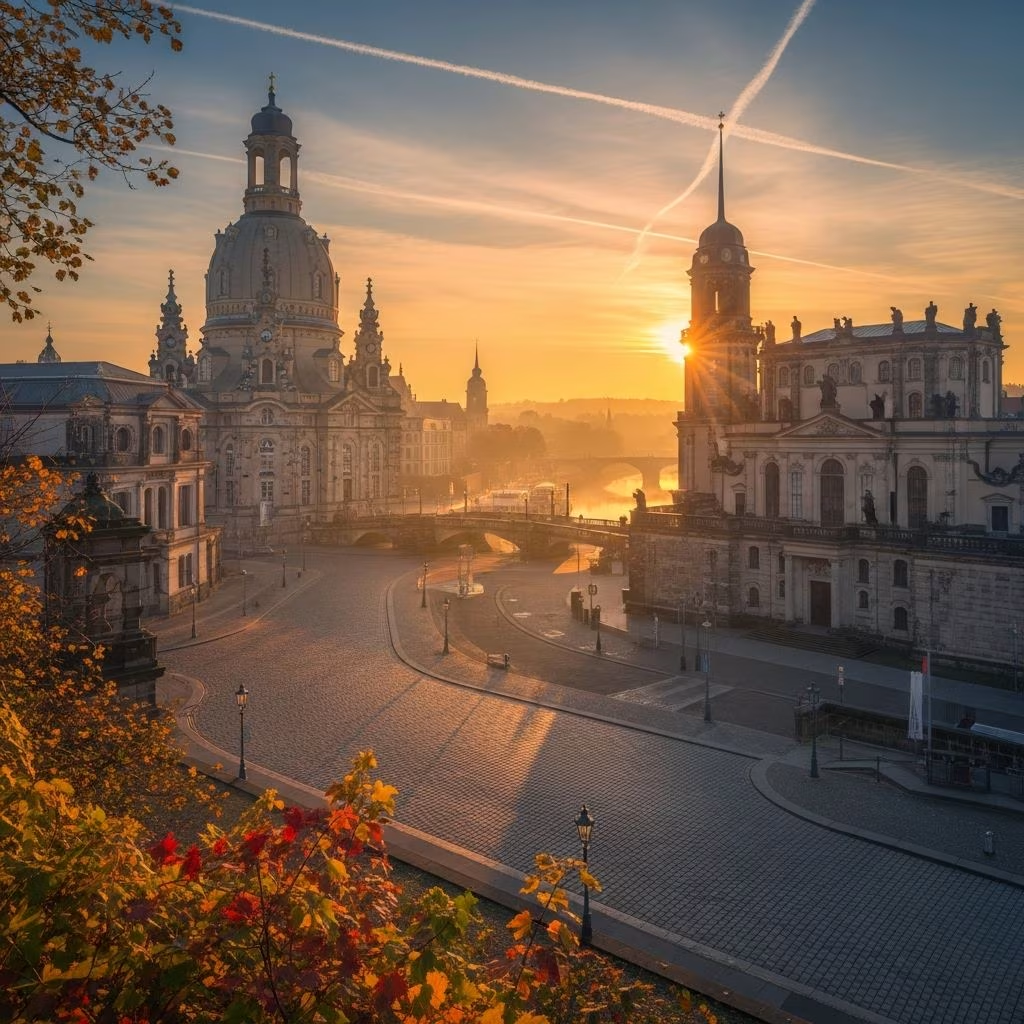
Dresden’s churches represent distinct theological traditions and architectural periods, each contributing meaningfully to the city’s visual and spiritual character. The Frauenkirche (Church of Our Lady) stands as the most iconic religious structure, distinguished by its enormous sandstone dome—the largest stone dome north of the Alps, weighing approximately 12 tons. Originally completed in 1734, this Protestant baroque church was entirely destroyed during 1945 bombardments and remained in ruins for decades before comprehensive reconstruction was undertaken. The rebuilding project, completed in 2005 after eleven years of meticulous work, restored the church to its original specifications using contemporary techniques combined with historical accuracy.
The interior space creates an atmosphere of luminous tranquility, with the dome’s weight seemingly defying physics as it soars above the ornate interior. Visitors can climb to the dome’s upper levels for panoramic city views, though this requires payment of a modest fee. An alternative climbing experience exists at the nearby Kreuzkirche (Church of the Holy Cross) at a lower cost, offering similarly impressive vistas while avoiding the crowds at the more famous church.
The Katholische Hofkirche (Dresden Cathedral) represents Catholic baroque architecture within this predominantly Protestant city. The cathedral’s distinctive tower and ornate facade create architectural variety along the skyline, and its interior decoration rivals the Frauenkirche in craftsmanship and visual richness.
Beyond traditional architectural forms, Dresden contains works of art executed at monumental scale that transform urban surfaces into historical narratives. The Fürstenzug (Procession of Princes) represents the world’s largest porcelain mural, stretching 330 feet across a building facade and comprising 25,000 individual tiles. This artistic achievement commemorates the thousand-year reign of the Wettin dynasty through depicting a grand procession of Saxonian rulers, scientists, and soldiers. The mural’s original creation between 1871 and 1876 preceded its current restoration, which maintains the stunning detail and chromatic richness of the original design.
The sheer scale of the Fürstenzug defies initial comprehension—it functions simultaneously as architectural ornamentation and historical record, visible from multiple points throughout the city center and worthy of extended contemplation. The porcelain medium provides durability while allowing chromatic precision impossible with painted surfaces, resulting in colors that remain vibrant despite weathering and age.
Dresden supports a sophisticated museum infrastructure that reflects its historical importance and cultural ambitions. The integrated museum system within the Zwinger complex allows visitors to encounter multiple artistic disciplines within a single location. The Gemäldegalerie Alte Meister (Old Masters Picture Gallery) houses an exceptional collection of European paintings spanning centuries, while the Porzellansammlung (Porcelain Collection) celebrates the decorative arts tradition for which Saxony became renowned. The Skulpturensammlung (Sculpture Collection) complements these galleries, and the Mathematisch-Physikalischer Salon preserves instruments representing scientific advancement during the baroque period.
The Grünes Gewölbe (Green Vault), housed within the Residenzschloss, represents another major collection focusing on decorative arts, jewelry, and precious objects that accumulated through centuries of royal patronage. This museum offers insight into material luxury and craftsmanship during periods when technical excellence in decorative arts rivaled fine art in cultural prestige.
Dresden’s urban geography divides into distinct neighborhoods, each offering different atmospheric and cultural experiences. The Altstadt (Old Town) centers on reconstructed baroque buildings and palatial complexes, maintaining a formal and historically conscious character that emphasizes grand architecture and major institutions. Walking through these streets involves continuous encounters with significant buildings and well-maintained historical sites.
The Neustadt (New Town) presents a contrasting character, with narrower streets, independent businesses, galleries, and street art creating a contemporary cultural atmosphere. This neighborhood developed in different historical periods than the Altstadt and consequently evolved distinct urban patterns and social characteristics. The Neustadt attracts artists, young professionals, and culturally engaged residents, resulting in a vibrant streetscape where experimental art, craft businesses, and innovative restaurants thrive. Street art decorates building facades throughout Neustadt, transforming walls into evolving galleries that reflect current artistic movements and social commentary.
Beyond major tourist destinations, Dresden maintains pockets of artistic activity that reward exploration. The Kunsthofpassage (Art Court Passage) exemplifies these hidden cultural spaces—a renovated industrial courtyard transformed into an art center through community initiative and creative investment. The passage features five distinct artistic courtyards themed around concepts like elements, light, metamorphosis, animals, and mythological gardens. This space combines functional design (housing studios, cafes, and shops) with artistic expression, creating an environment where contemporary art integrates with daily urban life.
The Kunsthofpassage demonstrates how urban spaces can undergo transformation through cultural activity, shifting from utilitarian structures into meaningful artistic destinations. The surrounding area maintains bohemian character with vintage shops, craft businesses, and establishments serving local clientele rather than tourists.
The Elbe River functions as both geographical boundary and aesthetic centerpiece for Dresden’s layout. The Brühlsche Terrasse (Brühl’s Terrace) creates a promenade along the river’s edge, earning the nickname “Balcony of Europe” through its combination of elevated position, architectural framing, and panoramic vistas. The terrace connects significant cultural institutions including the Royal Art Academy and the Albertinum Museum, making it simultaneously a recreational space and cultural transit zone.
The Augustus Bridge spans the Elbe and provides walking routes connecting different neighborhoods while offering views of both riverbanks and surrounding architecture. Natural beauty combines with architectural significance to create photogenic landscapes throughout the city, with sunset viewing from elevated positions providing particularly memorable experiences.
Experiencing Dresden effectively requires understanding transportation options and spatial relationships. Walking constitutes the primary means of exploring central districts, with distances remaining manageable between major sites. The city’s training system provides efficient connections for longer distances or excursions to outlying attractions, including the famous Bastei Bridge in Saxon Switzerland, which can be approached as a day trip through train access to nearby towns.
The Schwebebahn (suspension railway) represents both functional transport and historical artifact—one of the world’s oldest suspension railways, offering a unique journey that doubles as a sightseeing experience itself. This distinctive transport system provides practical access while preserving an unusual piece of industrial heritage.
Understanding local food culture and social spaces enriches the Dresden experience beyond architectural sightseeing. Cafes, restaurants, and beer halls integrate into the urban fabric, providing settings where visitors can observe local life while experiencing regional cuisine. The Hopfenkult establishment in Kunsthofpassage exemplifies contemporary social spaces where craft beverages and cultural interest converge. These informal gathering places reveal how daily life functions within the historical setting, preventing the city from becoming an exclusive museum.
Optimal Dresden experiences typically require balancing planned landmark visits with spontaneous exploration of neighborhoods and chance discoveries. A comprehensive visit spanning multiple days allows engagement with major museums, architectural tours, and neighborhood walks while maintaining sustainable pacing. The city’s manageable size permits concentrated cultural engagement without requiring excessive travel time, though depth of experience expands significantly with additional visit days. Consider allocating time for both structured museum visits and unguided wandering through historic streets, permitting the city to reveal itself gradually rather than through exhaustive itinerary completion.
Spring and early autumn offer optimal conditions with mild temperatures and manageable tourist crowds. Summer attracts peak visitors, while winter creates atmospheric conditions with holiday decorations, though temperatures drop significantly.
A minimum two-day visit permits engagement with major sites, though three to four days enables museum depth, neighborhood exploration, and possible day trips to surrounding attractions. Single-day visits require strict prioritization and preclude museum visits.
Many main attractions include accessibility features, though baroque architecture occasionally presents stairs and uneven surfaces. Contact specific venues regarding accommodations for individual requirements.
Altstadt emphasizes historical preservation, major institutions, and formal architecture, while Neustadt offers contemporary culture, street art, independent businesses, and bohemian atmosphere. Both neighborhoods merit visitation for complete understanding.
