

 Travel Essentials
 Travel Essentials

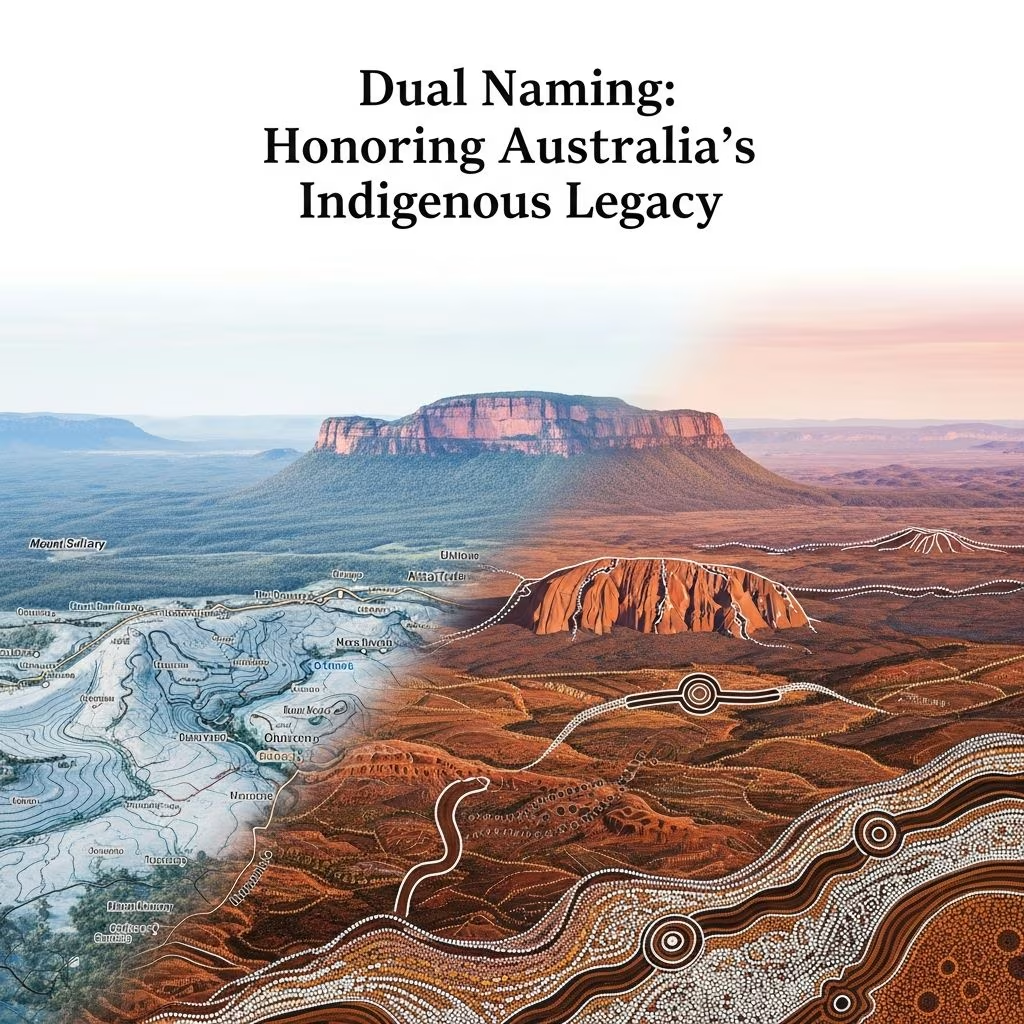
Australia's shift to dual naming for cities, landmarks, and rivers celebrates Aboriginal languages and histories, promoting reconciliation through official recognition of traditional names alongside English ones.
 Travel Essentials
Australia is undergoing a profound cultural transformation through the practice of dual naming, where traditional Aboriginal names are officially paired with established English or colonial names for geographical features. This initiative recognizes the deep-rooted connection Indigenous peoples have with the land, spanning over 60,000 years, while making these names visible on maps, signs, and tourism materials.
Dual naming emerges from a commitment to acknowledge the original custodians of the land. In New South Wales, for instance, the Geographical Names Board facilitates a process where both Aboriginal and non-Aboriginal names hold equal status, such as Wambuul/Macquarie River. This approach ensures that features can be referenced individually or combined, preserving linguistic diversity.
Western Australia has embraced this with over 50 dual-named places, guided by Landgate’s framework for Aboriginal naming. The guideline emphasizes recording original names to honor cultural heritage, applicable not just to natural features but also roads and localities.
Nationwide, this trend reflects broader reconciliation efforts. South Australia led early efforts, recently assigning Boandik names to features in Mount Gambier, demonstrating community collaboration.
Indigenous languages are vital to identity, linking people to Country. Dual naming revives these tongues, countering historical suppression. Tourism Australia highlights how it elevates Indigenous stories, using confirmed Aboriginal names alongside English ones to showcase cultural depth.
The process is community-led, requiring consultation with Local Aboriginal Land Councils and Traditional Custodians to ensure authenticity and support.
Australia’s states vary in implementation, but momentum builds uniformly.
NSW prioritizes evidence from Aboriginal groups before proposals reach the Geographical Names Board. This safeguards cultural integrity, with names reflecting oral and written traditions.
In 2023, Fraser Island became K’gari, its Butchulla name, marking a shift from singular to dual or full traditional adoption. Such changes spotlight Indigenous agency.
Landgate’s guidelines cover features and localities, with dozens already dual-named, fostering widespread adoption.
Early adopters like Mount Gambier continue assigning names from local languages, collaborating with cultural leaders.
| State | Example Dual Name | Language/Meaning | Year Recognized |
|---|---|---|---|
| NSW | Wambuul / Macquarie River | Wiradjuri | Ongoing |
| QLD | K’gari (Fraser Island) | Butchulla | 2023 |
| WA | Multiple (50+) | Various Aboriginal | Ongoing |
| SA | Mount Gambier features | Boandik | 2022 |
| NSW | Walgun / Cape Byron | Bundjalung (‘shoulder’) | Recent |
This table illustrates growing adoption, with sources confirming processes and examples.
Dual naming transforms travel by immersing visitors in authentic Indigenous narratives. Tourism Australia initiated this two years ago to mainstream First Nations stories, enhancing sites like Julian Rocks/Nguthungulli.
Travelers encounter layered histories: a river’s English name beside its Aboriginal counterpart evokes millennia of stewardship. This educates, promotes respect, and boosts Indigenous-led tourism.
While promising, hurdles persist. Accurate name verification demands rigorous consultation to avoid errors. Community buy-in is essential; proposals without it falter.
Scalability poses issues—thousands of places await recognition. Yet, frameworks like WA’s provide models for expansion.
Future steps include national coordination, digital mapping integration, and education campaigns to normalize dual names.
Many Australian locales derive from Aboriginal origins, from Araluen to Wollongong. Early records, like those from 18th-century explorers, noted tribal names tied to bays and rivers.
Dual naming builds on this, officially elevating suppressed voices. Suburbs like Tullamarine honor language groups, especially in remote areas where traditions endure.
Public and agencies alike can initiate, ensuring Indigenous leadership.
Dual naming officially recognizes both an Aboriginal and a non-Aboriginal name for a place, used equally.
All major states including NSW, QLD, WA, SA, with varying guidelines.
No, both coexist, sometimes combined.
Revives languages, affirms land rights, and shares culture.
Yes, maps and signs reflect them for respectful engagement.
Aboriginal names often describe landscapes poetically—Walgun evokes a shoulder-like cape, Nguthungulli a sacred site. Learning them unveils Dreamtime tales, flora-fauna knowledge, and navigation lore passed orally.
This practice invites all Australians to participate in healing historical divides, fostering pride in a shared, multifaceted heritage.
