

 Travel Essentials
 Travel Essentials

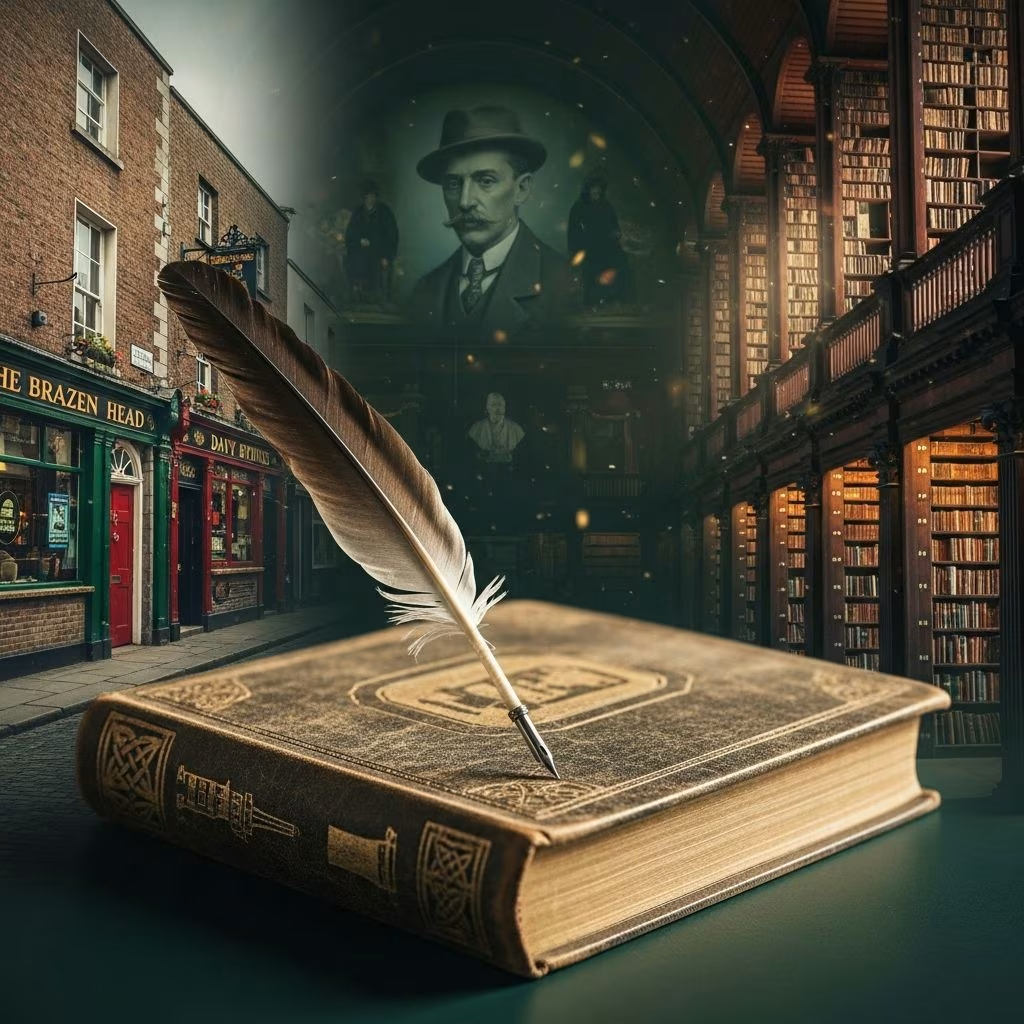
Discover Dublin's rich literary heritage through guided tours, museums, and festivals celebrating iconic Irish writers from James Joyce to Oscar Wilde.
 Travel Essentials
Dublin holds a distinguished place in the world of literature, earning its designation as a UNESCO City of Literature in 2010. This recognition reflects the city’s profound influence on some of the world’s most celebrated authors and its ongoing contribution to contemporary literary culture. The Irish capital has served as a muse, setting, and home to writers whose works continue to resonate globally, making it an essential destination for anyone seeking to understand the intersection of place and creative expression.
Dublin’s connection to literature extends far beyond the modern era. The city represents centuries of written tradition, from ancient Irish monastic manuscripts to contemporary bestsellers. This layered history creates a unique urban landscape where literary heritage is embedded in streets, buildings, and public spaces. The city’s evolution as a cultural hub has made it an ideal breeding ground for artistic innovation, attracting writers who drew inspiration from Dublin’s architecture, inhabitants, and social fabric.
The concentration of literary talent in Dublin during the 19th and 20th centuries transformed the city into a global literary powerhouse. Writers such as Oscar Wilde, Jonathan Swift, Charles Dickens, and Bram Stoker either lived in or were deeply influenced by the city. This clustering of genius created networks of intellectual exchange that fostered groundbreaking artistic movements and experimental literary forms.
James Joyce remains perhaps Dublin’s most celebrated literary figure. His masterworks, including Ulysses, revolutionized modern fiction and transformed how writers approached narrative structure. The connection between Joyce and Dublin is so profound that visitors can trace his footsteps through multiple locations across the city. The James Joyce Tower and Museum in Sandycove provides immersive access to his life and work, while the James Joyce Centre on North Great George’s Street offers exhibitions that illuminate his creative process and personal journey.
Beyond Joyce, Dublin nurtured the talents of Samuel Beckett, whose minimalist approach to language and existential themes earned him a Nobel Prize. Oscar Wilde, born and educated in Dublin, brought wit and sophistication to both drama and literature before his exile. These writers, among many others, transformed Dublin into a literary capital that influenced literary movements far beyond Ireland’s shores.
Visitors seeking deeper engagement with Dublin’s literary world have access to several world-class institutions dedicated to preserving and celebrating Ireland’s writers.
The Dublin Writers Museum serves as a comprehensive archive of the city’s literary luminaries. The museum features original manuscripts, personal correspondence, portraits, and intimate objects belonging to Dublin’s greatest authors. This collection provides historical context and humanizes the figures whose work shaped literature. The institution functions as both an educational resource and a tribute to the creative minds that defined an era.
For those interested in a more contemporary perspective on Irish literary achievement, the Museum of Literature Ireland offers curated exhibitions exploring diverse aspects of the nation’s written tradition. The museum houses significant artifacts, including the first copy of Ulysses, connecting visitors directly to pivotal moments in literary history.
The National Library represents an invaluable resource for literary scholars and enthusiasts. Housing the world’s largest collection of William Butler Yeats manuscripts, the library preserves materials donated by significant figures in Irish literary history. Original manuscripts of celebrated Yeats poems, including “The Lake Isle of Inisfree” and “Easter, 1916,” alongside the author’s Nobel Prize medal, offer tangible connections to creative genius.
Dedicated exclusively to James Joyce’s life and literary contributions, this cultural hub on North Great George’s Street combines museum exhibits with educational programming. The Centre celebrates Joyce’s revolutionary approach to fiction while contextualizing his work within Dublin’s social and historical landscape.
Dublin’s literary heritage becomes most vivid when experienced on foot through the city’s historic districts. Several approaches allow visitors to engage with literary landmarks at their own pace.
Professional guided tours offer expertly narrated journeys through Dublin’s literary geography. These typically depart from historically significant locations such as Christ Church Cathedral and traverse iconic streets including Christchurch Place, Parliament Street, and Ship Street. Experienced guides provide historical context, anecdotes, and insights that enrich understanding of how Dublin’s physical landscape shaped its writers’ imaginations. Most comprehensive tours span two hours, offering substantive exploration of multiple literary sites and their cultural significance.
For independent travelers, self-guided tours beginning at Trinity College offer flexible exploration of Dublin’s literary landmarks. This immersive loop can be completed in 2-3 hours for a focused experience or extended into a full-day exploration. The route enables visitors to proceed at their preferred pace, lingering at sites that resonate personally while skipping others. Key stops typically include Trinity College itself, the National Library of Ireland, St. Patrick’s Cathedral, and the James Joyce Centre.
A unique Dublin tradition combines literary history with the city’s iconic pub culture. Professional actors lead two-hour literary pub crawls that trace the paths of James Joyce, Samuel Beckett, Oscar Wilde, and Brendan Behan through authentic Dublin pubs where these writers once gathered. This experiential approach connects literature with the social spaces where artistic communities formed and creative ideas were refined.
The city’s commitment to celebrating literary culture extends through a robust annual calendar of festivals and events designed for both serious scholars and casual enthusiasts.
Held each May, this premier event attracts acclaimed authors from around the globe who converge on Dublin to participate in readings, panel discussions, and workshops. The festival represents the city’s position as a living literary center rather than merely a museum of past achievement, demonstrating Dublin’s continued relevance to contemporary writing.
These events create opportunities for visitors to engage with living authors, discover emerging voices, and participate in the ongoing literary conversation that defines Dublin’s cultural identity.
Beyond dedicated museums, Dublin’s physical landscape contains numerous sites of literary significance accessible to curious visitors.
As one of Europe’s oldest universities, Trinity College educated many of Ireland’s greatest writers while housing the celebrated Book of Kells, widely regarded as Ireland’s finest national treasure. The institution represents the intellectual foundation upon which Dublin’s literary tradition was built.
This historic cathedral connects to Dublin’s literary history through both architectural significance and literary association. Jonathan Swift, author and satirist, served as Dean of St. Patrick’s, embedding his legacy within the cathedral’s walls.
Dating to the early 18th century, Marsh’s Library stands as Ireland’s first public library. This institution represents the infrastructure that supported Dublin’s emerging literary culture and continues to preserve rare manuscripts and historic texts.
Located within Dublin Castle, this repository houses significant literary and artistic treasures that complement the city’s broader cultural heritage.
| Duration | Focus | Key Destinations |
|---|---|---|
| Half Day | Joyce-focused exploration | James Joyce Centre, Sandycove Tower, Bronze Joyce statue at O’Connell Street |
| Full Day | Comprehensive literary experience | Trinity College, National Library, Dublin Writers Museum, St. Patrick’s Cathedral, self-guided walking route |
| Weekend | In-depth cultural immersion | All major museums, guided tours, literary pub crawl, literary festival events (if available) |
Most literary museums operate during standard hours with modest admission fees. Walking tours typically require advance booking, particularly during peak season. Comfortable walking shoes are essential for self-guided exploration, as Dublin’s literary landmarks span considerable distances across the city. Public transportation and taxis provide convenient connections between major sites for those preferring not to walk the entire route.
Dublin earned this distinction in 2010 based on its extraordinary literary heritage, the international significance of its writers, and its commitment to supporting contemporary literary culture through festivals, institutions, and educational initiatives.
While multiple writers shaped Dublin’s literary legacy, James Joyce holds special prominence due to Ulysses‘ revolutionary influence on modern literature and the novel’s extensive engagement with Dublin’s streets, characters, and social fabric. However, Oscar Wilde, Samuel Beckett, William Butler Yeats, and Jonathan Swift equally shaped the city’s literary significance.
Both approaches offer value. Self-guided tours provide flexibility and personal discovery, while guided tours offer expert context and curated narratives that deepen understanding. Combining both approaches often proves most rewarding for literary enthusiasts.
May offers the International Literature Festival Dublin experience, while November features the Dublin Book Festival. However, Dublin’s literary attractions operate year-round, making any season viable for exploration.
Dublin represents far more than a historical archive of literary achievement. The city functions as a living laboratory where visitors can trace creative influences, understand the physical and social environments that shaped masterworks, and engage with an ongoing literary culture that continues evolving. From James Joyce to contemporary Irish authors, Dublin’s streets, institutions, and cultural events celebrate the enduring power of literary expression. Whether through solitary walks past historic buildings, immersive museum experiences, or participation in vibrant literary festivals, visitors discover how geography, culture, and human creativity intersect to produce art of lasting significance.
