

 Travel Essentials
 Travel Essentials

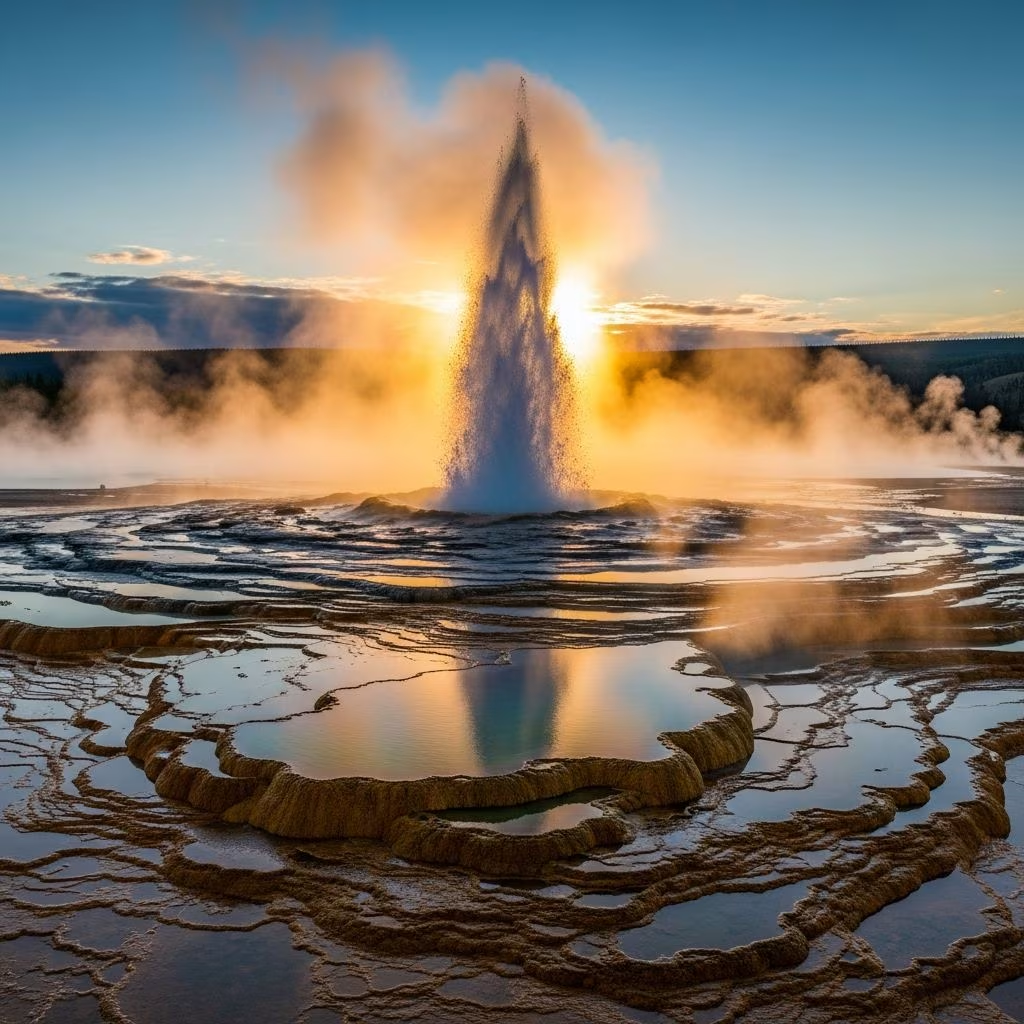
Yellowstone's Echinus Geyser in Norris Basin has erupted frequently since February 2026, drawing crowds to witness its rare acidic blasts up to 30 feet high.
 Travel Essentials
The vast geothermal landscape of Yellowstone National Park never ceases to amaze, and the recent revival of **Echinus Geyser** stands as a testament to its dynamic power. Nestled in the Norris Geyser Basin, this rare acidic geyser has burst back to life with eruptions that send plumes of water skyward, marking its most active phase since 2020.
Norris Geyser Basin ranks among Yellowstone’s most volatile thermal areas, characterized by intense heat and frequent changes in activity. Spanning over 200 acres, it divides into Back Basin and Porcelain Basin, each brimming with hot springs, fumaroles, and geysers. The basin’s underlying geology features rhyolite lava flows and fractures that channel superheated water from depths up to 1,000 feet.
What sets Norris apart is its **acidity**—many features, including Echinus, maintain pH levels as low as 3.5, far more corrosive than typical geysers like Old Faithful. This acidity stems from interactions between volcanic gases like hydrogen sulfide and groundwater, creating a unique ecosystem that supports acid-loving microbes.
**Echinus Geyser**, roughly 66 feet across, earned its name in 1878 from mineralogist Albert Charles Peale, who observed encrusting mineral deposits resembling sea urchins—echinus in Latin. Unlike alkaline geysers, its waters carry a sharp, sulfurous tang due to high acidity.
Historically sporadic, Echinus displayed consistent activity from the 1940s through the early 2000s, with eruptions up to 60 feet. Activity waned post-2000, leading to dormancy by 2020. Its resurgence began in early 2026, captivating scientists and visitors alike.
| Era | Activity Level | Notable Events |
|---|---|---|
| 1878–1940s | Intermittent | Naming by Peale; initial observations |
| 1948–2000s | Regular | Frequent 20–60 ft eruptions |
| 2010s–2020 | Declining | Rare bursts, full dormancy by 2020 |
| 2026–Present | Revived | Multiple eruptions starting Feb. 7 |
The geyser’s awakening unfolded dramatically in February 2026. Initial signs included frothing pool surfaces and water overflow into channels, signaling building pressure. On **February 7**, the first major eruption occurred, followed by events on February 9, 12, and 15.
By February 16, patterns stabilized: blasts every 2–5 hours, lasting 2–3 minutes, propelling water 20–30 feet high. The pool visibly drains during eruptions, refilling over the next hour as temperatures peak at 158°F (70°C). Recent data shows spikes preceding potential bursts, though frequency has slightly tapered.
Visitors have captured stunning footage, with water columns illuminated against snowy backdrops—a rare winter spectacle.
Echinus’s behavior mirrors past cycles, notably 2017, suggesting natural plumbing fluctuations rather than unprecedented events. Yellowstone’s hydrothermal system involves a massive underground reservoir where meteoric water meets magma-heated rocks, building steam pressure for eruptions.
Monitoring by the U.S. Geological Survey (USGS) Yellowstone Volcano Observatory tracks temperature, seismicity, and gas emissions. No elevated volcanic risk accompanies this activity; it’s typical hydrothermal dynamics. Acidic geysers like Echinus are scarce globally, making it a prime study site for extremophile biology and geochemistry.
**Best times:** Eruptions are semi-predictable; check NPS apps or ranger updates for real-time intel. Summer offers reliable access, but winter provides dramatic views amid snow.
**Access:** A 1.5-mile boardwalk loop in Back Basin leads directly to Echinus. Allow 1–2 hours; wear sturdy shoes for slippery surfaces.
Combine with Steamboat Geyser nearby, the world’s tallest, for a full basin experience.
Yellowstone logs hundreds of thermal injuries yearly—**stay on boardwalks**. Scalding water lurks beneath crusty surfaces; acidic vapors irritate eyes and lungs. Recent explosions, like those forming a new blue pool in Norris (late 2024–early 2025), underscore unpredictability.
Park rangers emphasize: “Predictability is a myth in Norris—respect distances to avoid tragedy.”
The basin teems with life adapted to extremes. Cyanobacteria form vibrant mats in cooler pools, while thermophiles thrive in 140°F+ waters. Birds like ravens forage edges, and bison roam nearby meadows. Human impact threatens this balance—pack out waste and tread lightly.
Echinus holds the title of largest acidic geyser, but kin exist in places like New Zealand’s Waiotapu Valley. Yellowstone boasts over 500 geysers, half the world’s total, thanks to its supervolcano caldera.
Climate influences activity; drier conditions may intensify eruptions by concentrating minerals.
Revivals often last months, but dormancy can return abruptly. USGS predicts possible summer shows, urging timely visits. Long-term, climate shifts and quakes could alter patterns.
Pressure buildup in its underground conduit from heated groundwater triggered the blasts, a common cycle for Yellowstone geysers.
Yes, from boardwalks. Never approach features; steam burns and acid hazards are real.
As of March 2026, every 2–5 hours, though intervals vary. Check NPS for updates.
Semi-regular; precursors include bubbling and temperature rises. Apps provide forecasts.
Echinus is acidic and irregular; Old Faithful is alkaline with 90-minute intervals.
Echinus’s resurgence spotlights Yellowstone’s living geology. Amid global wonders, this free spectacle reminds us of Earth’s fiery core. Plan responsibly—future generations deserve these views pristine.
