

 Travel Essentials
 Travel Essentials

Comprehensive guide to Ecuador's 11 national parks featuring volcanic peaks, Amazon rainforest, cloud forests, and unique wildlife across multiple ecosystems.
 Travel Essentials
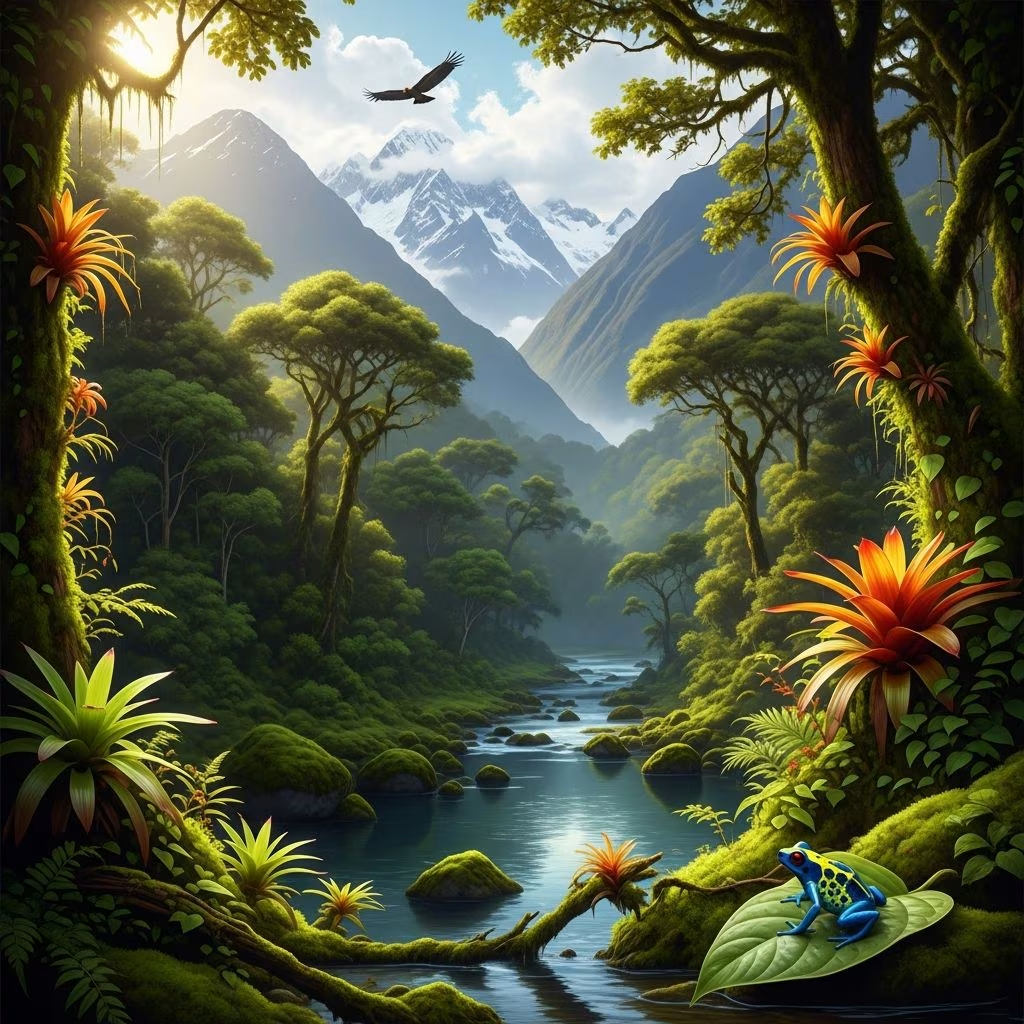
Ecuador stands as one of the world’s most biodiverse nations despite its relatively compact size. The country has established a comprehensive network of 11 national parks that protect approximately 26 million hectares, representing nearly 20% of Ecuador’s total territory. These protected areas span three distinct geographical regions: the Andean highlands, the Amazon basin, and the Pacific coastal zone. This guide explores each major park system, the unique ecosystems they preserve, and the experiences they offer to visitors seeking adventure in pristine natural environments.
Ecuador’s national park system represents one of Latin America’s most ambitious conservation initiatives. The parks work collectively to safeguard ecosystems that transition from high-altitude glacial zones to tropical rainforests. This ecological diversity within a single country creates opportunities for visitors to experience dramatically different landscapes and wildlife communities in relatively short distances. The preservation model demonstrates how systematic protection of natural areas can maintain biodiversity while allowing controlled access for scientific research and sustainable tourism.
Cotopaxi National Park protects the second-highest summit in Ecuador and ranks among the world’s highest active volcanoes. The park was established to ensure that development would not encroach upon this magnificent landscape, preserving its integrity for future generations. The volcanic cone rises prominently from surrounding páramo grasslands, creating a striking visual contrast. Visitors typically access the park from Quito, making it one of Ecuador’s most accessible highland destinations.
The park encompasses multiple elevation zones, each supporting distinct plant and animal communities. Lower elevations feature cloud forests with mosses and epiphytic plants, while higher zones transition to sparse páramo vegetation adapted to thin air and intense solar radiation. The accessibility and dramatic scenery make Cotopaxi a premier destination for both hiking enthusiasts and photographers.
Spanning approximately 500,000 hectares across central Ecuador, Sangay National Park stands as a UNESCO World Heritage Site. The park derives its name from Volcán Sangay, one of the world’s most continuously active volcanoes that regularly releases ash plumes. A second active volcano, Tungurahua, and an extinct peak create a dramatic geological landscape. The combination of active geothermal features, including thermal springs and lakes, adds to the park’s remarkable character.
What distinguishes Sangay is its representation of multiple climatic zones stacked vertically. Glaciated peaks transition through páramo grasslands into cloud forests and ultimately into lowland Amazon rainforest on the park’s eastern slopes. This elevation gradient supports rare and endangered species including the mountain tapir and spectacled bear. The park remains relatively remote, which has preserved both its ecological integrity and its sense of wilderness adventure.
Southern Ecuadorian parks offer distinct high-altitude experiences. El Cajas National Park, located near Cuenca city, functions as a lake district featuring hundreds of glacial lakes interspersed through alpine moorland. The landscape presents pristine mountain scenery characterized by glacial valleys and crystalline waters. These environments, shaped by Pleistocene glaciation, create opportunities for trekking and mountaineering amid some of South America’s most accessible high-altitude terrain.
Yacurí National Park, positioned below Podocarpus in the southern Andes near the Peruvian border, encompasses approximately 3,000 meters elevation with 46 high-altitude lakes. The park protects cloud forest and páramo ecosystems while harboring endangered species including mountain tapirs and spectacled bears. The combination of geological features, botanical diversity, and rare fauna makes this region significant for biodiversity conservation.
Llanganates occupies a vast territory across Tungurahua, Pastaza, Napo, and Cotopaxi provinces, creating a landscape of high valleys and mountainous peaks. The park offers exceptional opportunities for hiking, camping, horseback riding, and mountaineering. Beyond recreational appeal, Llanganates carries cultural significance related to legendary treasures from Spanish colonial history, adding an element of historical mystery to its natural grandeur.
The park’s diverse terrain supports varied plant communities and animal populations adapted to mountain environments. Its remote nature means fewer visitors than more accessible parks, creating opportunities for solitude and immersion in untouched wilderness.
Located along the equator near Quito, Cayambe-Coca protects a unique meeting point where Andean and Amazonian ecosystems interact. The park encompasses diverse habitats ranging from glaciated summits to tropical forests. This intersection of distinct biogeographical regions creates unusual species compositions and ecological relationships.
Comprising two distinct mountain systems, Sumaco Napo-Galeras protects the Sumaco volcano massif and the Galeras mountain range along with surrounding páramo and forest. The park’s position in northeast Ecuador makes it a destination for adventurers seeking high-altitude hikes along rarely traveled trails. The isolation of these mountain systems has allowed species evolution distinct from other Andean regions, creating pockets of endemic biodiversity.
Yasuní represents Ecuador’s largest mainland national park, encompassing 3,792 square miles (9,823 square kilometers) within the Amazon basin. Located between the Napo and Curaray Rivers in northeast Ecuador, the park protects pristine rainforest accessible primarily through the gateway town of Coca. The park’s remote character and difficult access have preserved it as one of the Amazon’s most intact ecosystems.
Yasuní contains exceptional species diversity, including large populations of jaguars, pink river dolphins, anacondas, and thousands of bird species. The park represents genuine off-the-beaten-track rainforest exploration, offering experiences unavailable in more developed regions. Multi-day expeditions typically involve river travel and guided hikes through dense forest canopy.
Machalilla stands as Ecuador’s sole coastal national park, running along the Pacific shoreline on the country’s western edge. The park encompasses a remarkable diversity of landscapes including tropical dry forest, pristine beaches, offshore coral formations, and the volcanic Isla de la Plata. The island has earned the nickname “Poor Man’s Galapagos” due to its distinctive marine and terrestrial wildlife, though it remains less visited and more affordable than the famous archipelago.
The park accommodates various water sports including surfing and scuba diving, with the offshore waters supporting diverse marine life. The combination of terrestrial and aquatic ecosystems creates opportunities for comprehensive coastal exploration.
Galapagos National Park protects the largest marine reserve in Ecuador, covering 51,352 square miles of ocean and archipelago. While geographically distinct from mainland Ecuador, the Galapagos represents the nation’s most iconic protected area. The combination of unique endemic species, geological formation features, and scientific significance makes it a premier global destination. The marine reserve aspect protects critical ocean ecosystems supporting marine biodiversity of international significance.
| Park Name | Primary Ecosystem | Best Activity | Access Level |
|---|---|---|---|
| Cotopaxi | Volcanic highland | Volcano climbing | Easy |
| Sangay | Multi-zone mountain | Wilderness trekking | Moderate |
| El Cajas | Alpine lake district | High-altitude hiking | Moderate |
| Yasuní | Amazon rainforest | Rainforest exploration | Difficult |
| Machalilla | Coastal tropical | Beach and water sports | Easy |
| Galapagos | Volcanic islands | Endemic wildlife viewing | Moderate |
Ecuador’s protected areas contain some of South America’s rarest species. The Andean parks harbor mountain tapirs and spectacled bears, both endangered species requiring large protected territories for population viability. The Amazon parks, particularly Yasuní, support jaguars, pink river dolphins, and thousands of bird species including numerous endemics. Machalilla protects marine species including various shark species and sea turtles. This biodiversity concentration reflects Ecuador’s position on the equator, where tropical productivity creates exceptional species richness.
The dry season (June to September for highland parks, December to January for lowland areas) typically provides the best conditions for hiking and outdoor activities. However, each park has distinct seasonal patterns requiring specific planning.
While some parks permit independent exploration, hiring qualified guides enhances safety and knowledge. Remote areas like Yasuní essentially require professional guides for responsible access.
Entrance fees vary by park, with coastal and lowland parks generally less expensive than highland or remote areas. Multi-day expeditions to Yasuní represent the most significant financial commitment.
Yes, strategic planning allows combinations. Cotopaxi and El Cajas work well together, as do various Amazon and coastal park combinations, though distances require careful itinerary design.
Large mammal viewing varies by park and season. Yasuní offers the best megafauna opportunities, while bird watching is exceptional throughout all parks, particularly during migration periods.
Ecuador’s national parks represent critical conservation infrastructure for maintaining global biodiversity. The systems protect ecosystem services including water regulation, carbon storage, and species habitat essential for planetary ecological stability. Continued support for these protected areas through sustainable tourism, research, and management investment remains vital for ensuring these ecosystems persist for future generations.
The park system demonstrates how nations can balance conservation with human development and economic interests through strategic land protection. As global climate patterns shift, these protected areas provide refuge for species adaptation and evolutionary response to environmental change.
