

 Travel Essentials
 Travel Essentials

Explore Ecuador's Andean region with vivid descriptions of mountain drives, equine explorations, cozy stays, and cultural immersion, perfect for planning your high-altitude adventure amid volcanoes and valleys.
 Travel Essentials
Ecuador’s Andean highlands offer a mesmerizing blend of dramatic elevations, lush valleys, and deep-rooted traditions that captivate every traveler. Rising from the bustling streets of Quito, these mountains challenge your senses with their sheer scale and serene beauty. This article draws inspiration from personal explorations to guide you through key experiences, from winding drives to intimate cultural encounters, all while emphasizing the role of photography in preserving these moments.
The journey into Ecuador’s Andes begins with a thrilling drive from Quito, the capital perched at over 9,000 feet. As roads twist upward, the landscape transforms rapidly—urban sprawl gives way to terraced fields and mist-shrouded peaks. Reaching altitudes around 13,000 feet tests your body’s adaptation to thinner air, where every breath reminds you of the earth’s raw power.
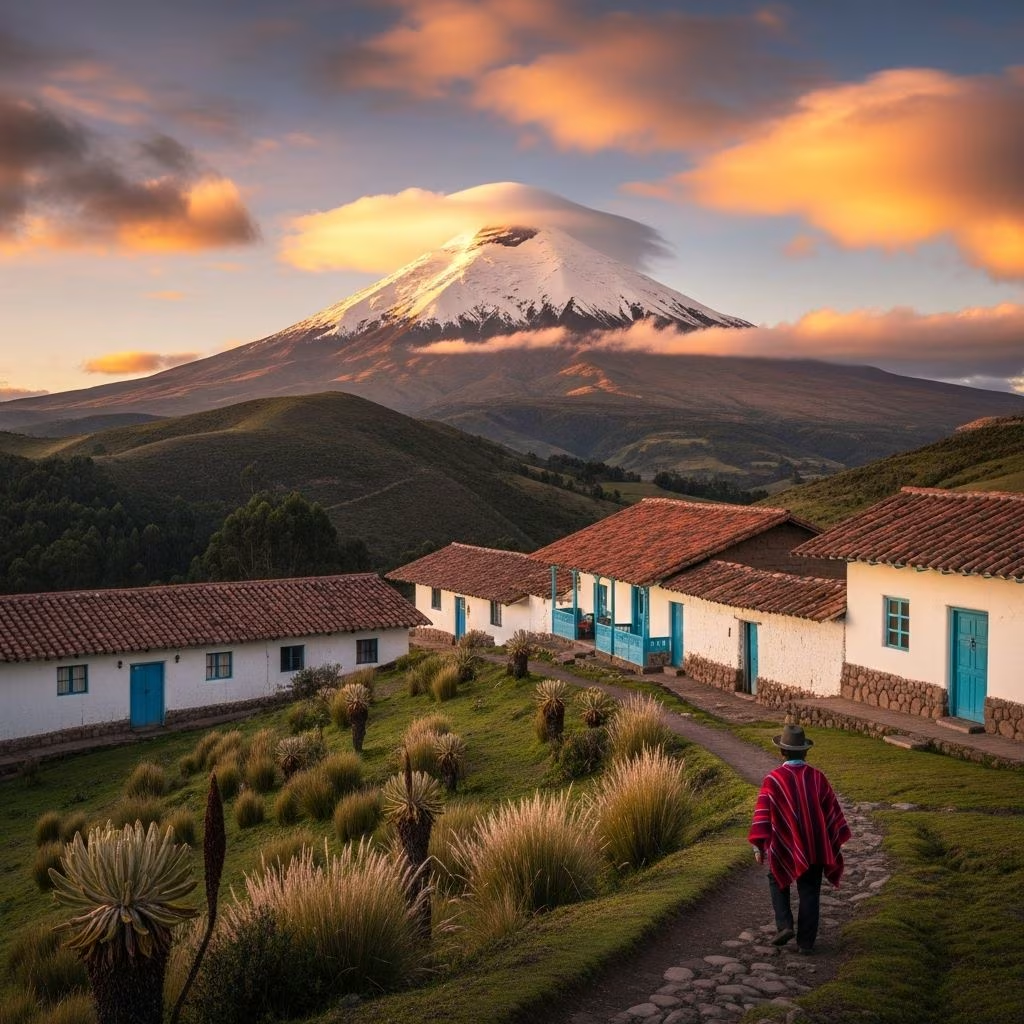
Prepare for sudden weather shifts: crisp mornings yield to afternoon clouds that drape volcanoes like Tungurahua in ethereal veils. Drivers navigate hairpin turns with skill, offering glimpses of quinoa-dotted slopes and distant snowcaps. This ascent isn’t just physical; it’s an invitation to slow down and absorb the rhythm of Andean life.
Mounting a sturdy Andean horse unlocks perspectives unattainable by foot. These animals, bred for the terrain, carry riders along trails etched into mountainsides, passing wildflower meadows and sheer cliffs. Imagine trotting past grazing llamas, their woolly forms contrasting against emerald pastures, with Imbabura Volcano looming as a silent sentinel.
Guides share stories of indigenous communities, pointing out condor nests and ancient Inca trails. One highlight: pausing at overlooks where the horizon stretches to infinity, the air alive with the scent of eucalyptus. Horses like Tequila—named for their spirited gait—become trusted partners, forging bonds that elevate the adventure.
| Trek Difficulty | Duration | Highlights |
|---|---|---|
| Beginner | 2-3 hours | Valley views, easy trails |
| Intermediate | Full day | Waterfalls, birdwatching |
| Advanced | Multi-day | Volcano summits, remote villages |
For an authentic stay, haciendas—colonial estates turned boutique lodges—provide warmth and history. Nestled in the highlands, these properties feature thick adobe walls, roaring fireplaces, and gardens bursting with orchids. Wake to the sound of roosters and fresh-brewed coffee overlooking páramos, the unique high-altitude ecosystems dotted with frailejones plants.
Many haciendas offer farm-to-table meals: locro de papa soup steaming with potatoes from nearby fields, paired with grilled trout from Andean streams. Evenings bring stargazing under unpolluted skies, where the Milky Way arcs boldly. These sanctuaries blend luxury with rusticity, ideal for acclimating after high drives.
Beyond nature, the Andes pulse with Quechua and Otavalo heritage. Markets in towns like Otavalo brim with handwoven ponchos in vibrant reds and blues, silver jewelry hammered by generations of artisans, and piles of fresh produce. Engage with vendors who demonstrate weaving techniques on backstrap looms, a craft unchanged for centuries.
Saturday’s Otavalo market, South America’s largest, draws global visitors. Haggle politely for alpaca scarves or herbal remedies, while sampling empanadas stuffed with cheese. These gatherings foster connections, revealing how highland life revolves around communal bartering and festivals honoring Pachamama, the earth mother.
A reliable camera is indispensable in the Andes, where light dances across layered landscapes. From golden hour glow on Quilotoa Lagoon’s turquoise waters to dramatic storm clouds over Cotopaxi, every scene demands documentation. DSLRs or mirrorless models excel at handling high dynamic range, capturing both shadowed valleys and sunlit peaks.
Tips for stunning shots:
Smartphones suffice for casual snaps, but dedicated gear treasures textures like mossy rocks or embroidered textiles.
Ecuador’s Andes suit various travelers: families on gentle hacienda stays, photographers chasing light, or hikers tackling Quilotoa Loop. Fly into Quito’s Mariscal Sucre Airport, then bus or drive south. Budget $100-200 daily, covering lodging, meals, and excursions.
Health notes: Altitude sickness affects 25-50% of visitors; descend if symptoms worsen. Visa-free for most nationalities up to 90 days. Currency: US dollar, with ATMs widespread.
| Region | Key Attraction | Travel Time from Quito |
|---|---|---|
| Otavalo | Indigenous market | 2 hours |
| Quilotoa | Crater lake hike | 3 hours |
| Baños | Waterfalls & swings | 3.5 hours |
Venture to Baños de Agua Santa for the Casa del Árbol, a treehouse swing overhanging abyssal drops with Tungurahua views. Nearby, hot springs soothe post-hike muscles. In the north, San Clemente offers cloud forest trails teeming with hummingbirds and orchids. Combine with Amazon extensions for biodiversity contrast.
For adventure seekers, paraglide over the Avenue of Volcanoes or mountain bike Quilotoa’s rim. Foodies savor hornado—roast pork with mote— at roadside fondas.
The Ecuadorian Andes evoke profound gratitude through their scale and soul. Standing atop a horse or gazing from a hacienda porch instills humility amid geological giants. Communities thrive resiliently, their traditions a testament to harmony with nature. Return home not just with photos, but transformed perspectives.
Yes, with precautions like gradual ascent and hydration. Most adapt within 48 hours.
Layers: fleece, rain jacket, sturdy boots, sun hat, and high-SPF sunscreen for intense UV.
Yes, but June-September offers drier trails; December-March brings wildflowers.
Absolutely—many feature kids’ activities like pony rides and cooking classes.
Ask permission for portraits; support artisans by buying crafts.
