

 Travel Essentials
 Travel Essentials

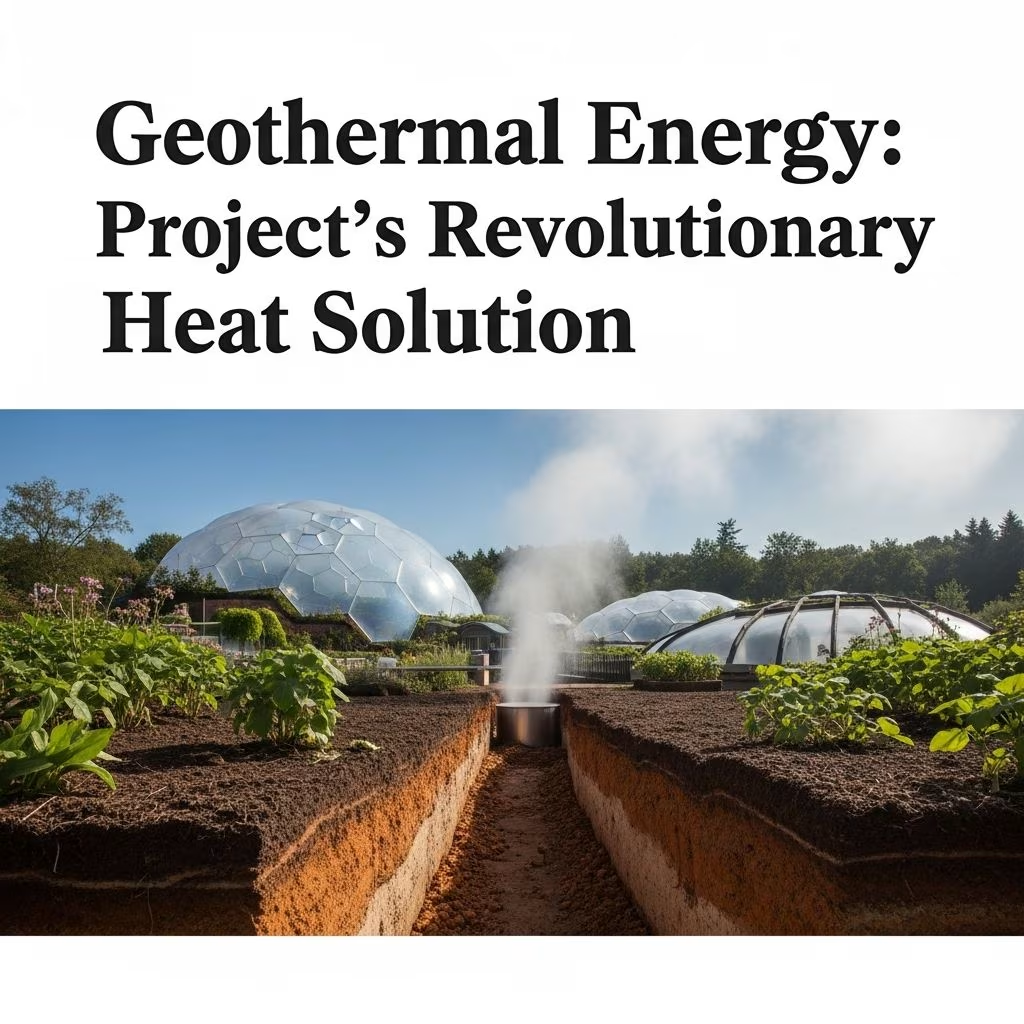
The Eden Project has launched the UK’s first operational deep geothermal heating system since 1986, cutting emissions and warming its biomes with earth heat.
 Travel Essentials
Beneath the lush gardens and iconic biomes of the Eden Project in Cornwall lies an untapped resource that promises to reshape how the UK generates heat for buildings and facilities. In a landmark achievement for renewable energy, the Eden Project has successfully activated a deep geothermal heating system that taps into the natural warmth stored within the earth’s crust. This groundbreaking installation represents the first operational deep geothermal heating facility in the United Kingdom since 1986, marking a significant turning point in the nation’s renewable energy landscape.
The project demonstrates how advanced drilling technology combined with innovative engineering can unlock sustainable heating solutions from unconventional sources. Rather than relying on traditional fossil fuel combustion or surface-level renewable systems, the Eden Project’s geothermal infrastructure draws heat from granite formations positioned thousands of meters underground, where temperatures remain consistently elevated year-round.
Creating a functional geothermal heating system required surmounting extraordinary technical obstacles. The drilling operation at the Eden Project site commenced with a clear objective: access the heat stored within granite bedrock located several kilometers beneath the surface. This wasn’t a straightforward excavation project; it demanded specialized equipment, expert personnel, and innovative methodologies to navigate through challenging geological formations.
The primary well, designated as EG-1, was drilled in carefully planned sections using progressively smaller drill bits. The operation took 162 days to complete, finishing in October 2021, and achieved a total depth of 4,871 meters with a measured depth of 5,277 meters. This makes it the longest geothermal well currently operational in the United Kingdom. The drilling process utilized an 8½-inch diameter drill bit for the final section, with the last 1,417 meters remaining as open-hole construction rather than being cased, allowing direct contact with the granite formation.
The choice of drilling technique reflected the specific geological conditions at the site. Traditional drilling methods, while effective in sedimentary layers, struggle with the hardness and high temperatures of basement rocks. The team employed specialized approaches designed to handle these demanding conditions while maintaining structural integrity and thermal efficiency.
Once the well reached the desired depth, the engineering team installed an innovative single-well heat exchanger system. This technology represents a significant advancement in geothermal heating efficiency and represents a different approach from traditional dual-well geothermal systems that require separate injection and extraction wells.
The system operates through a carefully engineered process. A vacuum-insulated tube measuring 4,000 meters in length was inserted into the well bore. This tube serves as the pathway for circulating water that carries heat from the deep rock formations to the surface. Hot water rises through the interior of this insulated tube, reaching temperatures of approximately 85°C—warm enough to heat buildings without additional processing.
Once the heat has been extracted at the surface through a heat exchanger, the cooled water is reinjected back down the well through the outer ring of the same tube. This closed-loop circulation ensures continuous operation without depleting the water source and allows the cooled water to be reheated by contact with the surrounding granite before being extracted again. This elegant design minimizes energy losses and maximizes the efficiency of the system.
To connect the geothermal well to the facilities requiring heating, engineers installed a 3.8-kilometer heat main—an insulated pipeline that transports the hot water from the drilling site to the destinations. This distribution network extends to the Eden Project’s renowned Biomes, administrative offices, and the newly constructed Growing Point plant nursery.
The geothermal system commenced heat generation in June 2023 and successfully supplied thermal energy throughout the winter months. This initial operational phase demonstrated the system’s reliability and capacity to meet the heating demands of a large, complex facility. The Biomes—which maintain tropical and Mediterranean climates for their plant collections—proved to be substantial consumers of this geothermal heat, alongside the Growing Point nursery and administrative buildings.
The environmental benefits of this system are substantial and quantifiable. The geothermal heating infrastructure is projected to eliminate approximately 500 tonnes of carbon dioxide emissions annually. This reduction is equivalent to the heating-related emissions from 227 British homes that rely on natural gas for warmth. For the Eden Project, the implementation takes the facility almost entirely off gas heating, representing a critical milestone in the organization’s commitment to achieving net-zero carbon status and transitioning to climate-positive operations by 2030.
Beyond the immediate carbon savings, the geothermal system provides heat at a consistent temperature year-round, independent of weather conditions or seasonal variations. This reliability contrasts with solar thermal or air-source heat pump systems that experience variable performance based on environmental factors. The earth’s stable internal temperature provides a consistent thermal resource that enables predictable, efficient heating operations.
The Eden Project’s geothermal installation represents the first phase of a more ambitious development strategy. Plans include drilling a second geothermal well to expand heating capacity and explore the possibility of generating electricity in addition to thermal energy. If fully realized, this two-well system could potentially provide sufficient energy to render the entire Eden Project carbon-neutral while simultaneously supplying renewable energy to approximately 17,000 residential properties in the surrounding region.
This expansion vision reflects the scalability potential of deep geothermal technology when deployed in appropriate geological settings. The granite formations underlying Cornwall contain significant thermal reserves, and improved drilling technologies continue to reduce the costs and technical barriers associated with accessing these resources.
The Eden Project’s success builds upon recent innovations in drilling technology that have transformed geothermal energy from a niche resource to an increasingly viable renewable heating solution. Multi-millimeter-wave (MMW) drilling represents one such innovation, offering superior capability in managing hard, high-temperature basement rocks at considerable depths—exactly the geological conditions encountered in granite formations.
Historical limitations restricted geothermal energy development primarily to volcanic regions like Iceland and Italy, where high temperatures exist at relatively shallow depths. Contemporary drilling advances are democratizing access to geothermal resources by enabling economically viable operations in locations where the target temperatures require drilling to greater depths. Many regions worldwide now possess accessible high-temperature geothermal resources at depths shallower than 10 kilometers—depths that are technically and economically manageable with modern equipment.
These technological improvements suggest that geothermal heating and power generation may transition from exceptional applications to standard renewable energy infrastructure in suitable locations. The cost-effectiveness of drilling techniques continues to improve, making geothermal projects increasingly competitive with conventional heating and electricity generation systems.
The Eden Project’s operational status deserves recognition within the context of broader UK geothermal development. The nation currently lags significantly behind other European countries in installed geothermal capacity. Germany, the Netherlands, and France have developed more extensive geothermal infrastructure, reflecting earlier investment and policy support for this renewable resource.
A geothermal system installed in Southampton during the 1980s represents the only other operational deep geothermal installation in the UK, currently offline for maintenance. That system supplies approximately 40 gigawatt-hours annually of heat through a district heating network serving hospitals, shopping centers, and other large facilities. Its long operational history demonstrates the durability and long-term viability of geothermal systems, even as it highlights the limited uptake of such technology in recent decades.
The Eden Project’s launch of its geothermal facility signals potential renewed interest in exploiting the UK’s geothermal potential. The success and visibility of this high-profile project may catalyze additional installations and encourage policy makers to support geothermal development more actively.
The Eden Project’s geothermal system required substantial capital investment to become operational. The project secured £9.9 million from the European Regional Development Fund, £1.4 million from Cornwall Council, and £5.5 million from institutional investors—a combined funding package of approximately £16.8 million. This financing structure reflects the capital-intensive nature of deep drilling projects and the necessity for multi-source funding models combining public support, regional development resources, and private investment.
Such financing arrangements demonstrate that bringing geothermal projects to fruition requires coordinated investment from multiple stakeholders. The involvement of regional development funds suggests recognition of geothermal energy’s significance for regional economic development, employment creation, and achievement of climate objectives.
The geothermal system’s integration into the Eden Project’s operations showcases how renewable heating technology can be incorporated into complex, existing facilities. The system heats the Rainforest and Mediterranean Biomes—structures designed to maintain specific climate conditions for diverse plant species—as well as office spaces and the new Growing Point nursery facility. Each of these locations has distinct heating requirements and occupancy patterns, yet the geothermal system successfully meets these varying demands.
The Growing Point nursery represents a particularly significant application, as this state-of-the-art facility grows plants both for the Eden Project and for commercial sale to visitors. Consistent, reliable heating from the geothermal system enables controlled cultivation of diverse plant species regardless of external weather conditions, supporting both tourism and commercial horticultural operations.
While the Eden Project’s geothermal system demonstrates technical viability and operational success, questions remain about scalability to other UK locations and applications. Granite formations suitable for geothermal drilling are not uniformly distributed across the country; successful deployment requires geological conditions comparable to those found in Cornwall. Additionally, district heating networks similar to the proposed expansion would require infrastructure investments and community participation in receiving facilities.
The economics of geothermal drilling continue to improve, particularly as equipment becomes standardized and operational expertise accumulates. However, projects in less ideal geological conditions or with smaller thermal requirements may face higher per-unit costs. Future deployment likely will focus on locations with exceptional geological characteristics and substantial heating demands—large industrial facilities, district heating networks serving dense communities, or regions with particularly favorable subsurface conditions.
The Eden Project’s commitment to achieving climate-positive status by 2030 places the geothermal system as a cornerstone technology in that transition. By eliminating 500 tonnes of annual carbon emissions and removing reliance on fossil fuel heating, the facility substantially advances its environmental objectives. The geothermal system’s carbon intensity over its operational lifespan—accounting for drilling energy, manufacturing impacts, and long-term operational efficiency—likely represents a dramatic improvement over continued reliance on natural gas heating.
This real-world demonstration of carbon-positive renewable heating may influence policy discussions and investment priorities across the UK and internationally. As climate targets become increasingly stringent and urgent, proven technologies offering substantial emissions reductions attract growing attention from facility managers, investors, and policymakers seeking concrete pathways to decarbonization.
The EG-1 well reaches a total depth of 4,871 meters (approximately 5 kilometers) with a measured depth of 5,277 meters, making it the longest geothermal well in the UK.
The system delivers heat at approximately 85°C, sufficient for space heating, water heating, and maintaining climate-controlled biome environments.
The geothermal heating system is projected to save approximately 500 tonnes of CO2 per year, equivalent to heating emissions from 227 British homes using natural gas.
Drilling was completed in October 2021. The system began generating heat in June 2023 and supplied heating to Eden Project facilities throughout the following winter months.
The Eden Project’s system is currently the only operational deep geothermal well in the UK. A geothermal system in Southampton from the 1980s remains offline for repairs.
Plans include drilling a second geothermal well as part of a two-well system that could make the Eden Project entirely carbon-neutral and potentially supply renewable energy to approximately 17,000 surrounding homes.
