

 Travel Essentials
 Travel Essentials

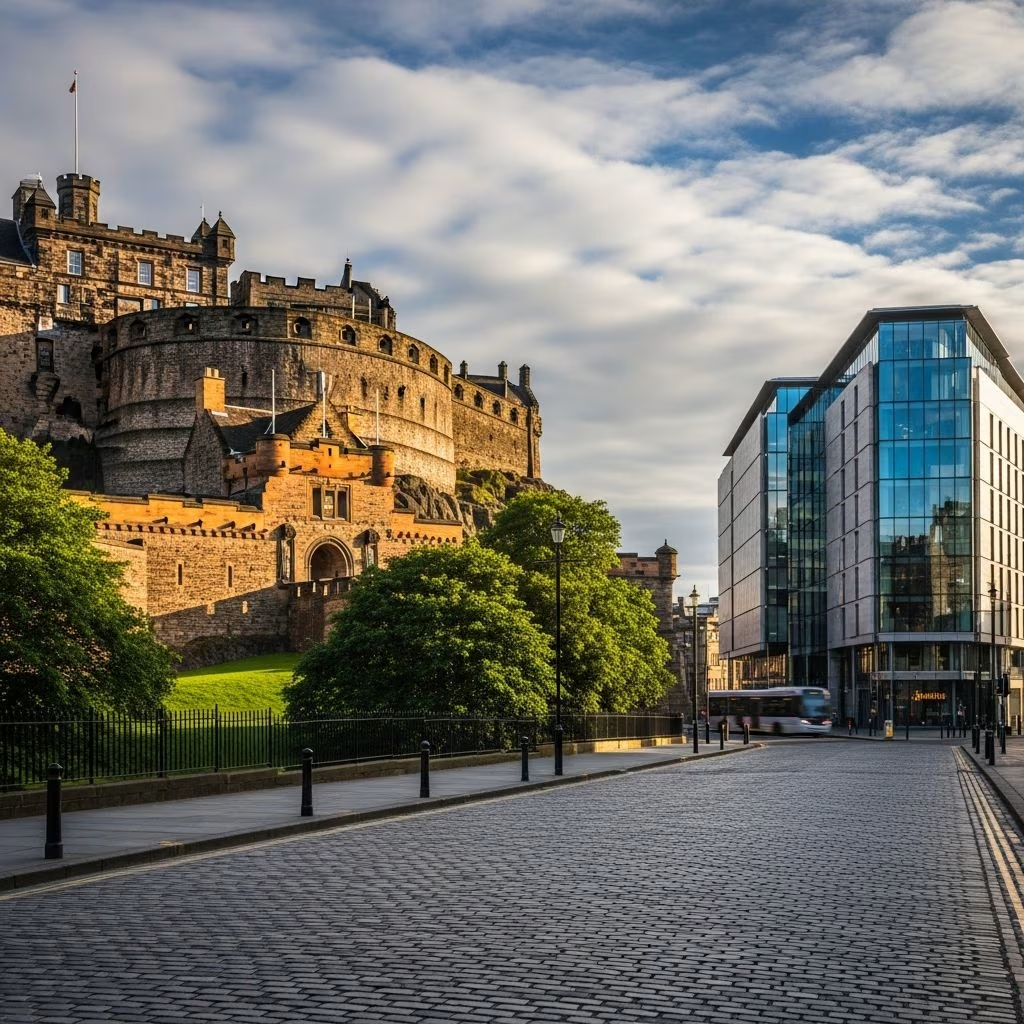
Explore Edinburgh's evolution from medieval castles to sleek modern structures, highlighting key landmarks, emerging design hubs, and sustainable trends shaping the city's skyline.
 Travel Essentials
Edinburgh stands as a testament to architectural excellence, where towering medieval fortresses coexist with graceful Georgian terraces and audacious contemporary structures. This Scottish capital harmoniously fuses its rich historical heritage with forward-thinking design, offering visitors a captivating journey through time.
The city’s **Old Town**, a UNESCO World Heritage site, captivates with its labyrinthine wynds and soaring spires. Dominating the skyline is **Edinburgh Castle**, perched atop an extinct volcano, its rugged stone walls echoing centuries of royal intrigue and military might. Constructed over 800 years, the castle’s architecture spans Romanesque to Gothic Revival styles, featuring the iconic Crown Jewels housed in the Crown Room.
Stretching downhill from the castle along the **Royal Mile**, a series of closes and courts reveal intricate tenement buildings from the 16th to 18th centuries. These narrow alleyways, once bustling with merchants and artisans, showcase vernacular Scottish architecture characterized by crow-step gables and forestairs—external stone staircases unique to the region.
Adjacent, the **New Town** represents 18th-century Enlightenment ideals. Commissioned in 1767, its grid layout with sweeping crescents and circuses was designed by architects like James Craig and Robert Adam. Charlotte Square, with its unified neoclassical facades, exemplifies the period’s emphasis on symmetry and proportion.
Edinburgh’s dramatic topography is bridged by three masterpieces: the **North Bridge** (open 1772), **South Bridge** (1788), and the awe-inspiring **Dean Bridge** (1831-32). The latter, engineered by Thomas Telford, spans 96 meters at 39 meters high using four massive arches, blending functionality with Victorian grandeur.
These structures not only facilitated urban expansion but also symbolized industrial progress, their sturdy masonry enduring as vital arteries of the city.
Mid-20th-century Edinburgh embraced modernism through visionary architects like **Sir Basil Spence**. His early work includes the 1933 Causewayside garage, an Art Deco gem integrating steel, concrete, and glass with minimalist lines amid residential surroundings.
Spence’s **Mortonhall Crematorium** (1960s) maximizes natural light via angled concrete forms, marking a shift toward functionalist design sensitive to emotional contexts. This era introduced clean geometries and material honesty, contrasting the city’s ornate past.
| Architect | Project | Year | Key Innovation |
|---|---|---|---|
| Sir Basil Spence | Causewayside Garage | 1933 | Art Deco minimalism with modern materials |
| Sir Basil Spence | Mortonhall Crematorium | 1960s | Light-optimized concrete angles |
| Enric Miralles | Scottish Parliament | 2004 | Organic, nature-inspired forms |
At the Royal Mile’s foot, the **Scottish Parliament Building** (opened 2004) embodies 21st-century ambition. Designed by Catalan architect Enric Miralles, its £414 million cost sparked debate, yet its poetic design—evoking upturned boats, leaves, and rocky outcrops—symbolizes Scotland’s devolved powers.
Key elements include the **debate chamber** with its light-flooded, timber-lined space accommodating 129 MSPs, and the **Garden Lobby** weaving indoor and outdoor realms. Miralles’s philosophy of ‘making a place’ prioritizes human scale and landscape integration, setting it apart from sterile modernism.
Edinburgh pulses with venues championing emerging talent. The **Scottish Design Exchange** on George Street supports over 330 designers via a social enterprise model, channeling sales directly to artists. Visitors can peruse jewelry, textiles, and furniture in this New Town outpost.
The **Edinburgh Art Festival**, integrated with the Fringe (late July to late August), transforms galleries into showcases for visual arts. From Stockbridge studios to Leith warehouses, it amplifies Scotland’s creative voices.
Contemporary renovations emphasize **sustainability** and light maximization. Floor-to-ceiling glazing and open plans flood historic shells with daylight, forging indoor-outdoor links. Eco-materials like reclaimed timber and low-carbon concrete align with Scotland’s net-zero goals.
Industrial-chic fusions pair exposed brick with sleek steel, preserving period details like cornices while injecting modernity. Collaborations with local artists yield bespoke murals and installations, personalizing spaces.
The **Edinburgh School of Architecture and Landscape Architecture (ESALA)** bridges academia and practice, fostering research in sustainable urbanism. Its programs nurture talents shaping tomorrow’s skyline.
Annual events like **Doors Open Days** grant access to hidden gems, from Victorian villas to modernist icons, democratizing architectural appreciation.
Former docks now host glass-clad apartments and public art, with Custom House (1810-12) anchoring the renaissance.
These bohemian enclaves brim with galleries and boutiques, where Victorian homes sport minimalist interiors.
Join guided walks from the Cockburn Association or self-tour via apps highlighting 50+ landmarks. Optimal times: summer for festivals, avoiding peak Fringe crowds.
The Scottish Parliament, known for its organic design and controversial construction.
Yes, Doors Open Days offers free access to hundreds of buildings annually.
Strict UNESCO guidelines ensure new builds complement historic contexts, as seen in light-permeable designs.
Late July-August during the Edinburgh Art Festival.
Yes, free tours run weekdays; book ahead for exhibitions.
