

 Travel Essentials
 Travel Essentials

Turn travel into a learning experience with immersive trips that build skills in language, cooking, crafts, and outdoor adventure.
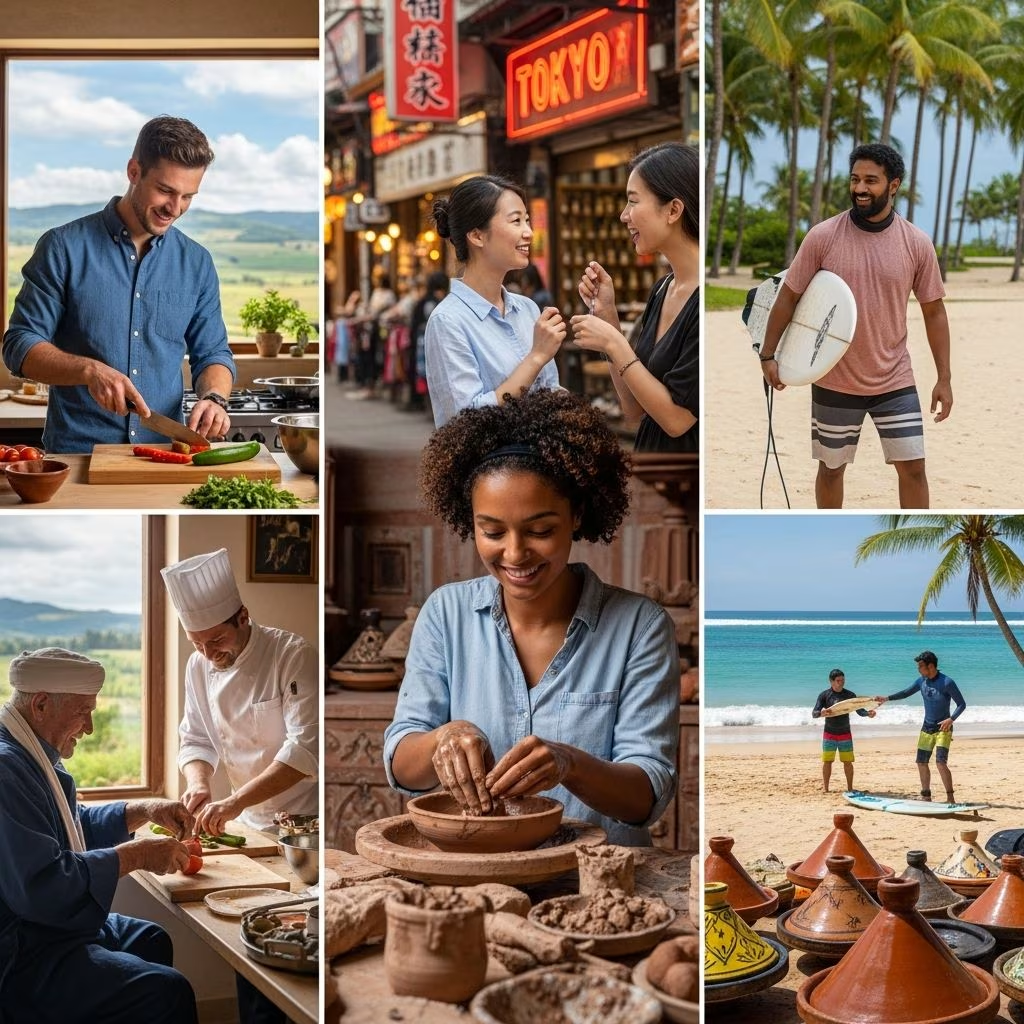 Travel Essentials
The modern traveler seeks more than postcards and photographs. Today’s adventurers crave meaningful experiences that leave lasting impressions and tangible capabilities. Educational tourism—combining leisure with skill acquisition—has emerged as a powerful way to maximize the value of time spent abroad. Rather than passively observing a destination, active learners become participants in their surroundings, gaining competencies while building authentic connections to unfamiliar cultures and environments.
Educational travel differs fundamentally from conventional sightseeing. When you engage in structured learning during vacation, you develop competencies that extend far beyond the trip itself. Whether mastering a new language, perfecting culinary techniques, or honing outdoor survival skills, these acquisitions enrich your personal capabilities while deepening your appreciation for the destination. The learning process itself becomes the primary attraction, transforming how you interact with local communities and environments.
This approach also creates stronger cultural bridges. When you study a language with native speakers, learn traditional crafts from local artisans, or participate in community-based activities, you move beyond tourist stereotypes. You become a genuine participant in the destination’s culture rather than a mere observer passing through.
For those drawn to wilderness experiences, several destinations offer intensive training in advanced outdoor capabilities. These programs transform novices into confident outdoor practitioners while immersing participants in some of Earth’s most dramatic landscapes.
Patagonia, spanning Argentina and Chile, stands as a premier destination for outdoor skill development. The region’s guided mountaineering courses teach participants rock climbing, rope management, avalanche awareness, and high-altitude survival techniques. Experienced instructors lead climbers through challenging terrain while explaining proper technique and building the physical stamina necessary for extended alpine expeditions. The dual benefit—acquiring practical skills while experiencing some of South America’s most spectacular scenery—makes this region particularly attractive for serious outdoor learners.
Beyond mountaineering, Patagonia offers courses in wilderness navigation using map and compass, backcountry survival, and ranch management. These diverse offerings appeal to different skill levels and interests, ensuring both beginners and experienced outdoors people find appropriate challenges.
In Argentina’s Parque Nacional Nahuel Huapi, travelers can train as traditional gauchos. This isn’t passive horseback riding on tame steeds. Instead, participants learn cattle management, navigate challenging mountain terrain on horseback, and develop horsemanship skills across demanding ranch landscapes. The immersive nature of this experience—living temporarily as ranch workers and learning authentic cowboy techniques—provides cultural insight alongside practical horse handling expertise.
For those accustomed to heated indoor pools, open-water swimming presents an entirely different challenge. Specialized programs in the British Isles’ Lake District offer structured introductions to open-water swimming suitable for complete beginners through experienced triathletes. Expert guides teach proper breathing techniques, cold-water adaptation, stamina building, and safety protocols while allowing participants to develop confidence in natural water environments. The experience combines physical skill development with the meditative qualities of swimming in serene natural settings.
Learning to cook local cuisine represents one of travel’s most accessible and rewarding skill-building opportunities. Food-focused programs ground participants in ingredient selection, preparation techniques, and the cultural significance of traditional dishes.
In Thailand, cooking schools typically operate on the principle of market-to-table learning. Instructors collect students from accommodations, visit bustling local markets together, and guide participants in selecting fresh ingredients. During these market visits, students learn to identify quality produce, understand seasonal availability, and discover the regional spice varieties fundamental to Thai cuisine. Classes then move to kitchen settings where instructors demonstrate proper knife skills, sauce preparation, and the balancing of flavors that define Thai cooking. This structure ensures students understand ingredient sourcing alongside technique.
France’s southwestern regions offer immersive culinary programs focusing on traditional French cooking methods and ingredient mastery. Programs may concentrate on butchery techniques, sauce preparation, or pastry arts. Participants work alongside professional chefs, learning skills passed through culinary generations. Similarly, other European destinations provide specialized training: cheese-making in forest regions, bread-baking in mountain villages, and truffle hunting combined with olive oil production in Italian settings.
Language learning accelerates dramatically when combined with immersive travel experiences. Rather than classroom-only instruction, immersive programs integrate daily lessons with real-world practice in social settings.
Seville, Spain offers language programs structured around practical daily use. Morning classroom sessions teach grammar and vocabulary while afternoon time is reserved for practicing Spanish in authentic settings—conversing with locals over traditional tapas, navigating markets, and participating in community activities. This rhythm ensures students develop classroom knowledge while building confidence in spontaneous conversations. The city’s vibrant culture and welcoming locals create an environment where language practice feels natural rather than forced.
Cuba presents another compelling Spanish-learning destination, with programs often combining language instruction with dance lessons and cultural exploration. Participants attend daily group Spanish classes alongside salsa dancing instruction, participating in guided excursions and spending leisure time in cultural sites. The multi-sensory approach—learning through language, movement, and cultural participation—engages different learning styles simultaneously.
Quebec City offers French language programs paired with cultural activities including cooking instruction and historical tours. The city’s European character and predominantly French-speaking population create natural immersion conditions. Programs typically structure intensive classroom instruction alongside cultural activities that require French language use, reinforcing learning through practical necessity.
Preserving traditional crafts through teaching represents both cultural preservation and extraordinary learning opportunity. Artisans worldwide welcome motivated students into their workshops.
In Kyoto, Japan, traditional kintsugi workshops teach the Japanese art of repairing broken pottery with gold. This ancient practice carries profound philosophical meaning—embracing imperfections and finding beauty in brokenness. Participants learn specialized techniques for creating gold-infused repairs while engaging with centuries-old aesthetic principles. The hands-on experience of working with gold and ceramic provides both technical skill and meditative calm.
Santa Fe, New Mexico’s rich artistic heritage makes it ideal for learning traditional crafts. Pottery workshops led by local artists teach clay shaping and glazing using techniques handed down through generations. Participants work directly with master potters, learning not just technique but the cultural and historical context embedded in these art forms. Many participants take home finished pieces they’ve created, carrying forward the skills they’ve acquired.
Venice offers opportunities to learn traditional glass-blowing techniques from artisans who maintain centuries-old methods. Similarly, various destinations provide metalworking instruction, allowing participants to forge functional or decorative pieces under expert guidance.
Beyond the primary categories, numerous specialized programs cater to specific interests and skill levels.
Iceland’s Arctic Circle provides dramatic settings for photography skill development. Instructors teach composition, lighting management, and technical camera operation while participants photograph extreme natural conditions. The challenging environment forces photographers to master their equipment while creating stunning portfolio pieces.
Flamenco guitar instruction combined with Spanish language study in Seville creates multi-dimensional learning experiences. Students develop musical proficiency while deepening cultural understanding of this quintessentially Spanish art form.
Semester-long programs combining multiple learning objectives appeal to younger travelers with extended availability. Programs incorporating trekking, kayaking, Spanish language study, and community engagement across multiple South American locations provide comprehensive skill development alongside cultural immersion and environmental education.
| Skill Category | Recommended Destinations | Duration | Best For |
|---|---|---|---|
| Outdoor Adventure | Patagonia, Lake District | 3-7 days | Physical fitness enthusiasts |
| Language Immersion | Seville, Quebec City, Cuba | 1-4 weeks | Serious language learners |
| Culinary Arts | Thailand, France, Italy | 3-10 days | Food enthusiasts |
| Traditional Crafts | Kyoto, Venice, Santa Fe | 2-14 days | Artists and makers |
| Comprehensive Programs | Bolivia, Peru, multiple regions | Semester | Gap year travelers |
When planning a learning-focused trip, several factors merit careful consideration. Physical fitness requirements vary dramatically—mountain climbing demands different conditioning than pottery workshops. Time availability affects program selection; single-skill courses may require only a few days, while language immersion typically demands weeks for meaningful progress.
Budget considerations span from affordable local workshops to expensive semester programs. Many destinations offer mid-range options balancing quality instruction with reasonable costs. Research program reviews, instructor qualifications, and included amenities carefully before committing.
Group size and instructor-to-participant ratios significantly impact learning quality. Smaller groups typically allow more personalized instruction and better cultural interaction. Consider whether you prefer group learning environments or private instruction.
To extract maximum benefit from educational travel, approach programs with genuine commitment rather than casual interest. Participate actively in all sessions, ask questions thoughtfully, and practice skills consistently throughout your stay. Engage authentically with instructors and community members, moving beyond transactional learning relationships.
Document your progress through photos, journals, or videos. This reflection reinforces learning and creates memories beyond the skills themselves. Many participants find that continuing to practice learned skills after returning home deepens the entire experience.
Educational tourism transforms how travelers relate to destinations and carry experiences forward. Rather than returning home with souvenirs and stories, learning travelers bring developed capabilities and deepened cultural understanding. A Spanish-speaking traveler maintains connection to Seville through ongoing language use. A skilled rock climber recalls Patagonian peaks during future mountaineering adventures. A cook recreates Thai dishes at home, each meal sparking memories of market visits and instructor guidance.
Beyond personal transformation, educational travel supports local communities more equitably than conventional tourism. When you study with local artisans, learn from native language speakers, or train with community-based guides, your spending directly benefits those teaching you.
Transforming your next vacation from passive tourism into active skill development represents a fundamental shift in how you travel. By selecting destinations aligned with your interests and committing genuinely to learning, you return home not just with expanded capabilities but with deeper connections to the communities you visited. Educational travel elevates vacation from entertainment to transformation, creating ripples extending far beyond the trip itself.
