

 Travel Essentials
 Travel Essentials

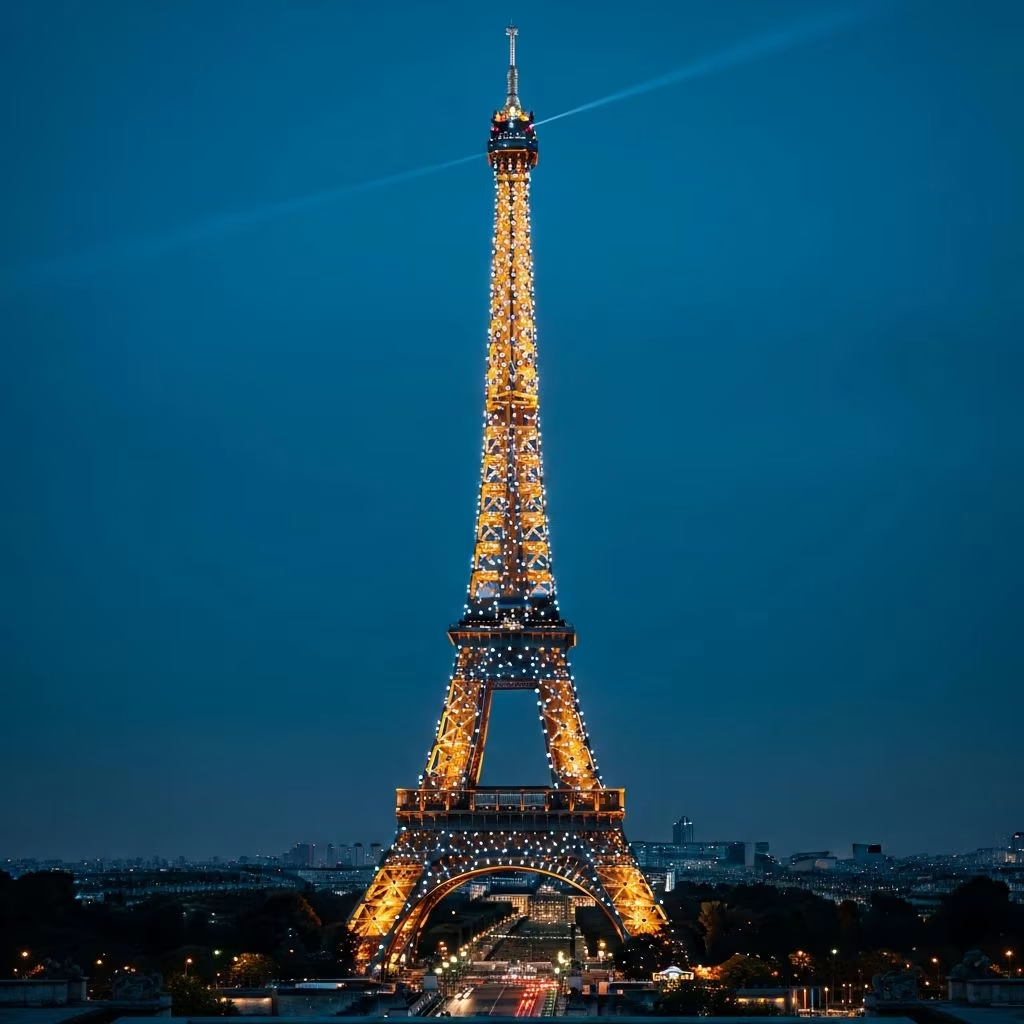
Explore the legal nuances of photographing the Eiffel Tower at night: personal use is fine, but commercial images require permission due to protected lighting design.
 Travel Essentials
The Eiffel Tower stands as one of the world’s most photographed landmarks, drawing millions of cameras each year. Yet, a common misconception persists: snapping its image after dark could lead to trouble. In reality, personal photographs enjoy broad freedom, but the glittering light display triggers specific French copyright protections that professionals must navigate carefully.
Since 1985, the Eiffel Tower has dazzled visitors with its nighttime illumination, featuring golden hues and hourly twinkling effects. This setup, crafted by lighting designer Pierre Bideau who passed away in 2021, qualifies as an original artistic work under French law. Copyright safeguards it for 70 years post-mortem, extending protection until at least 2091. The tower structure itself entered the public domain decades ago, as its original designer’s rights expired long before.
France’s approach diverges from many European neighbors. While the EU permits “freedom of panorama”—allowing photos of public art and buildings for any use—member states can opt out. France has chosen this path, treating temporary light installations as distinct creations ineligible for panorama exceptions.
For tourists and casual photographers, capturing the tower’s evening glow poses no legal risk. Posting to social media, printing for home walls, or sharing with friends falls squarely under personal enjoyment. The managing body, Société d’Exploitation de la Tour Eiffel (SETE), explicitly states that individuals need no authorization for private purposes.
This leniency stems from practical enforcement priorities: authorities target revenue-generating activities, not vacation snapshots.
Boundaries sharpen for profit-oriented endeavors. Blogs monetized via ads, stock photo sales, advertising campaigns, book publications, or merchandise designs demand prior SETE approval. Fees apply, scaled by usage scope, audience size, and medium.
Professional photographers must apply through SETE’s official channels, detailing project intent and distribution plans. Unauthorized commercial deployment risks fines, image takedowns, or lawsuits—though prosecutions against individuals remain rare.
| Usage Type | Daytime Tower | Nighttime Lights |
|---|---|---|
| Personal/Social Media | Allowed | Allowed |
| Commercial Print/Ad | Allowed | Permission + Fee |
| Stock Photo Sales | Allowed | Permission + Fee |
| Editorial News Use | Allowed | Case-by-Case |
Securing clearance involves these steps:
Daytime images sidestep these hurdles entirely, as the structure lacks active copyright.
This policy preserves creator rights and funds tower upkeep. SETE leverages licensing to support maintenance costs exceeding millions annually. Unlike permanent sculptures, illuminations count as “temporary” displays, dodging broader public domain lapses. Comparable rules apply to other French sites like Versailles fountains or Lyon light festivals.
Globally, variances abound. Germany’s panorama freedom covers all public visuals commercially; the UK mirrors this. In the US, fair use might defend some night shots, but French jurisdiction governs Eiffel imagery.
Influencers with sponsored posts or YouTubers reviewing Paris spots often blur lines. A travel vlog monetized through ads qualifies as commercial, necessitating clearance. Stock libraries purge night tower footage to evade violations, explaining its scarcity.
Enforcement stays selective: no tourist has faced jail for a holiday pic, per available records. Yet, high-profile cases—like a 2019 stock agency dispute—signal growing vigilance. Google Images overflows with lit-up towers, underscoring lax pursuit of amateurs.
Creative workarounds exist:
Drone pilots note added aviation rules atop copyright, confining flights to designated zones.
The Eiffel case spotlights evolving IP in public spaces. As LED artistry proliferates—think Dubai’s Burj Khalifa or Singapore’s Gardens by the Bay—similar protections may spread. Travelers should research local laws via tools like EUIPO guidelines or national copyright offices.
France balances tourism allure with artist remuneration, ensuring the tower’s magic endures legally funded.
No, for non-commercial personal accounts. Sponsored or ad-revenue posts require permission.
They vary: €100+ for small web uses, thousands for TV ads. Quote upon application.
Yes, nighttime clips with visible lights fall under the same rules.
Prominent night lighting still triggers restrictions if commercially exploited.
No court-enforced cases against tourists; focus remains on pros.
