
 Stays
StaysStays
Elqui Valley Stargazing Guide: Chile’s Best Astronomy Destination
Explore Elqui Valley's exceptional stargazing opportunities, from professional observatories to guided tours, amid stunning landscapes and rich cultural heritage.
 Stays
StaysElqui Valley in northern Chile stands out as one of the premier destinations for astronomy enthusiasts worldwide, thanks to its exceptionally clear skies available on approximately 300 days a year. Nestled between the towering Andes mountains and the Pacific Ocean, this high-elevation region minimizes light pollution and atmospheric interference, creating ideal conditions for observing the cosmos.
Why Elqui Valley Excels in Astronomy
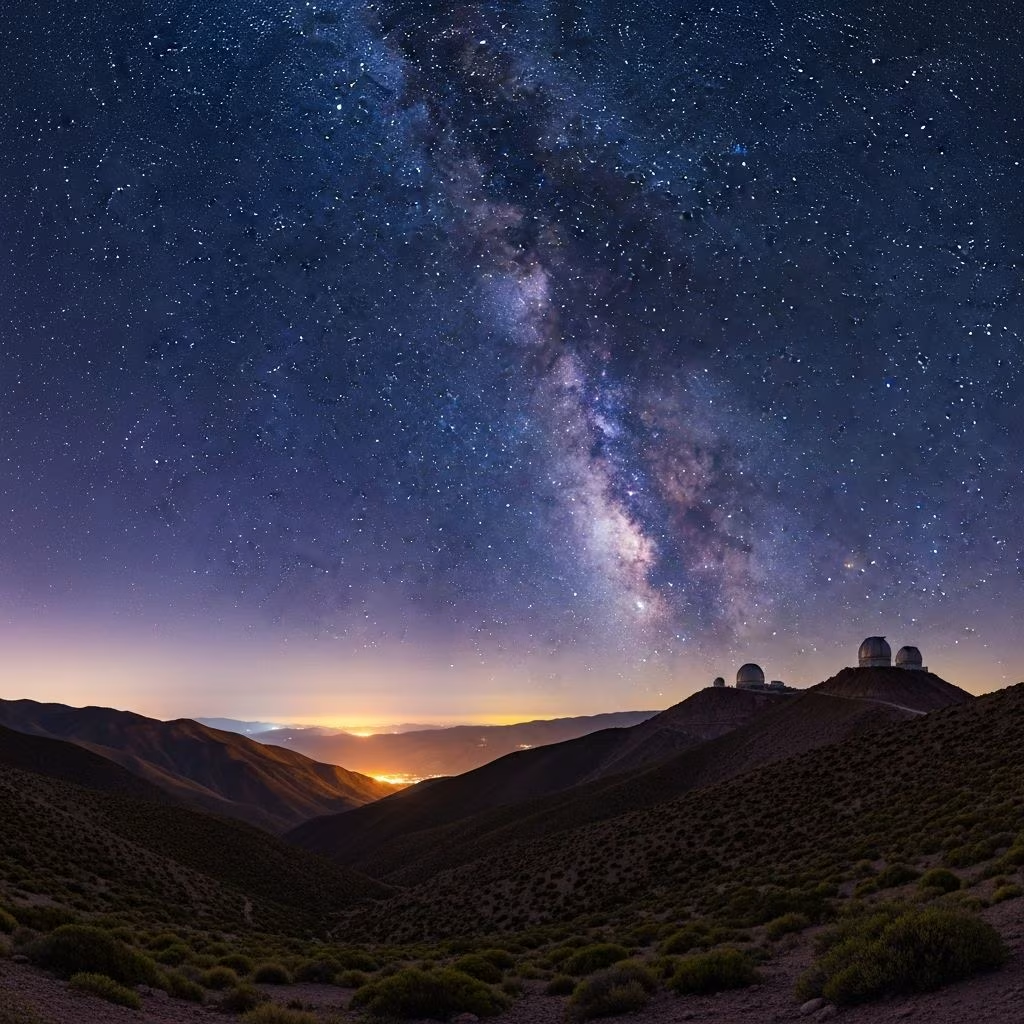
The valley’s unique geography plays a pivotal role in its astronomical fame. Surrounded by steep Andean peaks, it forms a natural observatory bowl where dry desert air and minimal cloud cover prevail. In 2015, the International Astronomical Union recognized over 90,000 acres of the valley as the world’s first International Dark Sky Sanctuary, underscoring its global significance. Professional observatories like those at Cerro Tololo, Gemini, and SOAR capitalize on these conditions for cutting-edge research.
Daytime reveals lush vineyards and rugged terrains, but nights transform the valley into a celestial spectacle. The absence of urban glow allows naked-eye views of the Milky Way, planets, and deep-sky objects. This blend of natural beauty and scientific prowess draws astro-tourists seeking immersive experiences.
Top Observatories for Visitors
Elqui Valley hosts several accessible observatories offering guided tours. These facilities cater to all levels, from beginners to seasoned stargazers.
- Observatorio Cerro Mamalluca: Located 9km northeast of Vicuña, this popular site provides bilingual group tours using 30cm telescopes to view the Moon, Jupiter, Saturn, and constellations.
- Observatorio del Pangue: Situated 17km south of Vicuña in a light-pollution-free zone, it features small-group sessions (up to 10 people) with a powerful 40cm T400 telescope for galaxies, nebulae, and star clusters.
- Cancana Observatory: In Cochiguaz, this pioneer tourist observatory, operational for over 27 years, boasts some of the cleanest skies globally in a wire-free ‘universal lookout’ area.
These venues often include educational narratives on cosmic phenomena, enhancing the viewing with laser pointers for constellation identification.
Planning Your Astrotourism Adventure
Vicuña serves as the ideal hub for explorations, with easy access to multiple sites. Reservations are essential, especially during peak seasons, as tours fill quickly. Expect 1-2 hour sessions starting post-sunset, blending telescope observations with naked-eye sky mapping.
Combine stargazing with daytime pursuits: hike scenic trails, taste pisco from local distilleries, or visit historical sites tied to indigenous Molle, Diaguita, and Inca cultures. The Elqui Valley Heritage Route integrates astronomy with gastronomy and landscapes for a holistic itinerary.
| Observatory | Location | Key Features | Best For |
|---|---|---|---|
| Cerro Mamalluca | Near Vicuña | 30cm telescopes, group tours | Beginners, families |
| Del Pangue | South of Vicuña | 40cm T400 telescope, small groups | Deep-sky enthusiasts |
| Cancana | Cochiguaz | Ultra-clear skies, tourist pioneer | Immersion seekers |
Unique Accommodations Under the Stars
For an unforgettable stay, opt for astro-friendly lodgings like dome yurts at Elqui Domos near Pisco Elqui. These transparent structures allow stargazing from bed amid vineyard surroundings. The high-desert setting ensures late sunrise, maximizing evening sky time. Many properties minimize lighting to preserve darkness, aligning with the sanctuary ethos.
Cultural and Natural Companions to the Stars
Beyond the night sky, Elqui Valley pulses with heritage. Ancient cultures shaped its history, evident in archaeological remnants. Modern visitors enjoy pisco tastings—Chile’s iconic spirit distilled from valley grapes—and farm-fresh cuisine. The region’s energy, often described as spiritually charged, complements astronomical pursuits.
Rugged hikes reveal diverse ecosystems, from river valleys to mountain vistas, providing daytime contrast to nocturnal wonders. This multifaceted appeal positions Elqui as more than a stargazing spot—it’s a complete sensory destination.
Practical Tips for Stargazers
- Visit in winter (June-August) for clearer skies, though summer offers milder temperatures.
- Bring warm layers; high-altitude nights chill quickly.
- Book tours in advance via official sites to avoid sellouts.
- Respect dark sky rules: use red flashlights and avoid white lights.
- Combine with nearby La Serena for urban amenities, 100km south.
FAQs
What makes Elqui Valley’s skies so clear?
High elevation, dry air, Andean sheltering, and 300 clear days annually create optimal viewing.
Are tours suitable for beginners?
Yes, most offer guided, bilingual explanations with telescopes and naked-eye sessions.
Can I visit professional observatories?
Tourist sites like Mamalluca and Pangue provide access; major research ones like Gemini have limited public programs.
Best time for stargazing?
Year-round, but July features events like solar eclipses (past 2019 notable).
How to get there?
Fly to La Serena, then drive 1-2 hours north; shuttles and tours available.
Preserving the Cosmic Legacy
Elqui’s status as a World Star Reserve hinges on collective efforts to combat light pollution. Tourists contribute by supporting eco-conscious operators and adhering to guidelines. This commitment ensures future generations witness the same breathtaking vistas.
In summary, Elqui Valley merges science, nature, and adventure into unparalleled astrotourism. Whether peering through telescopes at nebulae or tracing constellations by laser, the experience redefines connection to the universe.
References
- Elqui Valley: a natural astronomical observatory — Chile Travel. N/D. https://chile.travel/en/blog/elqui-valley-a-natural-astronomical-observatory/
- A stargazer’s guide to the Elqui Valley — Lonely Planet. N/D. https://www.lonelyplanet.com/articles/the-celestial-wonders-of-the-elqui-valley
- Astronomical Observation in the Elqui Valley – Nights of Stars — TripAdvisor. N/D. https://www.tripadvisor.com/AttractionProductReview-g303674-d19075163-Astronomical_Observation_in_the_Elqui_Valley_Nights_of_Stars-La_Serena_Coquimbo_Re.html
- CHILE: Dome yurt under the stars in Elqui Valley — wrenee. N/D. https://www.wrenee.com/blog/elqui-valley
- Why Elqui Valley is one of the best destinations in Chile — GoChile.cl. N/D. https://www.gochile.cl/en/articles/why-elqui-valley-best-destinations-chile-world-to-see-the-stars.htm
- Visit the remote Elqui Valley Tours & Holidays, Chile — The Latin America Travel Company. N/D. https://www.thelatinamericatravelcompany.com/destinations/chile/places-to-visit/elqui-valley/
← Previous
Edinburgh Festivals 2026: Dates, Highlights & Planning Guide
Next →
Best Summer Road Trips in the USA: Top Scenic Routes and Destinations
Related Reading