

 Travel Essentials
 Travel Essentials

Explore England's geography, heritage, customs, cuisine, and top destinations with insider tips to navigate this iconic nation confidently.
 Travel Essentials
England, the heart of the United Kingdom, blends ancient history with modern vibrancy, offering travelers a tapestry of experiences from bustling cities to serene countryside. Covering over 50,000 square miles and home to more than 56 million people, it boasts fertile lands, industrial legacies, and global cultural influences.
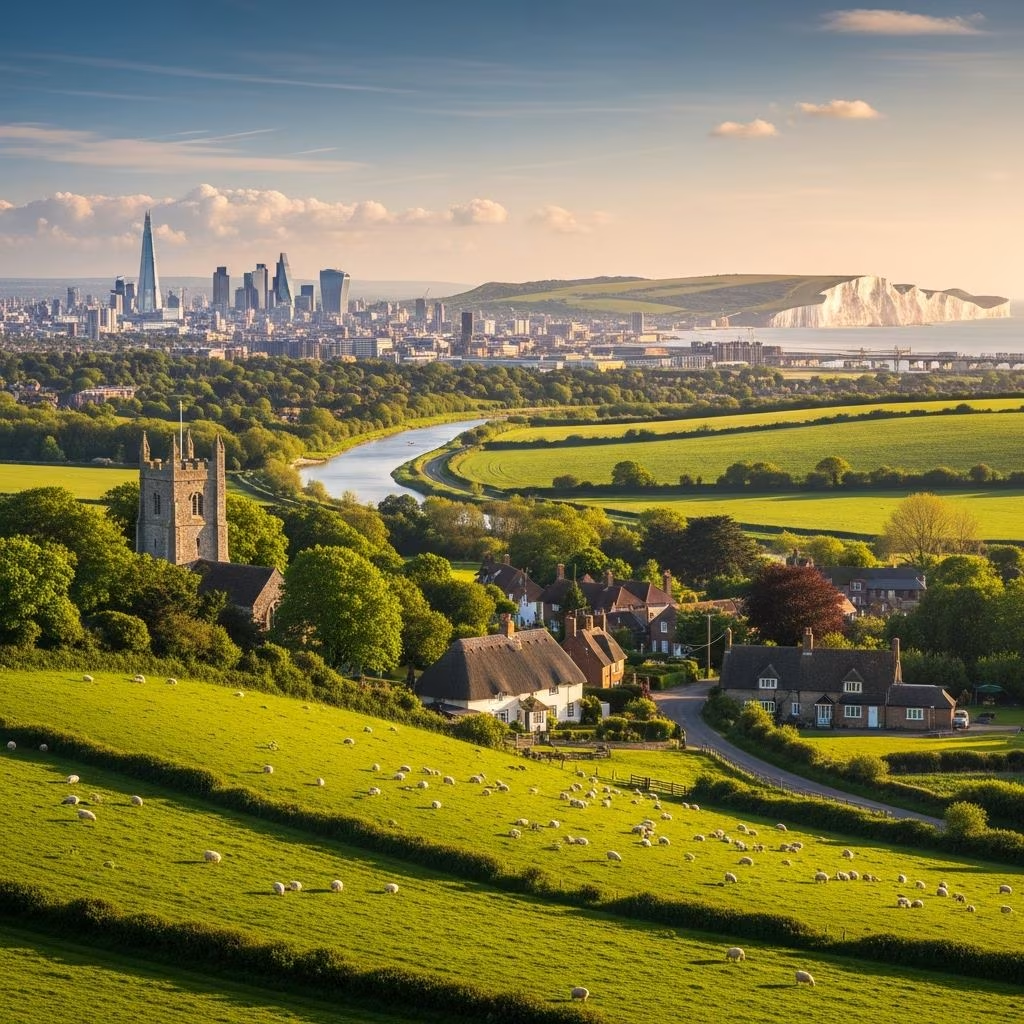
England occupies the southern two-thirds of Great Britain, bordered by Scotland to the north, Wales to the west, and surrounded by seas including the North Sea, English Channel, and Irish Sea. Its landscape varies dramatically: rolling hills in the Cotswolds, dramatic peaks in the Lake District, rugged Cornish coasts, and flat fens in East Anglia. No point is more than 77 miles from tidal waters, making coastal escapes accessible.
Rivers like the Thames, Severn, and Trent crisscross the country, supporting agriculture that produces wheat, barley, potatoes, and livestock—meeting 60% of food needs with just 2% of the workforce. Natural resources such as coal, petroleum, natural gas, and limestone have fueled its economy for centuries.
| Region | Key Features | Must-See Spots |
|---|---|---|
| South East | Chalk cliffs, historic ports | White Cliffs of Dover, Brighton Pier |
| West Country | Moors, beaches | Dartmoor, Cornwall beaches |
| Midlands | Canals, castles | Stratford-upon-Avon, Warwick Castle |
| North | Hills, lakes | Yorkshire Dales, Lake District |
Human habitation dates to the Upper Paleolithic, with Celtic, Roman, Anglo-Saxon, Viking, and Norman influences shaping its story. Unified in the 10th century, England pioneered the Industrial Revolution in the 18th century, transforming Manchester, Birmingham, and Liverpool into manufacturing powerhouses and sparking global change.
Home to the world’s oldest universities—Oxford (1096) and Cambridge (1209)—England birthed the English language, common law, parliamentary democracy, and innovations like the World Wide Web by Tim Berners-Lee. Its literary giants, from Shakespeare to Austen, drew inspiration from its landscapes.
England’s constitutional monarchy, currently led by King Charles III since 2022, symbolizes continuity. The sovereign is head of state but holds ceremonial powers, barred from the House of Commons. The Union Jack flag represents the UK, while England’s St. George’s Cross flies proudly.
Regional identities thrive: Yorkshire folk are hearty, West Country voices melodic, Midlands industrious. This diversity fosters pride in local dialects, foods, and festivals.
Politeness defines interactions—queue patiently, say “please” and “thank you,” and avoid direct confrontation. Personal space matters; small talk about weather is ice-breaking gold. Tipping is modest: 10% in restaurants, rounding up for taxis.
Pub culture is sacred: buy rounds, stand at the bar to order, and savor pints. Dress smart-casual; wellies for countryside, layers for unpredictable weather. Sundays are quieter, with many shops closed.
England’s reserved charm rewards patience: a quiet “cheers” opens doors to genuine hospitality.
England’s food scene mixes hearty classics with global fusion. Fish and chips, sourced from North Sea fleets, remain timeless. Sunday roasts feature beef, Yorkshire pudding, and veg. Regional specialties include Cornish pasties, Lancashire hotpot, and afternoon tea with scones, clotted cream, and jam.
Pub grub offers pies, ploughman’s lunches. Vegetarians thrive on cheeses, pies, and Indian influences from historical ties. Tea consumption leads globally—try it milky and strong. Craft beers, gins, and ciders showcase brewing heritage.
| Dish | Region | Key Ingredients |
|---|---|---|
| Full English Breakfast | Nationwide | Bacon, eggs, black pudding, beans, toast |
| Cottage Pie | North | Minced beef, veg, mashed potato |
| Sticky Toffee Pudding | North | Date sponge, toffee sauce |
US citizens need a valid passport for stays up to six months; no visa required. Check post-Brexit rules for other nationalities. Fly into Heathrow, Gatwick, or Manchester; trains via National Rail connect efficiently.
London’s Underground (Tube), buses, and black cabs are iconic. Oyster cards or contactless payments simplify fares. Driving? Left-side roads, roundabouts; rent autos for rural freedom but brace for narrow lanes. Trains reach Lake District or Cornwall seamlessly.[10]
London dazzles with Tower of London, Buckingham Palace, British Museum—but venture out. Bath’s Roman baths, Stonehenge’s mysteries, Oxford’s spires. York’s medieval walls, Edinburgh day trips (Scotland). Lake District’s Wordsworth trails, Cornwall’s Eden Project.[10]
Seasonal highlights: Spring bluebells, summer festivals, autumn colors, winter markets. Peak summer crowds; shoulder seasons (May, Sept) ideal.[10]
Book attractions ahead: Tower, Windsor Castle. Weather varies—pack rain gear, sturdy shoes. Cashless society, but cards accepted widely. NHS healthcare for emergencies; travel insurance advised. Mobile data via eSIMs.
Sustainable travel: Use public transport, support local farms. Respect countryside code—no littering, stick to paths.[10]
US citizens do not for stays under six months with a valid passport. Others check UKVI.gov.uk.
May-June or September-October for mild weather, fewer crowds.[10]
Moderate: London pricier, north cheaper. Budget £100-200/day.[10]
No, pound sterling (£). ATMs widespread.
Yes, high quality nationwide.
From prehistoric stones to digital revolutions, England’s layers invite endless discovery. Whether hiking moors, pub-hopping, or palace-gazing, it captivates with authenticity and warmth. Plan thoughtfully, embrace the quirks, and let this island nation weave its magic.
