

Food & Culture Stays Travel Essentials Travel Guides Trip Ideas
Categories
From the Blog
Remy’s Ratatouille Adventure at EPCOT: Ride Review, Tips & 2D Update
Travel Essentials

England’s 10 National Parks: A Guide to Landscapes, Wildlife and Travel

Explore England's 10 national parks: from rugged moors to serene lakes, this guide details top attractions, activities, and conservation efforts for unforgettable trips.
Travel Essentials

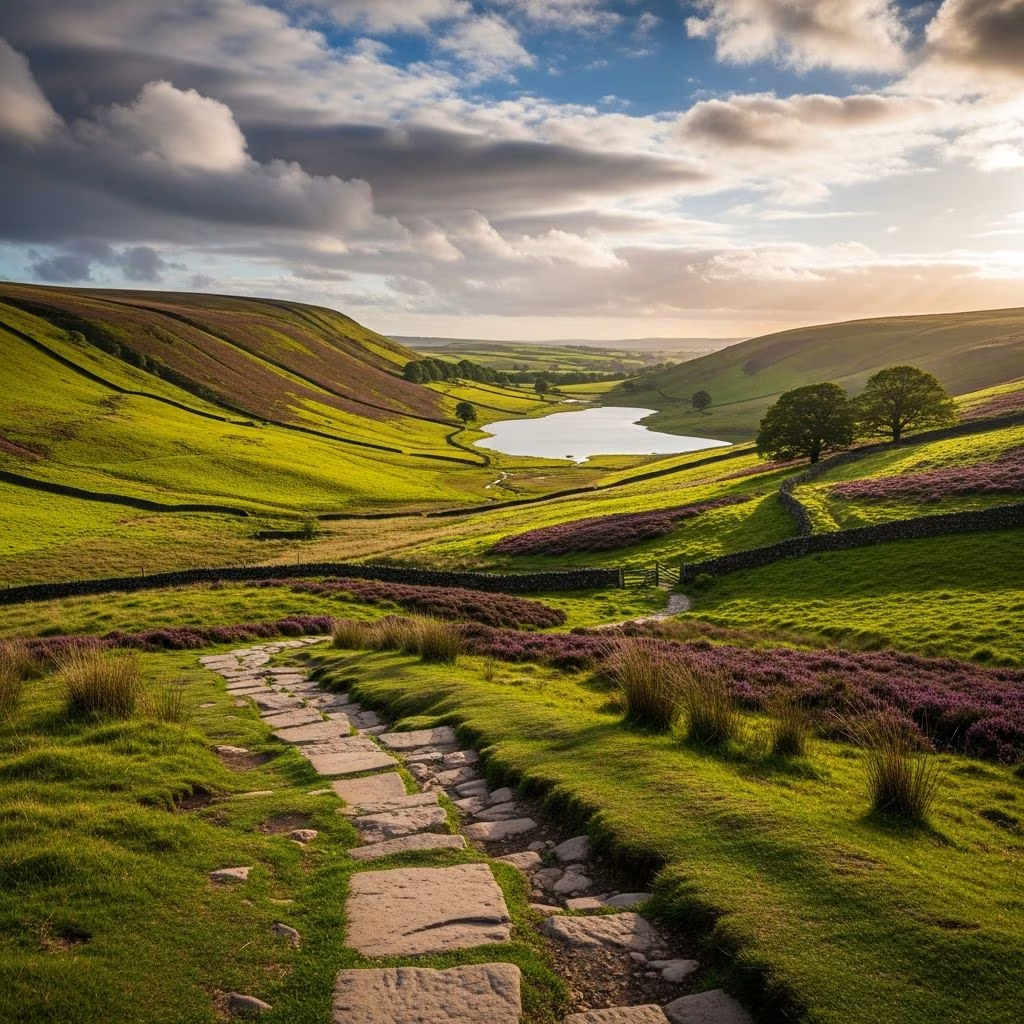
England boasts ten national parks that protect some of the most breathtaking natural areas in the United Kingdom. These protected landscapes span moors, dales, forests, and coastlines, covering about 10% of England’s land area and offering spaces for recreation, wildlife conservation, and cultural heritage preservation.

Overview of England’s Protected Landscapes

National parks in England serve as vital green lungs, providing habitats for diverse species while allowing public access for hiking, cycling, and wildlife watching. Established under specific legislation, they balance conservation with sustainable tourism. Unlike strictly wilderness areas elsewhere, these parks include communities and working farms, fostering a unique blend of nature and human history.

The total expanse of national parks in England and Wales reaches approximately 16,267 square kilometers, with England’s ten parks averaging over 1,000 square kilometers each. They attract millions of visitors annually, supporting local economies through eco-tourism.

Northern England’s Wild Expanses

The North hosts four parks known for rugged terrain and dramatic vistas, ideal for those seeking solitude and adventure.

  • Northumberland National Park: Spanning vast heaths and ancient hill forts, this park features Hadrian’s Wall, a UNESCO site. Hikers traverse the Cheviot Hills, spotting red squirrels and peregrine falcons.
  • North York Moors: Rolling heather moors and coastal cliffs define this area. The Cleveland Way trail offers sea views, while Goathland village inspired a famous TV series.
  • Yorkshire Dales: Limestone valleys, dry stone walls, and waterfalls like Aysgarth Falls characterize this park. Cycling routes and cheese trails highlight rural charm.
  • Lake District: England’s largest, with glacial lakes and fells immortalized by poets. Scafell Pike challenges climbers, and Windermere offers boat trips.

Midlands and Eastern Gems

Central and eastern parks provide gentler landscapes with unique ecosystems.

  • Peak District: The UK’s first national park (1951), featuring gritstone edges and limestone dales. Chatsworth House adds grandeur.
  • Broads: A wetland wonder with navigable rivers and broads (shallow lakes). Boating and birdwatching thrive here, home to rare marsh harriers.

Southern and Western Moors and Forests

The southwest and south deliver coastal drama and ancient woodlands.

  • Dartmoor: Granite tors, wild ponies, and prehistoric sites. Hiking the Two Moors Way reveals misty mires.
  • Exmoor: Coastal paths meet heather moors; spot Exmoor ponies and red deer. The Valley of Rocks stuns with bizarre formations.
  • New Forest: Ancient woodland with free-roaming ponies and deer. Cycling paths crisscross this biodiversity hotspot.
  • South Downs: England’s newest (2010), rolling chalk hills from Winchester to Eastbourne. The South Downs Way offers panoramic views.

Top Activities Across the Parks

Each park caters to varied interests, from adrenaline rushes to peaceful rambles.

ActivityBest ParksHighlights
HikingLake District, Peak District, DartmoorLong-distance trails like Pennine Way; guided fell walks
CyclingYorkshire Dales, South Downs, New ForestTraffic-free paths; mountain biking in Grizedale
Wildlife WatchingNorthumberland, Broads, ExmoorBird hides; otter spotting at dawn
Water SportsBroads, Lake DistrictCanoeing, sailing; ranger-led tours
ClimbingPeak District, Yorkshire DalesBouldering; via ferrata experiences

Wildlife and Biodiversity Hotspots

England’s parks safeguard endangered species. The Lake District hosts peregrine falcons and arctic terns, while Dartmoor’s ponies roam freely. New Forest’s old-growth oaks support rare butterflies. Conservation efforts combat climate change impacts, with rewilding projects restoring peatlands in the North York Moors.

Historical and Cultural Treasures

Beyond nature, parks preserve heritage. Peak District’s caverns reveal industrial pasts; Northumberland’s Roman remains educate on ancient frontiers. Literary ties abound: Wordsworth’s Dove Cottage in the Lake District draws fans.

Planning Your Visit: Practical Tips

Best times vary: summer for long days, autumn for colors. Use public transport or park-and-ride schemes to minimize impact. Stay in eco-lodges or glamping sites supporting locals.

  • Book ahead for peak season campsites.
  • Follow the Countryside Code: stick to paths, take litter home.
  • Check weather apps; moors can flood quickly.

Sustainable Tourism in National Parks

Parks promote responsible visits. National Parks England advocates for nature recovery, urging low-carbon travel. Initiatives like peat restoration in the Peak District fight erosion. Visitors contribute via voluntary levies or wildlife surveys.

Comparing England’s Parks at a Glance

ParkSize (sq km)Key FeatureVisitor Numbers (annual, approx.)
Lake District2,362Lakes & mountains15 million
Peak District1,437Moors & dales10 million
Yorkshire Dales1,762Waterfalls4 million
North York Moors1,432Heather moors8 million
Others (avg.)~1,000Diverse2-5 million

Note: Sizes derived from official mappings; visitor data from park authorities.

Frequently Asked Questions (FAQs)

How many national parks are in England?

There are 10 national parks in England, part of the UK’s 15 total.

Are dogs allowed in the parks?

Yes, but on leads in most areas to protect livestock and wildlife. Check specific rules per park.

What’s the best park for families?

New Forest or Broads offer easy access, boating, and animal spotting.

Do national parks charge entry fees?

No, entry is free, but parking and activities may incur costs.

Can I camp overnight?

Yes, in designated sites or wild camping where permitted (e.g., Dartmoor).

Future of England’s National Parks

With growing pressures from climate change and tourism, parks focus on resilience. Projects aim to double woodland cover and restore rivers. Visitors play a key role in advocacy for stronger protections.

England’s national parks offer timeless escapes. Whether scaling peaks or meandering forests, they reconnect us to nature’s power.

References

  1. National parks of the United Kingdom — Wikipedia. 2026 (accessed). https://en.wikipedia.org/wiki/National_parks_of_the_United_Kingdom
  2. See the best of Britain in its National Parks — VisitBritain. 2026 (accessed). https://www.visitbritain.com/en/things-to-do/see-best-britain-its-national-parks
  3. UK national parks — New Forest National Park Authority. 2026 (accessed). https://www.newforestnpa.gov.uk/about-us/who-we-are/uk-national-parks/
  4. National Parks England — National Parks England (.gov.uk equivalent authority). 2026 (accessed). https://nationalparksengland.org.uk
  5. National Parks — National Parks UK. 2026 (accessed). https://www.nationalparks.uk/parks/
  6. UK National Parks Map — National Parks UK (PDF). 2016 (authoritative map, still current). https://www.nationalparks.uk/app/uploads/2020/10/Map-NationalParks-names-2016.pdf
ME
medha deb
Medha Deb is an editor with…

Medha Deb is an editor with a master's degree in Applied Linguistics from the University of Hyderabad. She believes that her qualification has helped her develop a deep understanding of language and its application in various contexts. Medha specializes in the areas of beauty, health, sports, and wellness and is committed to ensuring that the content on the website is of the highest quality.Medha's passion for writing and editing began early in life when she joined a book writer's club with her mother. It was there that she discovered her love for the written word and the power it holds to inform, inspire, and transform lives. Since then, she has honed her skills as a writer and editor, working with a variety of clients and publications to produce compelling and informative content. Currently, she writes and edits for CultureTreker.She is also an ardent animal lover and dedicates her time and resources to the foster care of neonatal kittens, providing them with the love and attention they need to thrive. Her commitment to animal welfare is a testament to her compassion and empathy, and it underscores her belief in the importance of caring for the most vulnerable members of our society.

← Previous
Yellowstone Waterfalls Guide: Best Falls, Hikes, and Viewing Tips
‹›
