

 Travel Essentials
 Travel Essentials

Explore Iran's profound history, revolutionary changes, and daily realities through curated picks of novels, graphic memoirs, award-winning movies, and modern tracks.
 Travel Essentials
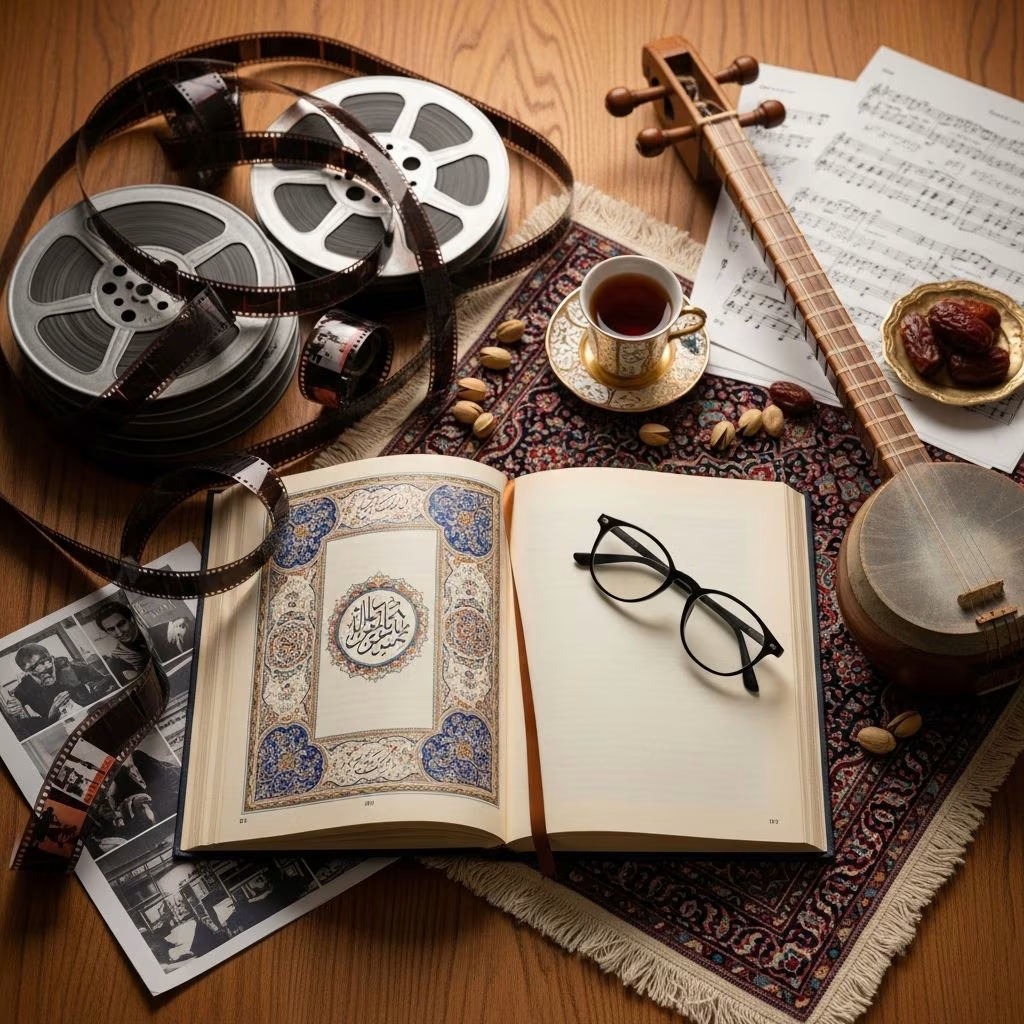
Iran’s cultural landscape offers profound insights into a nation shaped by ancient epics, revolutionary upheavals, and resilient artistry. While direct travel may be challenging due to advisories, engaging with its literature, cinema, and music provides an intimate portal to Persian identity, societal shifts, and human stories. This guide curates standout works across genres, highlighting timeless epics, personal memoirs, cinematic triumphs, and rhythmic anthems that capture Iran’s essence.
At the heart of Iranian identity lies a monumental poetic tradition that has preserved language and mythology for over a millennium. Ferdowsi’s Shahnameh, known as the Book of Kings, stands as a cornerstone. Composed around 1010 CE, this epic spans nearly 60,000 couplets, chronicling legendary kings, heroes, and battles from pre-Islamic Persia. Ferdowsi dedicated 33 years to this labor, deliberately crafting it in pure Farsi to counter Arabic linguistic dominance post-Arab conquest. It revives myths like Rostam’s feats and Sohrab’s tragedy, embedding moral lessons on justice, fate, and heroism.
Reading Shahnameh immerses one in Iran’s mythic origins, where gods, demons, and mortals intertwine. Modern translations, such as those by Dick Davis, make its grandeur accessible, revealing how it influences contemporary Iranian art, theater, and national pride. This epic not only saved Farsi but also fueled Persian cultural revivalism during turbulent eras.
20th-century Iranian novels dissect the clash between tradition and progress, often through satire, introspection, and social critique. Sadegh Hedayat’s The Blind Owl (1937) is a haunting existential tale of a painter trapped in opium-fueled hallucinations and societal decay. Hedayat, Iran’s most celebrated novelist abroad, draws from surrealism to portray a protagonist’s descent amid a failing quest for modernity. Its dense, symbolic prose has inspired global literary circles.
Iraj Pezeshkzad’s My Uncle Napoleon (1973) offers lighter satire, poking fun at 1940s Iranian bourgeoisie paranoia and family dynamics during Allied occupation. Centered on a young man’s romance amid exaggerated nationalist fears, it became a TV sensation, blending humor with insights into class and politics.
Simin Daneshvar’s Suvashun (1969), Iran’s first major feminist novel, follows Zari, a Shiraz housewife navigating WWII occupation and familial strife. Translated into 15+ languages, it explores women’s inner worlds against political turmoil, marking a milestone in Persian literature.
The 1979 Islamic Revolution reshaped Iran, birthing memoirs that humanize its chaos. Marjane Satrapi’s Persepolis (2000-2001), a graphic novel-duology, recounts her childhood amid bombs, veils, and exile. Satrapi’s stark illustrations blend humor and heartbreak, offering a youthful lens on war, repression, and identity.
Azar Nafisi’s Reading Lolita in Tehran details clandestine literature classes for women post-revolution. Interweaving Austen, Nabokov, and student lives, it celebrates forbidden Western classics as rebellion tools. Shirin Ebadi’s Iran Awakening, by the 2003 Nobel laureate, chronicles her legal battles for rights amid revolution’s fallout, from pre-1979 freedoms to enforced piety.
| Title | Author | Focus | Impact |
|---|---|---|---|
| Persepolis | Marjane Satrapi | Graphic memoir of youth in revolution | Global bestseller, film adaptation |
| Reading Lolita in Tehran | Azar Nafisi | Secret book clubs under repression | Inspires cultural resistance discussions |
| Iran Awakening | Shirin Ebadi | Lawyer’s fight for justice | Nobel Peace Prize winner |
Iranian cinema, despite censorship, has garnered international acclaim for nuanced storytelling. Asghar Farhadi’s A Separation (2011) won the 2012 Oscar for Best Foreign Language Film. It unravels a Tehran couple’s divorce, complicated by class tensions and an elderly father’s care, exposing ethical dilemmas in modern Iran.
Mohsen Makhmalbaf’s Gabbeh (1996) poetically unfolds a nomadic love story via a dyed carpet’s visions. Its lush visuals celebrate rural traditions against encroaching modernity. Majid Majidi’s Children of Heaven (1997), Oscar-nominated, tenderly follows siblings sharing shoes in poverty, highlighting child resilience.
Jafar Panahi’s The White Balloon (1995) tracks a girl’s quest for goldfish on New Year’s Eve. Abbas Kiarostami’s script won awards, capturing Tehran’s bustling streets through innocent eyes. These films master subtle critique within constraints, earning global praise.
Iranian music spans Sufi chants to underground pop, evading bans on Western influences. Ed Sheeran’s 2025 track Azizam (‘my dear’ in Farsi) surprised with its Farsi lyrics and video depicting joyous underground parties—dancing, feasting, featuring icons like Googoosh and Andy. It humanizes Iran beyond headlines.
Googoosh, pre-revolution diva, symbolizes lost glamour; her comeback resonates with diaspora. Contemporary artists blend tar lute with electronic beats, preserving heritage while innovating.
These selections transcend entertainment, illuminating Iran’s dualities: ancient pride versus modern strictures, personal freedom amid collective history. They foster empathy, challenging stereotypes of conflict with tales of love, ingenuity, and endurance. For travelers or armchair explorers, they prepare deeper appreciation.
Persepolis by Marjane Satrapi—its graphic format suits all ages, blending history with personal narrative.
Asghar Farhadi’s A Separation, exploring marriage and morality under societal pressure.
Yes, most like Shahnameh, My Uncle Napoleon, and Suvashun have acclaimed translations.
Underground scenes and crossovers like Azizam showcase vibrant defiance.
They offer profound virtual immersion, complementing future travels with context.
