

 Travel Essentials
 Travel Essentials

Teach kids essential outdoor skills that build confidence, independence, and a lifelong respect for nature through hands-on family adventures.
 Travel Essentials
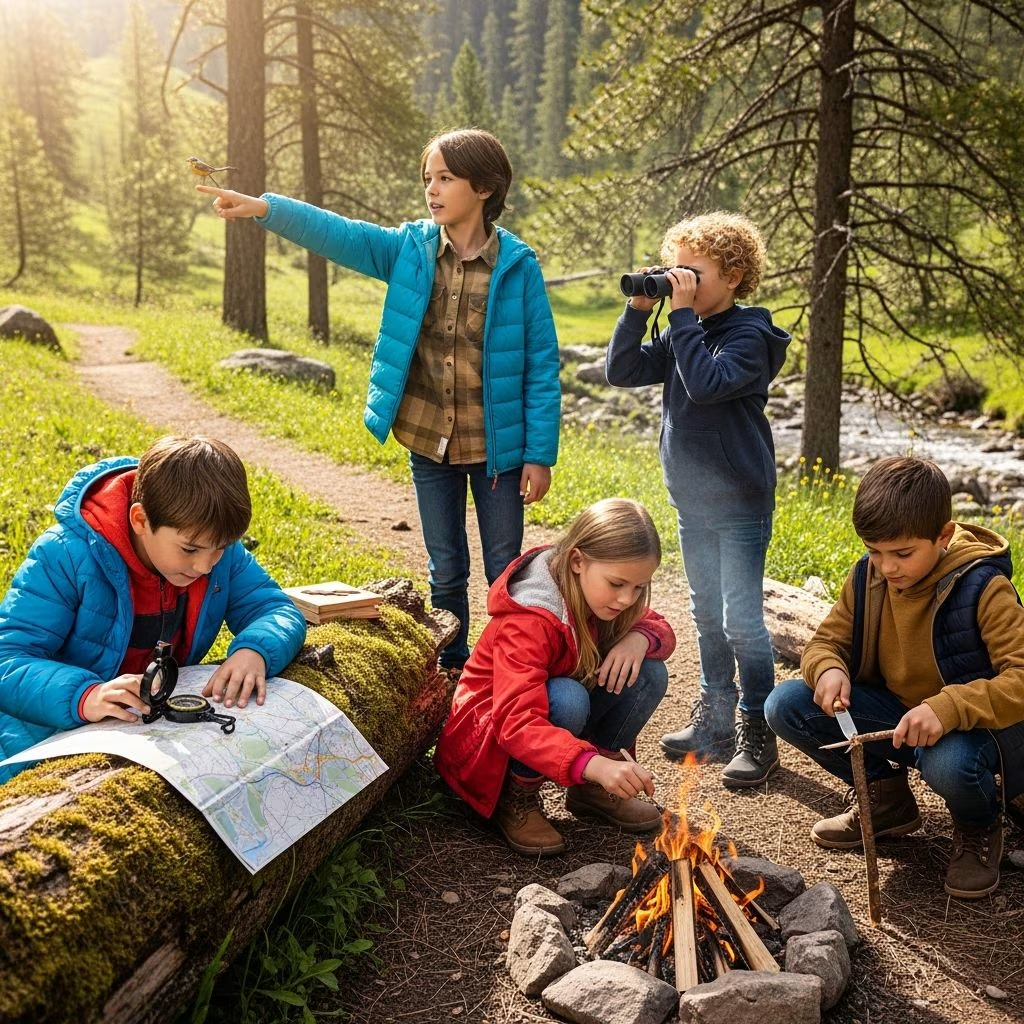
Teaching children essential outdoor skills transforms everyday nature outings into powerful learning experiences that build resilience, independence, and a profound respect for the environment. These abilities not only prepare kids for adventures but also equip them with life lessons in problem-solving, teamwork, and self-reliance.
Exposure to the outdoors counters the sedentary pull of screens, promoting physical health and mental well-being. Research highlights how such activities reduce childhood obesity risks and enhance emotional regulation, as kids who spend time outside exhibit lower stress levels and improved focus. Moreover, mastering practical skills instills confidence; children learn they can handle challenges, from minor setbacks to unexpected wilderness scenarios.
Family bonding strengthens through shared discoveries, like identifying animal tracks or cooking over an open flame. These moments create lasting memories while subtly teaching stewardship—ensuring natural spaces remain vibrant for future generations. Programs from organizations like scouting groups emphasize that early skill-building leads to lifelong adventurers who value conservation.
Fire building stands as a foundational skill, teaching patience and safety awareness. Start in a controlled backyard setting: gather tinder (dry grass or leaves), kindling (small twigs), and fuel wood (larger branches). Demonstrate a teepee structure, lighting from the base upward with matches or a striker.
Supervise closely, stressing rules like never leaving a fire unattended and fully extinguishing with water. This hands-on task boosts accomplishment, mirroring survival techniques used in camps. For added education, discuss fire’s role in ecosystems, such as controlled burns that renew forests.
Navigating without GPS hones spatial reasoning and decision-making. Introduce compasses and topographic maps, teaching kids to align north and plot simple routes using landmarks like rivers or hills. Natural cues, such as the sun’s path (rising east, setting west), add low-tech reliability.
Practice on short hikes: hide treasures marked on a hand-drawn map, rewarding accurate finds. This builds trust in one’s instincts, vital for orienteering games or real hikes. Orienteering fosters teamwork as groups debate paths, enhancing communication skills.
Constructing shelters sparks creativity and survival savvy. Use fallen branches for a lean-to: prop against a tree, layering leaves or pine boughs for insulation. Debris huts pile mounds of leaves over a frame, mimicking animal dens.
Test structures against rain simulations (hose water) to refine designs. This activity teaches resourcefulness—assessing terrain for wind protection—and physics basics like stability. Kids gain comfort knowing they can create safety anywhere outdoors.
Knots secure gear, build shelters, and even rescue in emergencies. Begin with the bowline for loops that won’t slip, then the square knot for binding items. Clove hitches attach ropes to poles, perfect for tarps.
Make it fun: tie knots to race or create friendship bracelets. Scouting traditions prove knots underpin countless outdoor tasks, from fishing to lashing frames. Regular practice turns fumbling fingers into deft tyers.
Tracking reveals nature’s stories through prints, scat, and rubs. Teach identifying deer hooves (cloven, pointed) versus canine paws (rounded claws). Look for trails, feeding signs, or bedding areas.
Journal finds with sketches and notes on time, weather, and location. This cultivates patience and curiosity, deepening ecological understanding—predator-prey dynamics or seasonal migrations. Binoculars and field guides amplify discoveries without disturbance.
Outdoor cooking merges nutrition with adventure. Use foil packets for veggies and meat over coals, or skewer marshmallows for s’mores. Emphasize hygiene: clean surfaces, cook thoroughly.
Intro safe foraging—dandelions for salads, berries with positive ID. Pair with water purification: boil or filter stream water, teaching self-sufficiency. Meals become celebrations of effort, bonding families around the fire.
| Skill | Tools Needed | Key Benefit |
|---|---|---|
| Fire Building | Matches, tinder | Warmth, cooking |
| Navigation | Compass, map | Direction finding |
| Shelter Building | Branches, leaves | Protection |
| Knot Tying | Rope | Securing loads |
| Tracking | Guidebook | Ecosystem insight |
Preserve wild spaces with Leave No Trace (LNT) principles: plan ahead, travel on durable surfaces, dispose waste properly, leave what you find, minimize campfire impact, respect wildlife, and be considerate. Practice litter cleanups at parks, sorting recyclables.
Stewardship tasks like trail maintenance or planting natives instill responsibility. Kids internalize that small actions safeguard biodiversity, turning them into eco-advocates.
Prevention trumps cure—teach S.T.O.P. (Stop, Think, Observe, Plan) if lost. Bright clothing and whistles aid rescuers. Basic first aid covers blisters (clean, bandage), sprains (RICE: Rest, Ice, Compression, Elevation), and insect bites (antihistamine).
Role-play scenarios to build calm responses. Swimming proficiency rounds out safety, enabling water-based fun confidently.
Tailor skills to development: toddlers sense textures (sun/shade play); school-age tie knots, track; teens lead navigation. Kinesthetic games like critter playgrounds (build bug habitats) engage all.
Kids may resist bugs or mud—frame as “adventure armor.” Short sessions prevent overwhelm; praise efforts over perfection. Weather flexibility teaches adaptability. Persistent exposure shifts mindsets from screen-loving to nature-craving.
Start with fire safety, basic navigation, and LNT to build foundational confidence without overwhelm.
Incorporate games, treasures hunts, and their interests like storytelling around campfires.
Yes, with constant supervision in controlled areas, emphasizing safety rules first.
Essentials: multi-tool, first aid kit, maps, rope, and weather-appropriate clothing.
Weekly short sessions or monthly overnights reinforce learning progressively.
Choose nearby spots: state parks with trails. Pack checklists, debrief post-trip—what worked, next goals. Join clubs for guided sessions. These outings yield healthier, happier kids attuned to nature’s rhythms.
