

 Travel Essentials
 Travel Essentials

Explore the 2025 wildfires that scorched 34% of Etosha National Park, their causes, impacts on wildlife, and why the park's regeneration makes it ideal for visits in 2026.
 Travel Essentials
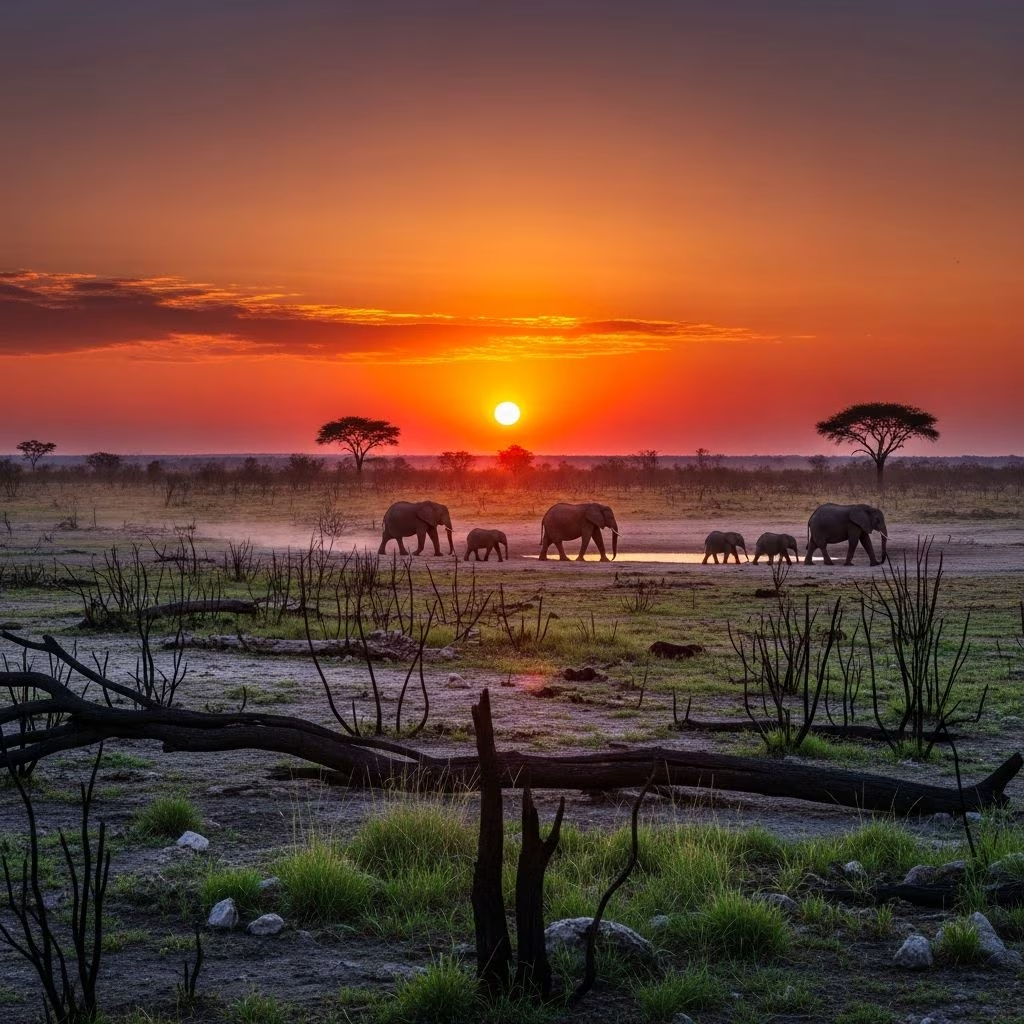
Etosha National Park in northern Namibia endured a massive wildfire in September 2025 that scorched nearly a third of its vast expanse, raising alarms for one of Africa’s premier safari destinations. Despite the destruction, the park’s resilience highlights fire’s role in its ecosystem, promising enhanced wildlife sightings for visitors in 2026.
The fire erupted on September 22, 2025, coinciding with World Rhino Day, in the southwestern sector of Etosha National Park. Strong winds and parched vegetation fueled its rapid spread, consuming grasslands and mopane woodlands before breaching park boundaries into nearby communal lands in Omusati and Oshana regions.
Dry conditions during the park’s arid season created perfect tinder, with contiguous dry grasses and shrubs igniting easily. Flaming embers, carried by gusts, sparked spot fires kilometers ahead, overwhelming containment efforts and turning a single front into multiple blazes across the landscape.
Official estimates indicate the inferno ravaged approximately 34% of Etosha’s 22,270 square kilometers, equating to about 7,700 square kilometers of charred terrain. This figure aligns closely with reports of over 38% or 853,946 hectares affected within just one week.
Some 30% of the park’s critical grazing lands were obliterated, severely impacting forage availability for herbivores. While no human casualties occurred, an undetermined number of animals perished, with ongoing assessments evaluating losses to species like black rhinos in this key stronghold.
| Impact Metric | Details |
|---|---|
| Burned Area | ~34-38% of park (7,700+ sq km) |
| Grazing Lands Affected | ~30% |
| Spread Duration | One week |
| Extension Beyond Park | Omusati and Oshana regions |
Authorities suspect unregulated charcoal production near park edges as the primary ignition source. This common livelihood activity for adjacent communities heightens risks during prolonged dry spells, when dry vegetation abounds.
Etosha’s fire history underscores such vulnerabilities. A 2011 blaze, also sparked by a charcoal kiln, burned 370,000 hectares, killing dozens of rhinos, giraffes, and elephants. These incidents reveal how external human activities intersect with natural dryness to amplify disasters.
Namibia’s government swiftly mobilized over 500 soldiers alongside firefighters, police, and volunteers. The Namibian Defence Force deployed 364 personnel for ground operations, with 40 troops and drone units aiding monitoring and cleanup. Air Force teams conducted aerial surveys, confirming no active fires post-outbreak.
Three veterinarians were dispatched to treat injured wildlife, while teams patrolled water points and corridors, encouraging visitors to report distressed animals. Regional councils, communities, and private partners collaborated on recovery, focusing on water repairs, veterinary aid, and landscape stabilization.
Etosha’s savannas and woodlands naturally burn every decade post-wet season growth, with lightning as a historical trigger. Annual rainfall of 250-500 mm fosters grass surges that dry into fuel. However, recent fires like 2025’s deviate from this rhythm due to human factors.
Black rhinos, a conservation priority, faced threats in their stronghold. While exact losses remain under evaluation, historical precedents like 2011’s toll emphasize vulnerability. Post-fire efforts prioritize these species alongside general wildlife monitoring.
Contrary to pure devastation, fire sustains Etosha’s health. Pre-human management, blazes cleared old vegetation, promoting nutrient-rich regrowth. Since 1981, rangers have harnessed prescribed burns, learning from uncontrolled events like 2011 and a partially managed 2012 fire.
The 2025 event, though severe, initiates renewal: fresh grasses draw herbivores, visibility improves in cleared areas, and green belts spur animal congregations. This cycle, evolved over millennia, positions fire as a rejuvenator rather than just a destroyer.
All rest camps, major roads, tourism loops, waterholes, and gates operate normally. No infrastructure damage or access closures affect safaris. The park remains safe, with no ongoing fire risks reported.
Aerial and ground assessments confirm stability, enabling full operations. Travelers report unchanged breathtaking views, now augmented by post-fire enhancements.
2026 promises peak viewing as regeneration peaks. New grass flushes attract grazers like zebras and springboks to waterholes, boosting densities. Bush clearance reveals hidden animals, from lions to elephants.
Etosha hosts 200,000 annual visitors for its iconic salt pan and 114 mammal species. Post-fire dynamics amplify encounters, blending drama with renewal. Book early for this transformed paradise.
The 2025 crisis spotlights needs for refined strategies. Enhanced prescribed burns, community charcoal regulations, and boundary firebreaks could mitigate risks. Independent ecological and socio-economic reviews will shape updated plans.
Global parallels, like NASA’s fire monitoring, underscore satellite tech’s value for early detection. Namibia’s response demonstrates effective scaling of military and civilian resources.
No, the park is fully open with all facilities operational.
About 34-38%, but recovery is underway.
Yes, enhanced visibility and new growth improve sightings.
Likely unregulated charcoal production amid dry conditions.
Unknown numbers; assessments and care ongoing.
Etosha’s saga reinforces balancing tourism, livelihoods, and ecology. Regulating adjacent activities, investing in fire tech, and fostering community ties will safeguard this gem. Visitors contribute via ethical travel, supporting funds for resilience.
As 2026 dawns, Etosha emerges stronger, its wildfires a testament to nature’s adaptability and human stewardship’s potential.
