

 Travel Essentials
 Travel Essentials

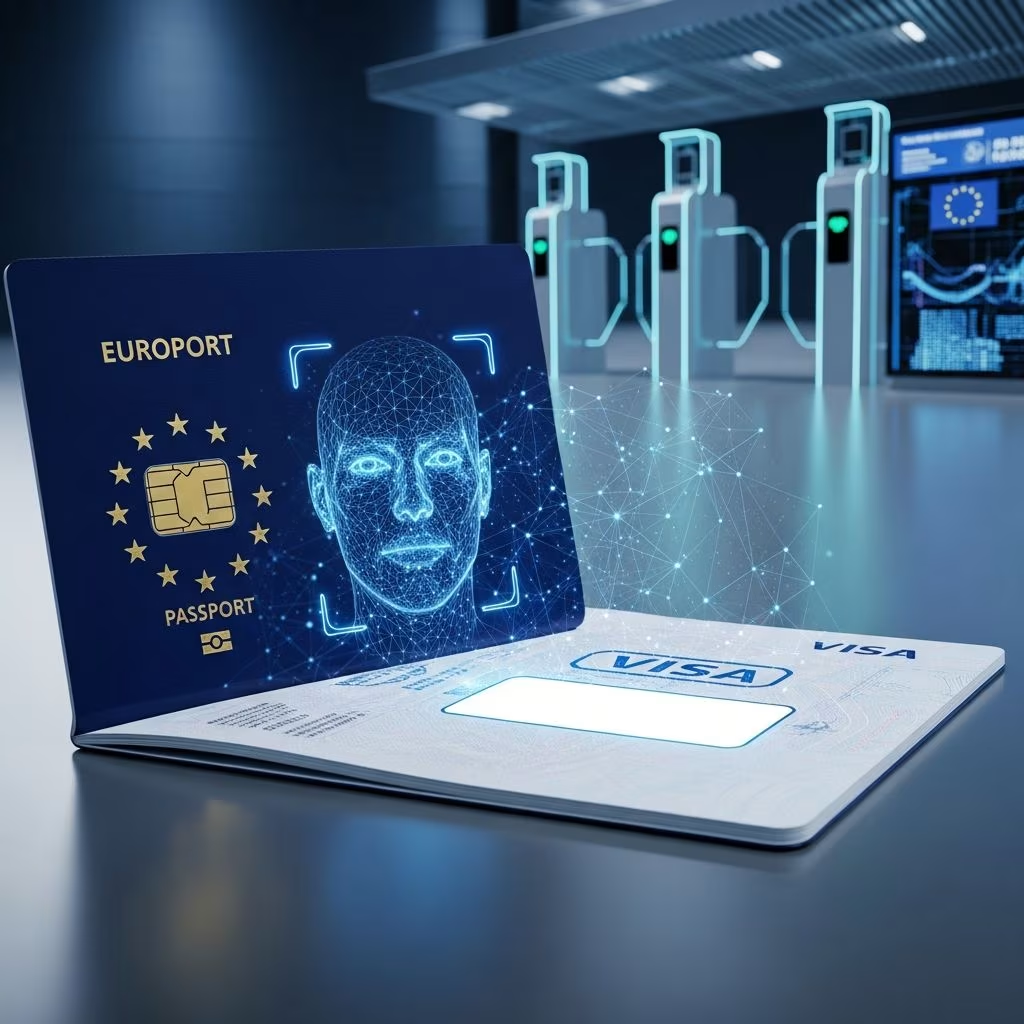
The EU's new Entry/Exit System replaces manual passport stamps with biometric scans for non-EU visitors, enhancing security and efficiency at Schengen borders starting April 2026.
 Travel Essentials
The Schengen Area is ushering in a new era of border control where traditional passport stamps are being phased out in favor of advanced biometric technology. Starting in April 2026, non-EU travelers will encounter facial scans and fingerprint captures at entry points, fundamentally changing the travel experience across Europe’s borderless zone.
Historically, border agents manually stamped passports to record entries and exits, a process prone to human error and inefficiency. The introduction of the Entry/Exit System (EES) automates this entirely, creating a centralized database that logs precise travel data for short-stay visitors. This system targets non-EU nationals staying up to 90 days in any 180-day period, ensuring compliance without the need for physical marks in travel documents.
Biometric enrollment occurs on the first visit post-launch: officers capture a facial image and four fingerprints, linking them to the traveler’s passport details. Subsequent crossings rely on automated verification, speeding up queues once data is registered. The European Commission emphasizes that this modernization strengthens security by enabling real-time overstay calculations and fraud detection.
Upon arrival at airports, seaports, or land crossings, expect a structured process:
For first-time users, allocate extra time—up to 5-10 minutes per person during peak rollout—as systems integrate. Land borders like those between France and Spain or Eurotunnel may see initial backups, but e-gates equipped with facial recognition promise faster processing long-term.
| Border Type | Expected Initial Impact | Long-Term Benefit |
|---|---|---|
| Airports | Higher queues for biometrics | Automated e-gates |
| Land Borders | Manual scans prolong waits | Precise overstay tracking |
| Seaports | Phased implementation | Reduced fraud |
The EES addresses longstanding challenges in monitoring short-stay visitors. Manual stamping often failed to capture exits, leading to unreliable overstay data. Now, the system flags discrepancies instantly: if a traveler exceeds 90 days, alerts trigger for authorities.
Early data is telling. In its first four months, EES processed 17 million travelers across 30 million crossings, refusing entry to 16,000—25% due to prior overstays. Over 4,000 individuals were identified as violators, demonstrating the system’s precision. This feeds into a visa suspension mechanism: countries with over 30% overstay rates risk losing visa-free access, a stark incentive for compliance.
Penalties vary: fines up to €198 in France, entry bans, or visa denials. The digital trail persists, impacting future applications.
Concerns about surveillance are valid, but the EU mandates strict safeguards. Biometrics are stored for 48 months (24 for minors), then deleted automatically unless linked to irregularities. Access is limited to border control and law enforcement for verification purposes, compliant with GDPR.
Travelers retain rights: request data access, corrections, or deletion post-retention. No sharing occurs outside the EU bloc without consent.
EES tracks those already entering; it doesn’t authorize travel. Enter ETIAS, launching late 2026 (mandatory by October 2027), requiring pre-travel online authorization for visa-exempt nationals. Costing €7, it’s valid three years or until passport expiry.
Passport remains essential—no face fully replaces it yet.
To navigate changes seamlessly:
Families with children: Minors provide fingerprints from age 6; photos from 12, with shorter retention.
Europe leads, but parallels exist. The US Electronic Passport Program pairs biometrics with passports. Canada and Australia employ similar entry/exit systems. This trend reflects post-pandemic priorities: secure, contactless borders.
Challenges persist—privacy advocates decry ‘surveillance states,’ yet proponents highlight reduced illegal migration and terrorism risks.
No, only non-EU/EEA nationals on short stays (90/180 rule). EU citizens, long-term residents, and diplomats exempt.
Initially yes for first-timers; faster thereafter via automation.
System alerts automatically; fines, bans possible. Track days diligently.
Yes, GDPR-protected with defined retention and access rights.
Applications late 2026; mandatory October 2027.
By 2027, EES and ETIAS form a robust duo, potentially expanding to AI-driven risk assessments. Travelers benefit from predictability, while authorities gain tools against threats. As implementation progresses, feedback loops will refine the system, balancing security with seamless mobility.
Prepare now: the stamp collection era ends, but adventure awaits in a digitized Schengen.
