


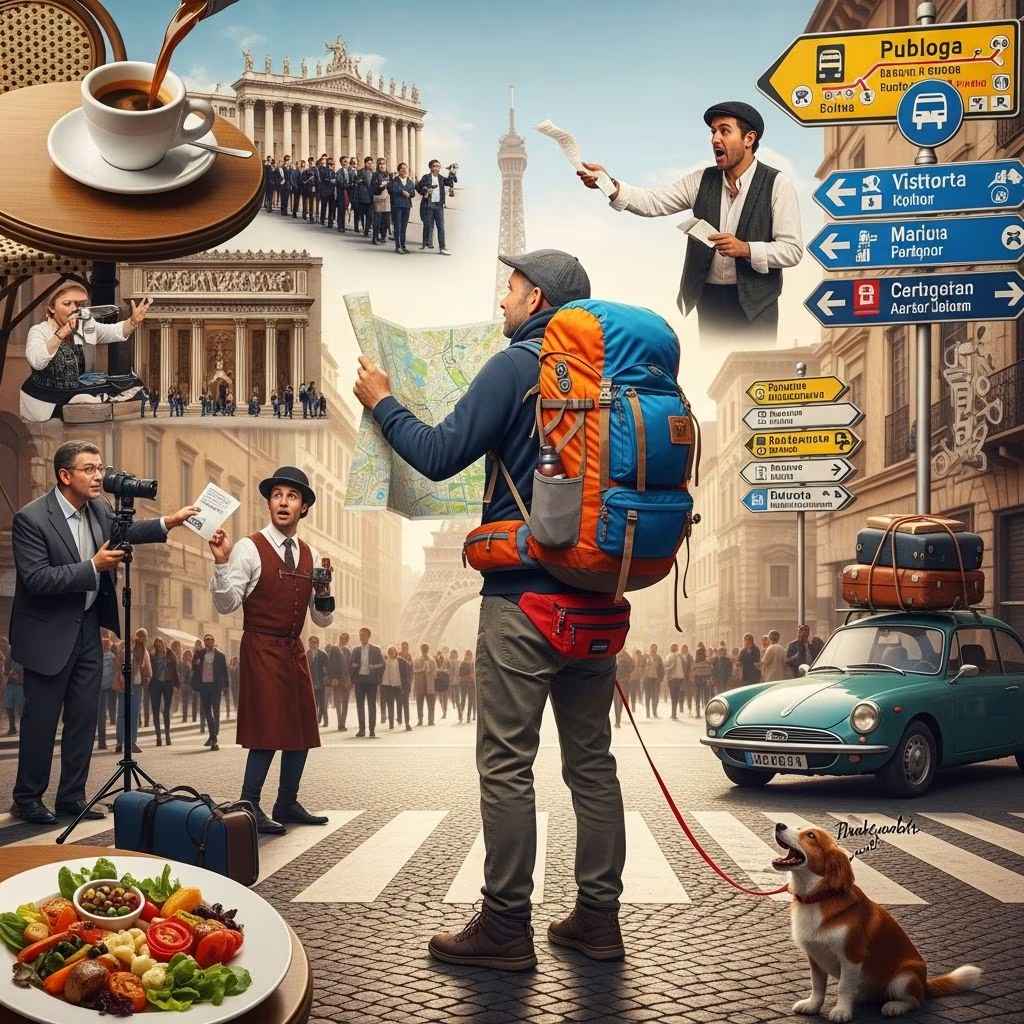
Europe attracts millions of visitors annually, yet many travelers encounter preventable challenges that diminish their experience and drain their budgets. Whether you’re embarking on your inaugural European adventure or returning for another visit, understanding common pitfalls enables you to navigate this diverse continent with confidence and cultural awareness. This comprehensive guide addresses the mistakes that frequently catch travelers off guard, from logistical oversights to behavioral missteps that can transform a dream vacation into an exhausting ordeal.
Packing and Luggage Miscalculations
One of the first mistakes travelers make occurs before they even board their flights. Budget airlines operating throughout Europe impose strict baggage restrictions that differ significantly from traditional carriers. Many travelers discover at the airport that their carry-on dimensions exceed limits or that they’re charged premium fees for checked luggage they assumed was included. Understanding your specific airline’s policies—including weight limits and dimensional requirements—prevents costly surprises at check-in.
Beyond airline restrictions, European cities present unique luggage challenges. Historic city centers often feature narrow cobblestone streets, steep staircases, and limited elevator access in older accommodations. Oversized suitcases become liabilities rather than assets in these environments. Packing strategically with a smaller primary bag and considering luggage storage services for day trips allows flexibility without the constant burden of managing oversized baggage through challenging terrain.
Blending In Versus Standing Out
Your appearance communicates volumes in European cities, often marking you as a tourist from considerable distances. Europeans typically favor understated, streamlined clothing in neutral tones, while American tourists frequently wear athletic wear, branded merchandise, and casual outdoor gear in urban settings. This sartorial contrast makes you conspicuous and potentially vulnerable to pickpockets who specifically target tourists.
Dressing appropriately extends beyond theft prevention. Many European establishments, from museums to upscale restaurants, maintain dress codes that may not be explicitly stated but are nonetheless enforced. Religious sites require covered shoulders and knees as a matter of respect. Investing modest effort into a travel-appropriate wardrobe—comfortable walking shoes in leather rather than athletic sneakers, lightweight layers in coordinated colors, and minimal visible branding—allows you to move through cities with greater agency and cultural sensitivity.
Strategic Timing for Maximum Value
Selecting when to travel dramatically impacts both costs and experience quality. Peak summer months (July and August) flood popular destinations with crowds, drive accommodation prices to annual highs, and necessitate booking major attractions months in advance. Conversely, winter months in Northern Europe bring extreme cold, shortened daylight hours, and reduced transportation options.
Shoulder seasons (April through June and September through October) offer optimal conditions for European travel. Weather remains pleasant, crowds are manageable, major attractions remain open with shorter wait times, and accommodation prices reflect significant discounts compared to peak season. This timing strategy allows deeper engagement with destinations without the exhaustion of navigating perpetual crowds or the financial strain of peak-season pricing.
Language Barriers and Cultural Communication
Arriving in a European country without basic linguistic preparation creates unnecessary friction. While English speakers can navigate major tourist zones, making minimal effort to learn essential phrases—greetings, thank-yous, basic directional questions, and polite forms of address—demonstrates respect and frequently generates warmer local interactions.
Locals notice and respond positively to visitors attempting their language, even unsuccessfully. This cultural acknowledgment opens doors to recommendations, discounts, and authentic experiences unavailable to tourists who expect English-language accommodation without reciprocal effort. Downloading offline translation applications and carrying phrase guides provides practical backup while demonstrating genuine interest in engaging meaningfully with local communities.
Payment Methods and Currency Management
The tension between cash and card payments creates persistent confusion for travelers. While cards offer security and convenient record-keeping, numerous European establishments—particularly smaller family-run restaurants, local markets, and public facilities—operate exclusively on cash. ATMs charging conversion fees and unfavorable exchange rates can also deplete budgets quickly if you’re unfamiliar with banking practices.
An optimal strategy involves carrying a modest amount of euros (or local currency) obtained before departure, supplemented by card payments for larger transactions. Notifying your bank of travel plans prevents fraud-detection blocks on legitimate purchases. Avoiding currency exchange at airports, tourist information centers, and hotels—where rates are notoriously unfavorable—preserves funds better than convenience-based conversion.
Public Transportation Mastery
European public transportation systems rival the complexity of international airports, yet most travelers navigate them poorly. Validating train tickets before boarding isn’t optional—it’s legally mandatory. Failure to validate results in substantial fines, despite possessing a legitimate ticket. Understanding regional transportation passes, timing validation windows, and identifying which services require advance reservations prevents costly mistakes and frustrating delays.
Rather than relying on expensive taxis or ride-sharing services, purchasing city transportation passes provides unlimited access to local transit networks at predictable costs. Studying transit maps in advance, downloading transport authority apps, and asking locals for navigation assistance builds confidence while supporting your journey’s authenticity.
Public Facilities and Hygiene Expectations
American travelers frequently encounter unexpected public restroom charges throughout Europe. Unlike many North American facilities, using public bathrooms often requires payment (typically 50 cents to 2 euros). Coffee shops generally extend courtesy restroom access to customers, while department stores, train stations, and tourist attractions charge standardized fees. Carrying small coins prevents embarrassing situations when nature calls.
European bathrooms also feature bidets and different flushing mechanisms unfamiliar to many American travelers. Taking moments to understand facilities prevents accidental damage and embarrassment. Expecting differences in plumbing, ventilation, and facilities helps you adapt gracefully rather than expressing surprise or frustration.
Strategic Dining to Maximize Value and Authenticity
Restaurant location determines both quality and pricing more dramatically in Europe than most destinations. Establishments directly adjacent to major tourist attractions—the Eiffel Tower, Colosseum, or Trevi Fountain—survive on foot traffic rather than culinary excellence, resulting in mediocre food at inflated prices. These restaurants employ aggressive recruitment tactics, featuring large picture menus displayed outside and staff encouraging passersby to enter.
Walking two or three blocks away from famous landmarks reveals authentic neighborhood restaurants frequented by locals, offering superior cuisine at reasonable prices. Lunch menus typically cost substantially less than dinner offerings at identical establishments, making your midday meal the strategic opportunity for sit-down dining while reserving evening meals for casual fare or lighter options. Consulting local recommendations, reading recent online reviews, and observing where locals actually dine guides you toward genuine culinary experiences rather than tourist traps.
Booking Major Attractions Strategically
Many iconic European attractions now implement timed-entry systems requiring advance reservations. The Sistine Chapel, Uffizi Gallery, Sagrada Familia, and dozens of other major sites sell out weeks ahead during peak season. Arriving without reservations means joining hours-long queues or discovering the attraction has reached daily capacity, requiring you to return or forfeit the experience entirely.
Booking tickets online before departure eliminates this uncertainty, often providing discounts while guaranteeing entry. Day-tour companies provide guided access to otherwise inaccessible sites. Prioritizing which attractions genuinely matter to you, rather than attempting a comprehensive checklist, ensures you actually experience what moved you to visit Europe rather than spending your trip frustrated by logistical failures.
Beverage Ordering Nuances
Ordering water in European restaurants presents a cultural and practical puzzle. Tap water (acqua del rubinetto, eau du robinet) is perfectly safe throughout Western Europe but rarely served without requesting it specifically. Restaurants default to bottled water, which incurs charges ranging from 3 to 8 euros per bottle. This seemingly small expense accumulates across numerous meals. Specifying tap water prevents financial surprises while reducing plastic consumption.
Similarly, cappuccino functions as a breakfast beverage in Italy and much of Europe, not an all-day coffee drink as common in American culture. Ordering cappuccino after 11 AM marks you as a tourist and often generates quiet amusement from service staff. Understanding regional beverage customs prevents minor cultural missteps while demonstrating travel awareness.
Regional Closure Patterns and Holiday Calendars
Many European cities, particularly in Southern Europe, experience significant closures on Sundays and public holidays. Museums, shops, restaurants, and attractions may close entirely or maintain limited hours. Planning activities without accounting for these closures leads to disappointing encounters with shuttered venues. Researching closure patterns for your specific destinations prevents frustration and wasted time.
City tourism taxes, invisible until checkout, represent another surprise expense. Many European cities impose nightly accommodation taxes ranging from 2 to 5 euros per room, added to hotel bills rather than incorporated into advertised rates. Understanding these costs when booking accommodations ensures your budget reflects actual expenses rather than advertised rates.
Recognizing and Preventing Petty Crime
Pickpocketing represents the most significant security threat to European tourists, particularly in major cities and crowded attractions. Thieves operate with remarkable sophistication, targeting distracted travelers in public transportation, famous landmarks, and tourist-heavy areas. Common scams include clipboard-wielding con artists, individuals offering flowers at fountains, and coordinated groups creating diversions while accomplices access your belongings.
Protective strategies include wearing small crossbody bags positioned in front rather than on your back, keeping valuables in hotel safes, avoiding displaying expensive electronics or jewelry, and remaining alert on crowded trains and platforms. Traveling with copies of important documents rather than originals provides protection against document theft. While Europe is generally safe, acknowledging and respecting petty crime risks enables appropriate vigilance without paralyzing fear.
Documentation and Regulatory Compliance
Passport validity requirements often surprise travelers unfamiliar with Schengen area regulations. Your passport must remain valid for at least three months beyond your intended departure date from European countries, not just through your trip duration. Visas and entry requirements vary by citizenship, with some travelers requiring Schengen visas while others enjoy visa-free entry.
International roaming charges for mobile phones can devastate budgets when used carelessly. Purchasing European SIM cards or activating international plans with your carrier before departure prevents shocking bills. Many travelers prefer portable WiFi devices or apps providing data access without cellular charges, transforming communication economics significantly.
Embracing Depth Over Breadth
Perhaps the most consequential mistake involves attempting to experience too many destinations in limited time. Booking two-week itineraries spanning London, Paris, Rome, Barcelona, Amsterdam, and Prague results in excessive travel days, superficial engagement with each destination, and exhaustion rather than enrichment. Travel days consume productivity, transportation costs accumulate, and the frantic pace prevents meaningful connection with places and cultures.
Instead, selecting three to four destinations maximum allows authentic exploration. Spending five days in Paris rather than thirty hours enables discovery beyond famous landmarks—neighborhood cafés, lesser-known museums, local markets, and the rhythm of genuine Parisian life. Travelers report significantly greater satisfaction from depth-focused itineraries than from compressed geographic covering.
Discovering Authentic Experiences Beyond Instagram
Social media has transformed travel motivation, with tourists planning itineraries around photogenic locations rather than genuine interests. The result: crowded, often disappointing encounters with over-hyped destinations while truly rewarding experiences remain undiscovered.
Rather than pursuing Instagram-famous spots exclusively, allocate time for local recommendations, neighborhood exploration, and serendipitous discoveries. The Borghese Gallery in Rome offers masterpieces in intimate settings with minimal crowds if you reserve in advance. The covered passages of Paris’s 2nd arrondissement provide authentic charm without the Eiffel Tower crowds. Family-run trattorias in Trastevere serve exceptional food at reasonable prices compared to Spanish Steps restaurants. These experiences emerge through local consultation, guidebook exploration, and willingness to venture beyond obvious tourist corridors.
Setting Realistic Expectations
Travel trends on social media frequently feature “Instagram versus reality” content showing overcrowded, disappointing European destinations. Popular places remain popular for legitimate reasons, yet expectations often exceed reality, particularly during peak seasons. Famous sites are genuinely crowded, famous food can be overhyped, and famous neighborhoods lack the solitude suggested by curated images.
Embracing realistic expectations—enjoying iconic sites while acknowledging their crowdedness, seeking authentic experiences as complements rather than replacements for famous attractions, and valuing personal experience over social media documentation—dramatically improves travel satisfaction. You can photograph the Colosseum and the Eiffel Tower while also discovering the neighborhoods and restaurants where you’ll remember why you fell in love with Europe.
Leveraging Local Knowledge
Locals possess invaluable perspective often unavailable through guidebooks or online resources. Conversations with residents, hotel staff, restaurant workers, and fellow travelers reveal hidden restaurants, quieter viewpoints, upcoming events, practical transit advice, and genuine cultural context. Creating space for spontaneous local interaction enriches your experience immeasurably compared to following predetermined tourist itineraries exclusively.
Financial Preparation and Budget Strategy
Understanding destination-specific costs enables realistic budgeting. Paris, London, Switzerland, and Scandinavian countries command premium prices for accommodations, dining, and attractions. Portugal, Greece, Eastern Europe, and Southern Italy offer equivalent experiences at substantially lower costs. Mixing splurge experiences with budget-conscious activities and traveling during shoulder seasons rather than peak periods stretches funds significantly.
Accommodation booking during advance periods secures better rates than last-minute reservations. Eating your main meal at lunch rather than dinner capitalizes on cheaper lunch menus at restaurants offering identical cuisine. Utilizing public transportation passes and walking rather than relying on taxis or ride services reduces daily expenses considerably.
References
- Avoid These 15 Europe Travel Mistakes — YouTube. 2026. https://www.youtube.com/watch?v=2Isgn-7wCV8
- 7 Common European Travel Mistakes (and How a Travel Advisor Can Help) — Picture Perfect Adventures. https://www.pictureperfectadventures.com/post/the-top-7-mistakes-travelers-make-in-europe-without-a-travel-advisor
- Top Travel Mistakes — and How to Avoid Them — Rick Steves Europe. https://www.ricksteves.com/watch-read-listen/read/articles/top-travel-mistakes-and-how-to-avoid-them
- 18 Europe Travel Tips: DOs and DON’Ts for Your First Europe Trip — Dangerous Business. https://www.dangerous-business.com/europe-travel-tips/
- 23 Travel Mistakes to Avoid on Your Trip to Europe — Wander Your Way. https://wanderyourway.com/23-travel-mistakes-to-avoid-on-your-trip-to-europe/

