

 Travel Essentials
 Travel Essentials

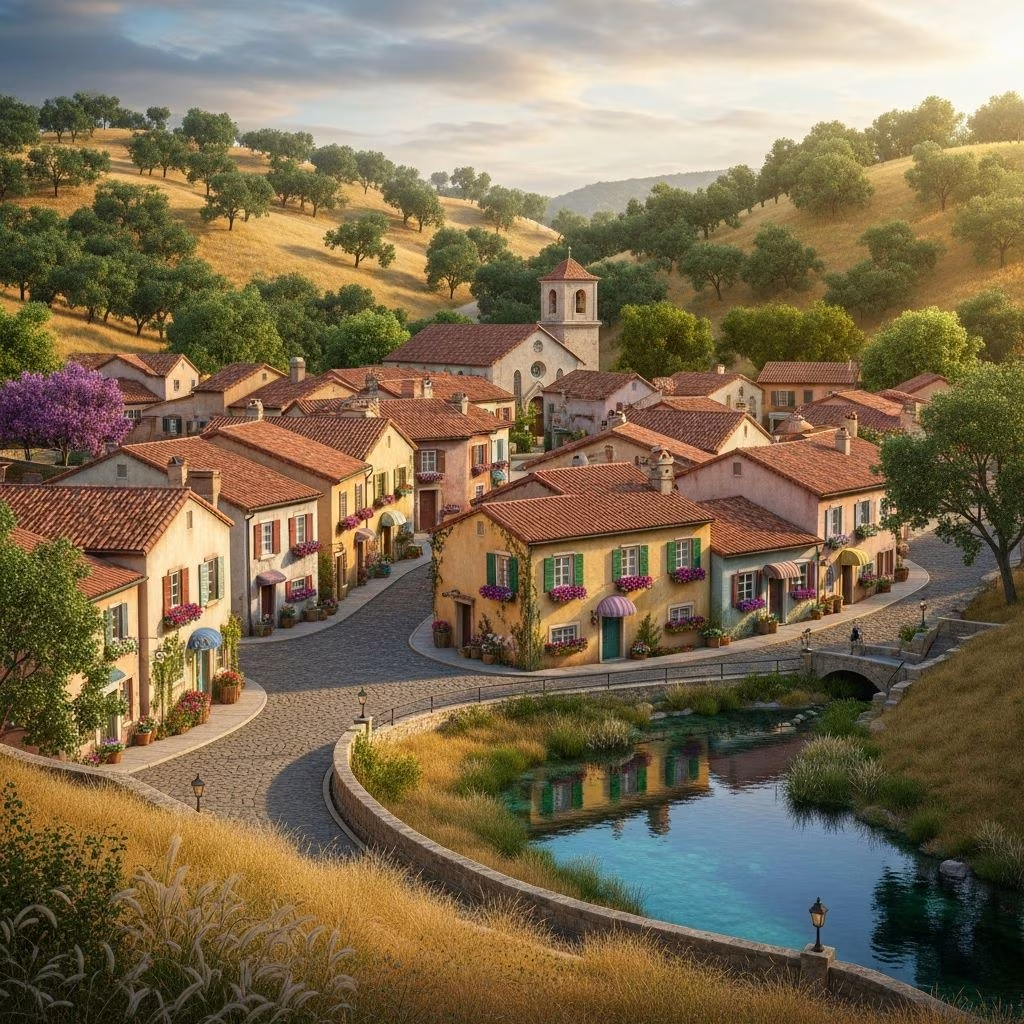
Explore California's most European-inspired destinations, from Danish villages to Mediterranean coastal towns, without leaving the United States.
 Travel Essentials
California is renowned for its diverse landscapes, from sun-drenched beaches to towering redwoods, yet many travelers overlook an equally compelling aspect of the state: its collection of authentically European-inspired communities. Scattered throughout the Golden State are towns and neighborhoods where the architecture, cultural heritage, and atmosphere transport visitors across the Atlantic without requiring a passport or expensive airfare. These destinations represent genuine settlements with deep historical roots rather than theme park recreations, offering travelers the rare opportunity to experience continental charm within the United States.
The presence of European-style towns throughout California stems from the state’s complex immigration and settlement history. During the late 19th and early 20th centuries, waves of European immigrants established communities that reflected their cultural origins. Spanish conquistadors and missionaries left their architectural imprint through missions and tile work, while Danish, Italian, and other European settlers created enclaves that preserved their heritage through distinctive building styles, town planning, and community traditions.
Unlike theme parks or artificial recreations, these communities developed organically as people sought to recreate the familiar environments of their homelands. The result is a network of genuinely authentic destinations where European cultural elements have endured for generations, creating destinations that feel authentically continental while remaining distinctly Californian.
Santa Barbara stands as one of California’s most recognizably European destinations, primarily through its Spanish colonial heritage. The town’s distinctive character emerges from its red-tiled Mediterranean roofs, whitewashed buildings, and ornate tilework that adorns public spaces and private residences alike. The Spanish Mission Santa Barbara, founded in 1786, serves as the architectural and cultural anchor for the entire community, with its distinctive Romanesque façade visible from many vantage points throughout the town.
The downtown area features numerous examples of Spanish colonial revival architecture, with carefully maintained historic districts that preserve the aesthetic established over two centuries ago. Street names, public plazas, and neighborhood designs reflect Spanish town planning principles, creating a coherent visual and cultural identity that distinguishes Santa Barbara from typical American coastal communities. Local restaurants, artisan shops, and cultural institutions further reinforce the Spanish atmosphere, offering visitors immersive experiences that extend beyond mere architectural observation.
Solvang represents perhaps California’s most deliberately European community, distinguished by its comprehensive Danish architectural and cultural identity. Established in 1911 by Danish settlers, Solvang was conceived from its inception as a Danish village transplanted to California. The entire community embraces half-timbered buildings, thatched roofs, and traditional Danish design principles that create an unmistakably Scandinavian atmosphere.
The town’s commitment to its Danish heritage extends beyond architecture into community traditions, local businesses, and cultural programming. Danish pastries, smørrebrød sandwiches, and other traditional foods remain staples at local establishments, while Danish flags and cultural celebrations punctuate the annual calendar. This deliberate preservation of cultural identity distinguishes Solvang from towns that merely possess European aesthetic qualities—instead, it functions as an active, living expression of Scandinavian heritage within a California valley context.
Located approximately 35 minutes north of Santa Barbara in the San Ynez Valley, Solvang offers visitors an accessible destination for experiencing authentic Danish culture without international travel. The town’s compact size and pedestrian-friendly layout encourage exploration on foot, with numerous shops, galleries, and restaurants offering Danish specialties and European-influenced goods.
Venice in Los Angeles presents an intriguing case study in European urban design translated to an American coastal setting. While most of Venice operates as a modern American beach community with all its attendant energy and diversity, specific neighborhoods along its canals evoke distinctly European atmospheres. The Venice Canal Historic District features charming walkways, intimate bridges, and residential properties that recall waterside communities throughout Europe.
The comparison to Giethoorn, a canal-based village near Amsterdam in the Netherlands, proves particularly apt for those familiar with both communities. The quiet, water-centered living environment, pedestrian-focused infrastructure, and intimate scale of development create a European sensibility within metropolitan Los Angeles. Early morning walks along the canals reveal peaceful residential streets where the distant sounds of ocean waves blend with the quieter rhythms of canal-side living.
This European element of Venice contrasts sharply with the broader Venice Beach experience, creating distinct microclimates within a single neighborhood. Visitors seeking a more serene, European-influenced experience can venture inland from the crowded beach toward the canal districts, where architectural preservation efforts and community commitment maintain the distinctive character established during Venice’s early 20th-century development.
Capitola, located south of San Francisco near Santa Cruz and Monterey, combines European coastal town characteristics with distinctive California artistic traditions. The town’s defining feature—a picturesque waterfront lined with colorfully painted buildings in pastels and bright hues—evokes Mediterranean coastal communities where vibrant residential and commercial architecture reflects centuries of cultural exchange and artistic expression.
The compact downtown area features narrow pedestrian streets, small galleries, and waterfront dining establishments that create a bohemian, European village atmosphere. Unlike larger California coastal cities, Capitola maintains an intimate scale and focus on local artistry rather than commercial tourism development. The presence of working artists, independent businesses, and preservation-minded residents contributes to an authentic, evolving cultural environment rather than a static historical recreation.
The surrounding geography adds to Capitola’s European character, with nearby redwood forests and dramatic coastal cliffs providing landscape features reminiscent of California’s Mediterranean climate zones. Visitors exploring Capitola experience both the architectural and natural environmental qualities that characterize Mediterranean regions, creating a holistic European sensibility within a California Pacific coast setting.
San Juan Capistrano, a community of approximately 36,000 residents in southern Orange County along Interstate 5, centers its European character around the historic Mission San Juan Capistrano. Founded in 1776, this Spanish mission represents one of California’s finest examples of Spanish colonial religious architecture, featuring distinctive stone arches, courtyards, and ecclesiastical design that transport visitors to colonial-era Spain.
The mission’s architecture reflects Spanish baroque and churrigueresque influences, with ornate details and purposeful spatial organization that served both practical and spiritual functions. The surrounding downtown district preserves historic buildings from the mission era and subsequent American periods, creating a palimpsest of architectural styles that nonetheless maintains coherent aesthetic unity through carefully managed preservation and development guidelines.
Beyond the mission itself, the town’s commitment to historical preservation creates an environment where Spanish colonial heritage remains visible and tangible. Streets radiate from the mission, reflecting traditional Spanish town planning principles. Local businesses, restaurants, and cultural institutions acknowledge and celebrate this heritage, making San Juan Capistrano a destination where European religious and architectural traditions remain actively present rather than merely archived in museums.
Optimal Travel Seasons: Most California European-style towns offer year-round visitation, though spring (March through May) and fall (September through November) provide ideal weather conditions with fewer crowds than summer months. Solvang’s Danish pastry shops and wine tasting rooms operate throughout the year, while coastal destinations like Santa Barbara and Capitola offer pleasant conditions across all seasons.
Transportation Considerations: While California’s European towns are scattered across the state, strategic route planning enables visitors to experience multiple destinations efficiently. Santa Barbara and Solvang are accessible within a day-trip radius of Los Angeles, while Capitola and San Juan Capistrano can be incorporated into Northern California or Central Coast itineraries. Renting a vehicle provides maximum flexibility for exploring smaller communities and nearby attractions.
Accommodation Options: Most European-inspired towns offer lodging ranging from budget-friendly motels to upscale boutique hotels and bed-and-breakfasts. Historic inns and locally-owned accommodations typically provide more authentic experiences than chain hotels, often featuring architectural styles consistent with each town’s European character.
California’s European towns offer distinctive dining experiences reflecting their cultural heritage. Solvang features authentic Danish smørrebrød sandwiches, pastries, and restaurants serving traditional Scandinavian cuisine. Santa Barbara’s Spanish heritage influences local restaurants offering tapas, paella, and other Mediterranean dishes. Capitola and Venice’s waterfront locations support fresh seafood preparations influenced by Italian and Mediterranean cooking traditions.
Local wine regions surrounding these communities, particularly near Solvang and Santa Barbara, offer tasting experiences that complement European culinary traditions. Many towns feature farmers’ markets and specialty food shops selling imported European products alongside local California ingredients.
Solvang is frequently cited as California’s most authentically European town, deliberately designed and continuously maintained as a Danish village with comprehensive architectural, culinary, and cultural commitments to Scandinavian heritage.
Yes, these communities offer authentic cultural experiences rooted in genuine immigrant heritage and sustained community commitment rather than commercial recreations. However, visitors should recognize these as California communities with European influences rather than exact replicas of European destinations.
Many European-style California towns can be experienced during day trips from major cities. Santa Barbara and Solvang are accessible from Los Angeles, while Capitola is reachable from San Francisco or San Jose. However, overnight stays allow deeper engagement with each community’s character.
Spring and fall provide ideal weather conditions with moderate temperatures and fewer crowds. Summer offers warm weather but attracts larger tourist populations, while winter remains mild in most California regions, with occasional rain.
