

 Travel Essentials
 Travel Essentials

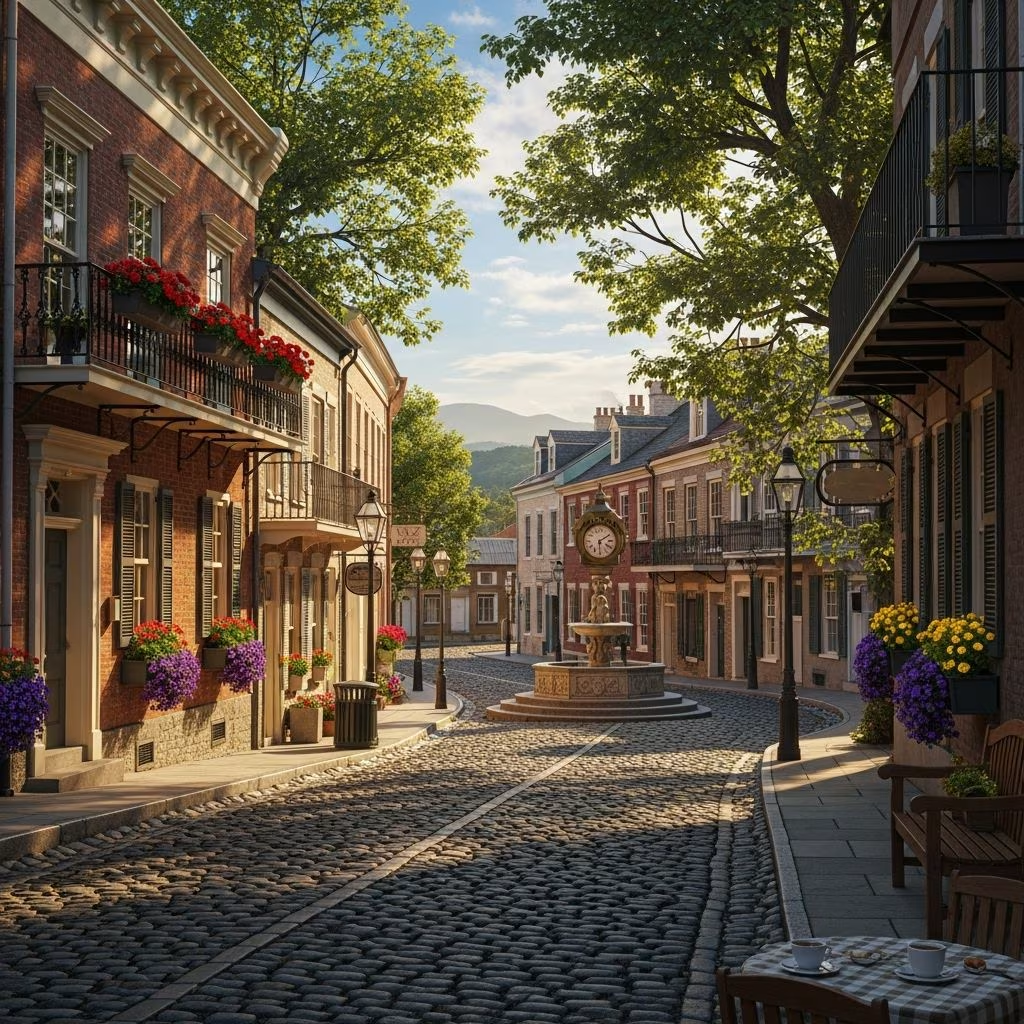
Explore charming American destinations with genuine European architecture, culture, and heritage without crossing the Atlantic Ocean.
 Travel Essentials
The allure of European travel often captures the imagination of wanderers seeking centuries-old architecture, cobblestone streets, and time-honored traditions. However, not every traveler has the resources, time, or inclination to traverse the Atlantic. Fortunately, the United States harbors a wealth of communities that authentically capture the essence of European culture and aesthetics. These destinations offer genuine historical foundations, architectural authenticity, and cultural practices that transport visitors to another continent without requiring international travel documents.
Throughout American history, immigrant communities established settlements that deliberately preserved their cultural heritage. These towns represent more than mere tourist attractions; they constitute living repositories of authentic European traditions, languages, and architectural practices. Many originated during waves of European immigration when settlers sought to recreate the environments they left behind, establishing communities built on shared cultural values and architectural principles imported from their homelands.
The preservation of these communities reflects a unique American phenomenon where distinct ethnic neighborhoods maintained their identity across generations. Unlike themed attractions, these destinations preserve genuine historical fabric alongside contemporary amenities, creating authentic experiences grounded in centuries-old traditions and architectural heritage.
The Scandinavian presence in America has left indelible marks on several communities, particularly in the Midwest and California. These regions attracted Norwegian, Swedish, and Danish immigrants who established settlements featuring distinctive Nordic architectural styles and cultural practices.
Solvang, California represents one of America’s most distinctive Scandinavian communities, earning recognition as the Danish Capital of America. Founded in the early twentieth century, this charming town features authentic old-world architecture, distinctive thatched roofs characteristic of Danish design, and traditional windmills that evoke rural Danish landscapes. Visitors encounter genuine Danish pastries, specialty shops featuring Nordic craftsmanship, and annual festivals celebrating Scandinavian heritage. The town’s commitment to authentic Danish aesthetics extends throughout its commercial and residential districts, creating an immersive environment that captures the visual essence of Copenhagen’s countryside.
New Glarus, Wisconsin emerged as another significant Scandinavian settlement, where Swiss-German heritage combines with broader Germanic influences. The community maintains traditional festivals, brewery traditions reflecting Alpine beer-making practices, and architectural elements rooted in Swiss mountain village aesthetics. Local businesses preserve traditional craftsmanship and culinary practices, allowing visitors to experience authentic Alpine culture embedded within American geography.
German and Bavarian influences permeate numerous American communities, where settlers established towns deliberately modeled after their Alpine homelands. These destinations showcase distinctive architectural elements, traditional festivals, and cultural practices that maintain Bavarian identity across generations.
Helen, Georgia exemplifies American interpretation of Bavarian village aesthetics. Originally called Little Bavaria, this community began with fifteen colonists who pledged loyalty to Bavarian traditions and maintained German language practices. The town features covered wooden bridges (Holz Brücke) consistent with traditional Bavarian construction, the Castle Museum preserving cultural heritage, and annual events like the Volksläufe (people’s race) maintaining Germanic athletic traditions. During Christmas, the entire community undergoes transformation with decorations reflecting German holiday traditions, creating an authentic alpine Christmas atmosphere. Traditional signage throughout the town employs German language and script, while local businesses offer Bavarian blacksmith experiences and authentic Alpine cuisine.
Fredericksburg, Texas developed another distinctive German heritage community. German settlers established this town during the nineteenth century, creating neighborhoods featuring German architecture, language preservation efforts, and cultural institutions. The community maintains German restaurants, specialty shops, and architectural conventions reflecting settlers’ origins. Local farmers markets offer produce and products reflecting German agricultural traditions and culinary practices.
Columbus, Ohio’s German Village represents an urban alternative to rural Germanic communities. This historic neighborhood preserves brick architecture, narrow streets, and cultural institutions reflecting German heritage. Residents actively maintain traditional architectural standards, supporting preservation of nineteenth-century German-American building practices. The neighborhood’s revitalization efforts demonstrate contemporary commitment to preserving ethnic heritage within urban contexts.
Beyond Germanic influences, Mediterranean cultures have established equally authentic American communities reflecting Southern European heritage, particularly Italian, Spanish, and Greek traditions.
New Orleans, Louisiana represents America’s most significant French and Spanish colonial heritage destination. Between the late seventeenth and early nineteenth centuries, French and Spanish imperialists shaped the city’s cultural and architectural character. The French Quarter preserves wrought iron balconies, Spanish colonial architecture, and French cultural institutions reflecting centuries of European influence. Creole cuisine, jazz traditions with French Caribbean roots, and ongoing French language usage throughout the city maintain authentic European cultural presence. Annual Mardi Gras celebrations derive from French traditions, attracting millions of visitors seeking European-American cultural fusion.
Tarpon Springs, Florida developed as America’s significant Greek heritage community. Greek sponge divers established this coastal settlement, creating neighborhoods featuring Greek Orthodox architecture, restaurants serving authentic Greek cuisine, and cultural festivals celebrating Hellenic traditions. The waterfront preserves traditional fishing practices, while the Greek Orthodox cathedral anchors community spiritual and cultural life. Annual Epiphany celebrations draw thousands of visitors witnessing traditional cross-diving ceremonies reflecting Mediterranean religious practices.
Italian communities throughout America preserve distinct heritage districts. North End Boston and Little Italy in San Diego represent urban Italian-American neighborhoods maintaining Italian restaurants, cultural institutions, and architectural traditions reflecting Southern European heritage. These neighborhoods preserve Italian language usage, traditional feast day celebrations, and family-oriented community values rooted in Mediterranean cultures.
New England communities preserve English colonial heritage through seventeenth and eighteenth-century architectural preservation and cultural traditions. Portsmouth, New Hampshire exemplifies this heritage, having been settled in 1623 by European colonists who established waterfront neighborhoods reminiscent of English coastal villages. Historic streets preserve colonial architecture, maritime heritage museums document European settlement patterns, and ongoing community traditions maintain English cultural references. Visitors experience authentic colonial atmosphere through preserved streetscapes and institutional buildings reflecting transatlantic heritage.
Contemporary communities increasingly recognize the value of cultural heritage preservation, establishing zoning ordinances, architectural review boards, and cultural institutions supporting authentic practices. These efforts distinguish genuine heritage communities from theme park approximations, creating living environments where descendants of original settlers maintain ancestral traditions alongside modern conveniences.
Many communities balance preservation with modernization, installing contemporary utilities, internet infrastructure, and commercial amenities while maintaining distinctive architectural aesthetics and cultural practices. This balance allows heritage communities to remain economically viable while preserving authentic character for contemporary and future generations.
European heritage communities offer distinctive seasonal experiences reflecting ancestral traditions. Winter holidays transform many Germanic communities with authentic Christmas markets, traditional decorations, and holiday cuisine reflecting Alpine celebrations. Summer brings outdoor festivals celebrating national independence days from settlers’ countries of origin, featuring traditional music, dance, and culinary specialties.
These seasonal events represent genuine cultural expressions rather than commercialized attractions, often organized by community descendants maintaining family traditions and cultural knowledge. Visitors participating in these celebrations encounter authentic cultural expression embedded within contemporary community life.
Successful visits to American European heritage communities require minimal planning compared to transatlantic travel. Most destinations remain accessible via automobile from major metropolitan areas, with accommodations ranging from bed-and-breakfasts in historic buildings to contemporary hotels maintaining architectural compatibility. Local tourism offices provide cultural context, event calendars, and restaurant recommendations ensuring authentic experiences.
Visitors benefit from arriving during cultural festivals and seasonal celebrations when communities emphasize ancestral traditions most prominently. Spring and fall offer comfortable weather for exploring architectural heritage, while winter holidays showcase distinctive seasonal practices. Summer months attract larger crowds but offer extended operating hours for cultural institutions and outdoor festivals.
These destinations preserve crucial American cultural diversity, maintaining immigrant heritage alongside broader national identity. They demonstrate how immigrant communities successfully integrated into American society while maintaining distinctive cultural practices and architectural traditions. Contemporary visitors gain understanding of immigration history, cultural adaptation, and community resilience through authentic engagement with heritage preservation.
European heritage communities offer accessible alternatives to international travel while supporting preservation of authentic cultural practices and architectural traditions. Whether exploring Bavarian Alpine villages reimagined in Georgia, Scandinavian aesthetics preserved in California, or French colonial heritage maintained in Louisiana, American travelers can experience genuine European cultural expressions without requiring passport renewal or transatlantic travel complications.
