

 Travel Essentials
 Travel Essentials

Explore Europe's most scenic train routes, from Alpine passes to Mediterranean coastlines. Learn booking tips, best travel times, and route highlights for unforgettable rail adventures.
 Travel Essentials
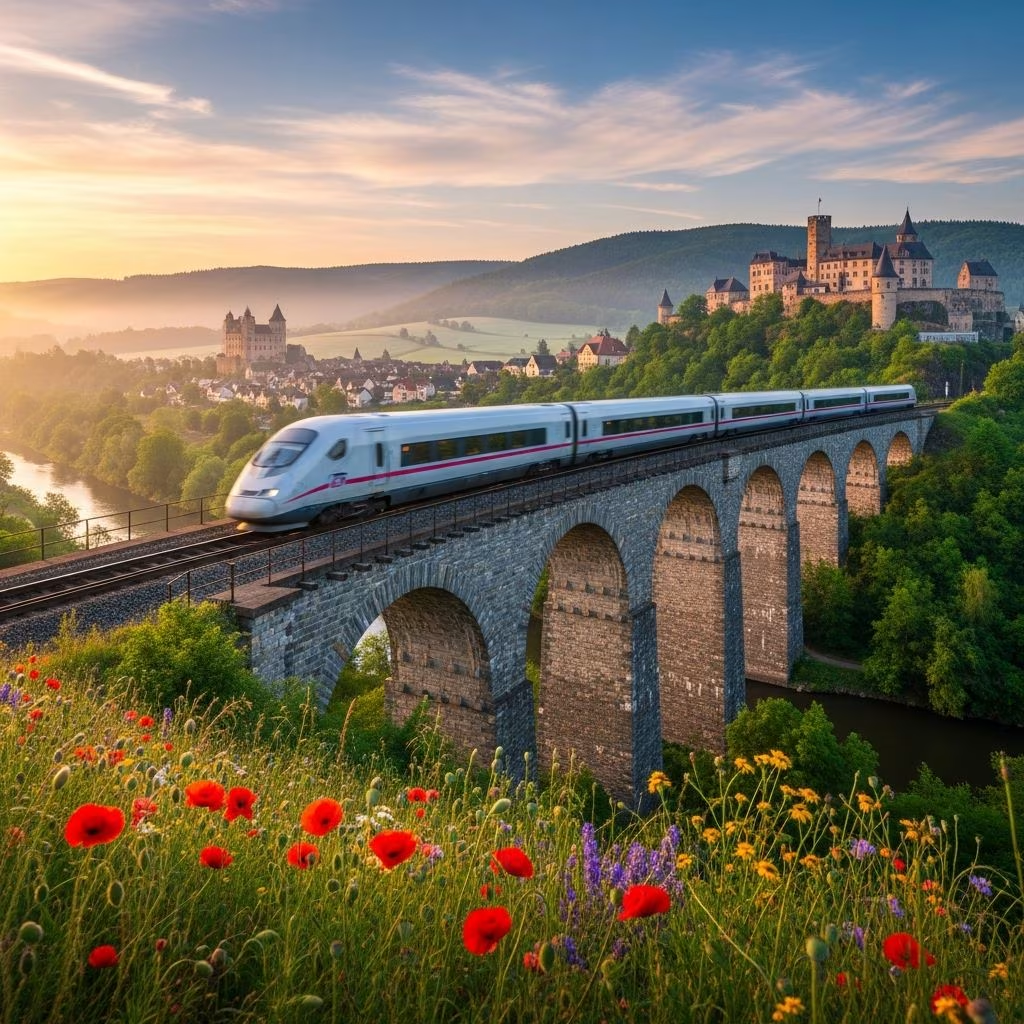
Train travel through Europe offers a uniquely immersive way to experience the continent’s diverse landscapes, cultures, and architectural heritage. Unlike flying, which whisks travelers over miles of terrain in mere hours, or driving, which demands constant attention to roads and navigation, rail journeys allow passengers to settle into comfortable seats while watching landscapes unfold organically. Europe’s railway networks connect some of the world’s most spectacular natural and urban environments, making train travel not merely transportation but a destination in itself.
The Alpine region of Europe represents the pinnacle of scenic train travel, where engineering marvels merge seamlessly with nature’s grandeur. These routes navigate elevation changes that demand intricate track designs, spiraling tunnels, and ingenious bridge work that themselves become attractions worth appreciating.
The narrow-gauge railway traversing from Chur through the Graubünden region toward Tirano in northern Italy stands as a testament to Swiss precision and breathtaking vistas. This approximately 4-hour journey consistently ranks among the world’s most beautiful rail experiences, winding through dramatic gorges, past turquoise lakes, and across viaducts that seem to float above Alpine valleys. The route’s engineering allows it to navigate steep mountain terrain while maintaining passenger comfort, making it accessible for travelers of varying mobility levels.
Another prominent Alpine crossing runs between Munich and Venice, serviced by the EuroCity trains that operate daily. This route transitions seamlessly from Bavarian landscapes into Alpine passes before descending into the Italian lake regions and eventually the Venetian plains. Window seats, available for a modest premium, provide unobstructed views throughout the journey, and May through October represents the optimal travel window for those wishing to disembark for mountain hiking excursions.
Scandinavia’s train routes offer a distinctly different Alpine experience, characterized by pristine wilderness, dramatic fjord landscapes, and unique subarctic ecology. The Norwegian rail network showcases some of Northern Europe’s most spectacular scenery, particularly routes involving high-altitude mountain stations and coastal descents.
The journey from Oslo ascending to the Myrdal mountain station represents one of Northern Europe’s most dramatic train experiences. After traversing five hours through deepening woods and alpine terrain, passengers encounter a distinctive high-mountain plateau landscape. The specialized tourist railway descending from Myrdal to the fjordside settlement of Flåm accomplishes an engineering marvel: navigating steep descents through 20 tunnels and past numerous waterfalls in just 55 minutes. This concentrated sequence of natural wonders—waterfalls, mountain vistas, coastal fjord views—delivers remarkable scenic intensity within a brief timeframe.
Europe’s extensive coastlines have inspired memorable rail routes that hug Mediterranean shores, Atlantic coasts, and regional waterways. These journeys provide rhythmic transitions between bustling port cities and sleepy coastal villages, with opportunities to disembark and explore communities unreachable by highway.
The Douro River route operating between Porto and Pocinho in Portugal offers intimate river valley perspectives unavailable from standard highways. Passengers experience vineyard-terraced hillsides, historic river towns, and the distinctive character of Portuguese riverside communities. This route demonstrates how regional rail services can provide authentic cultural encounters impossible to replicate through organized tourism.
The French Train de la Côte Bleue connects Marseille with Miramas, delivering approximately 75 minutes of Mediterranean coastal scenery. This regional service showcases rocky shorelines, turquoise water vistas, and the distinctive Provence landscape that has captivated artists and travelers for centuries.
Beyond natural scenery, Europe’s rail network connects historically significant cities and regions, enabling multi-city itineraries that would prove exhausting if traveled by automobile or onerous by air.
The Middle Rhine Railway traverses one of Europe’s most culturally saturated regions, winding past medieval castles, vineyard-covered hillsides, and charming riverside towns. This route, celebrated as part of the broader “Romantic Rhine” journey, represents how landscape and human heritage interweave throughout European geography. The combination of natural beauty and architectural history creates a travel experience richer than either element provides independently.
Europe offers several premium and specialized rail experiences that transcend conventional commuter or express services. These services often feature restored vintage cars, observation decks, and carefully curated itineraries designed to maximize passenger experience.
The Golden Pass route spanning between Lucerne and Montreux divides into three distinct segments, each highlighting different Alpine and pre-Alpine characteristics. The Classic configuration utilizes refurbished cars drawing inspiration from the historic Orient Express aesthetic. The section between Montreux and Zweisimmen particularly emphasizes scenic intensity, navigating narrow valleys and delivering mountain vistas that justify premium ticket pricing. VIP seating options position passengers at train heads, providing unobstructed forward views unavailable from standard configurations.
The Glacier Express and Bernina Express represent Switzerland’s most celebrated luxury rail experiences, though not the only scenic alternatives. Their prominence in travel marketing sometimes overshadows equally impressive but less commercialized routes that offer comparable natural beauty at more accessible price points.
European train ticketing systems vary significantly by country and operator. While some routes operate on fixed schedules with daily departures, others operate seasonally or less frequently. Advance booking often yields financial advantages and guarantees seat availability for popular routes, particularly during peak summer months.
Reservations typically require separate purchases from baseline tickets, particularly for premium services and international routes. This dual-ticketing system occasionally surprises travelers unfamiliar with European rail conventions but ultimately allows price flexibility—budget-conscious passengers can purchase basic tickets while comfort-seekers can upgrade with reserved seating and space allocations.
European rail routes function year-round, but seasonal variations significantly impact experience quality. Alpine routes with hiking opportunities recommend May through October windows, when weather permits safe mountain exploration. Summer months (June-August) peak travel seasons bring larger crowds, potentially diminishing the peaceful countryside solitude many rail travelers seek.
Journey durations range from brief 75-minute coastal hops to multi-hour Alpine crossings. This diversity allows tailoring itineraries to varying schedules and energy levels. Day trips from major cities increasingly attract travelers seeking countryside experiences without overnight accommodation.
European trains increasingly offer dining services, observation cars, and comfortable seating appropriate for extended journeys. Premium services provide sleeping accommodations for overnight journeys, transforming transportation into an integral travel experience rather than merely functional transit.
| Route Type | Primary Characteristics | Typical Duration | Best Season |
|---|---|---|---|
| Alpine Mountain Routes | Elevation changes, mountain scenery, engineering highlights | 3-5 hours | May-October |
| Nordic Fjord Routes | Wilderness, waterfalls, subarctic landscapes | 5-8 hours | June-September |
| Coastal Mediterranean Routes | Sea views, historic towns, regional character | 1-3 hours | April-October |
| Historic Cultural Routes | Castles, vineyards, architectural heritage | 2-4 hours | Year-round |
| Luxury Premium Services | Restored cars, curated experiences, observation decks | 3-6 hours | May-September |
The interconnected nature of European rail networks permits combining multiple scenic routes into comprehensive journeys. Travelers might connect Alpine crossing routes with Mediterranean coastal services, or sequence Nordic wilderness experiences with Central European cultural corridors. This modularity allows customizing itineraries to personal interests and available timeframes.
Rail passes and regional tickets sometimes offer economical advantages for multi-route journeys, though calculating price comparisons requires patience and attention to peak/off-peak pricing structures. Individual route bookings sometimes prove less expensive than comprehensive pass systems for selective itineraries.
Modern European trains feature cushioned seating, climate control, and dining accommodations suitable for journeys spanning several hours. Premium services offer superior comfort amenities, while budget options maintain acceptable standards for travelers prioritizing cost efficiency over luxury.
Reservation requirements vary by route and operator. Some services operate on open-seating models, while others require reserved places. International routes and premium services typically mandate reservations, which are often purchased separately from baseline tickets.
Most European rail routes permit intermediate disembarking, though specific policies depend on ticket type and operator regulations. Sugar Loaf Station in Wales exemplifies scenic intermediate stops offering hiking and picnic opportunities.
European trains typically accommodate standard luggage without additional charges, though premium services may offer enhanced luggage allowances. Overhead racks and undercarriage storage provide reliable luggage security during transit.
Several European routes offer overnight sleeper services, transforming lengthy journeys into multi-day experiences. The Belgrade-Bar railway exemplifies seasonal sleeper services operating year-round, with distinct daytime and overnight configurations.
European train journeys transcend mere transportation, functioning as meditative experiences that encourage landscape contemplation, cultural observation, and deliberate travel pacing. The railway vantage point—positioned low enough to observe ground-level detail yet elevated enough to encompass vast panoramas—offers unique landscape perspectives unavailable from automobile windows or airplane windows.
As European rail networks continue modernizing infrastructure while preserving historic character, these routes increasingly attract travelers seeking alternatives to rushed itineraries and mass tourism. The combination of accessibility, affordability, and genuine scenic magnificence positions European train travel as an essential component of thoughtful continental exploration.
