

 Travel Essentials
 Travel Essentials

A practical guide to trekking Everest Base Camp respectfully, safely, and responsibly while supporting Sherpa communities and protecting the trail.
 Travel Essentials
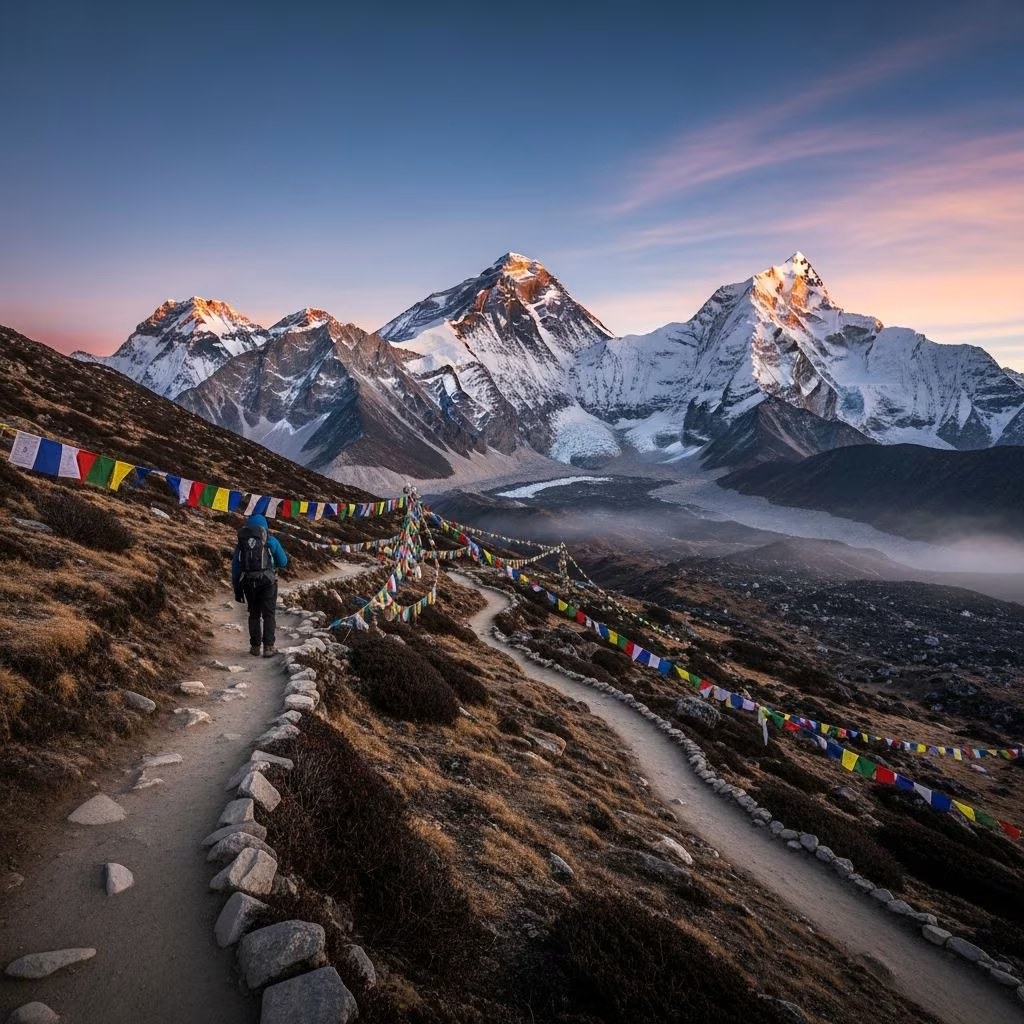
The Everest Base Camp (EBC) trek stands as one of the world’s most iconic journeys, drawing thousands of adventurers annually to the Khumbu region of Nepal. Spanning roughly 130 kilometers round trip and reaching elevations over 5,300 meters, this multi-day hike tests physical limits while immersing trekkers in Sherpa culture and breathtaking Himalayan vistas. Success hinges not just on fitness but on embracing local customs, environmental responsibility, and trail safety. This guide outlines practical etiquette to ensure your experience enhances rather than burdens this fragile ecosystem and its communities.
Thorough preparation forms the foundation of respectful trekking. Begin training 8-10 weeks ahead with cardio-focused activities like stair climbing, cycling, and loaded hikes to build endurance for the trek’s demands. Invest in quality gear: waterproof trekking boots broken in over multiple hikes, layered moisture-wicking clothing, a down jacket, thermal sleeping bag, gloves, sunglasses, sunscreen, water purification tablets, and a headlamp. Boots must withstand snow, rain, and mud—test them rigorously to prevent blisters.
Timing matters: opt for pre-monsoon (March-May) or post-monsoon (September-November) seasons for stable weather and clear views. Hire a licensed guide or agency for navigation, altitude insights, and cultural context, boosting safety and success rates. Mentally gear up by setting realistic expectations—treat it as a marathon, not a race, prioritizing acclimatization over speed.
Nepal’s Khumbu valley thrives on hospitality from Sherpa villages like Namche Bazaar and Dingboche. Show gratitude through polite interactions: learn basic Nepali phrases such as “Namaste” (hello/goodbye with palms pressed together) and “Dhanyabad” (thank you). Avoid imposing Western norms; flexibility is key in a culture where schedules bend to nature and tradition.
Meat consumption raises concerns at higher altitudes—much is transported laboriously by porters or animals, so opt for vegetarian dal bhat (lentils and rice) to lighten loads and respect logistics.
Narrow trails demand vigilance, especially with porters carrying up to 30kg loads and livestock trains. No strict “left or right” rule exists—prioritize common sense.
| Scenario | Action | Reason |
|---|---|---|
| Approaching yaks, yaks, or donkeys (hear bells jingling) | Step to the mountain (inside) edge | Prevents being pushed off cliffs; saves lives |
| Passing porters or trekkers | Only on safe, flat sections; yield space | Avoids accidents on wet, narrow, or boulder-strewn paths |
| Final push to Base Camp | Maintain steady pace despite crowds | Reduces slips amid excitement and congestion |
Porters deserve space—their bells signal approach. One incident involved a trekker fatally knocked by a donkey for not yielding. Stay adaptable: Nepal’s traffic flows suggestively, mirroring trail dynamics.
Acute Mountain Sickness (AMS) affects many due to rapid ascent from Lukla (2,860m) to EBC (5,364m). Respect altitude with proven tactics:
Research emphasizes extra time above 3,500m for oxygen adaptation. Rushing spikes risks; crowds near Base Camp tempt speed, but steady wins.
The Khumbu faces waste overload from tourism. Minimize impact:
Complaining about rustic conditions erodes goodwill—embrace them as authentic.
Pack smart to avoid mishaps. Waterproof boots prevent trench foot in snow/rain. Layer for -10°C nights: base thermals, fleece, waterproof shell. Poles aid stability on descents taxing knees.
Health kit: Diamox for AMS prevention (consult doctor), ibuprofen, blister care, antidiarrheals. Purify all water—boil or tablets. No meat high up reduces tummy risks from unrefrigerated transport.
Guides and porters are EBC’s backbone. Build rapport: share meals, learn their stories. Fair tipping motivates—group kitty ensures equity. Don’t overload porters beyond agency limits (15-20kg personal).
No technical skills needed, but cardio fitness is essential. Train consistently.
Standard: $20/day lead guide, $15 assistant, $10 porter—pooled.
Possible with permit, but guides enhance safety and insight.
Descend immediately; guides monitor. Prevention via acclimatization key.
Yes, abundant dal bhat, momos, soups—preferred at altitude.
Yellow tents amid Khumbu Icefall reward perseverance. No summit rush—descend mindfully to avoid post-adrenaline fatigue. Reflect, photograph ethically, descend pacing for knee health.
Embracing etiquette transforms EBC from challenge to communion with mountains and people. Your mindful steps preserve this treasure for future generations.
