

 Travel Essentials
 Travel Essentials

A comprehensive guide to visiting Everglades National Park with kids, covering wildlife encounters, hiking trails, water activities, and family-friendly attractions.
 Travel Essentials
The Everglades represents one of North America’s most distinctive ecosystems, spanning approximately 1.5 million acres across South Florida. This subtropical wilderness, which covers an area equivalent to the entire state of Delaware, ranks as the third-largest national park in the continental United States. For families seeking an unforgettable nature experience, the Everglades offers remarkable opportunities to witness diverse wildlife, explore unique habitats, and create lasting memories together. The park’s flat terrain, accessible trails, and variety of viewing opportunities make it particularly well-suited for visitors of varying ages and physical abilities.
Before embarking on your family adventure, understanding what makes the Everglades special enhances the experience significantly. The park protects one of the world’s most biodiverse regions, recognized internationally as a World Heritage Site, an International Biosphere Reserve, and a Wetland of International Importance. The landscape encompasses multiple distinct habitats, each supporting specialized plant and animal communities adapted to specific environmental conditions.
The ecosystem supports an astounding variety of species that will captivate young explorers. The park is home to approximately 2,000 plant species, 51 types of reptiles, 17 different amphibians, 40 mammal species, and over 347 bird species. This biological richness means wildlife viewing opportunities abound throughout the park, though success depends on understanding where and when different animals appear most actively.
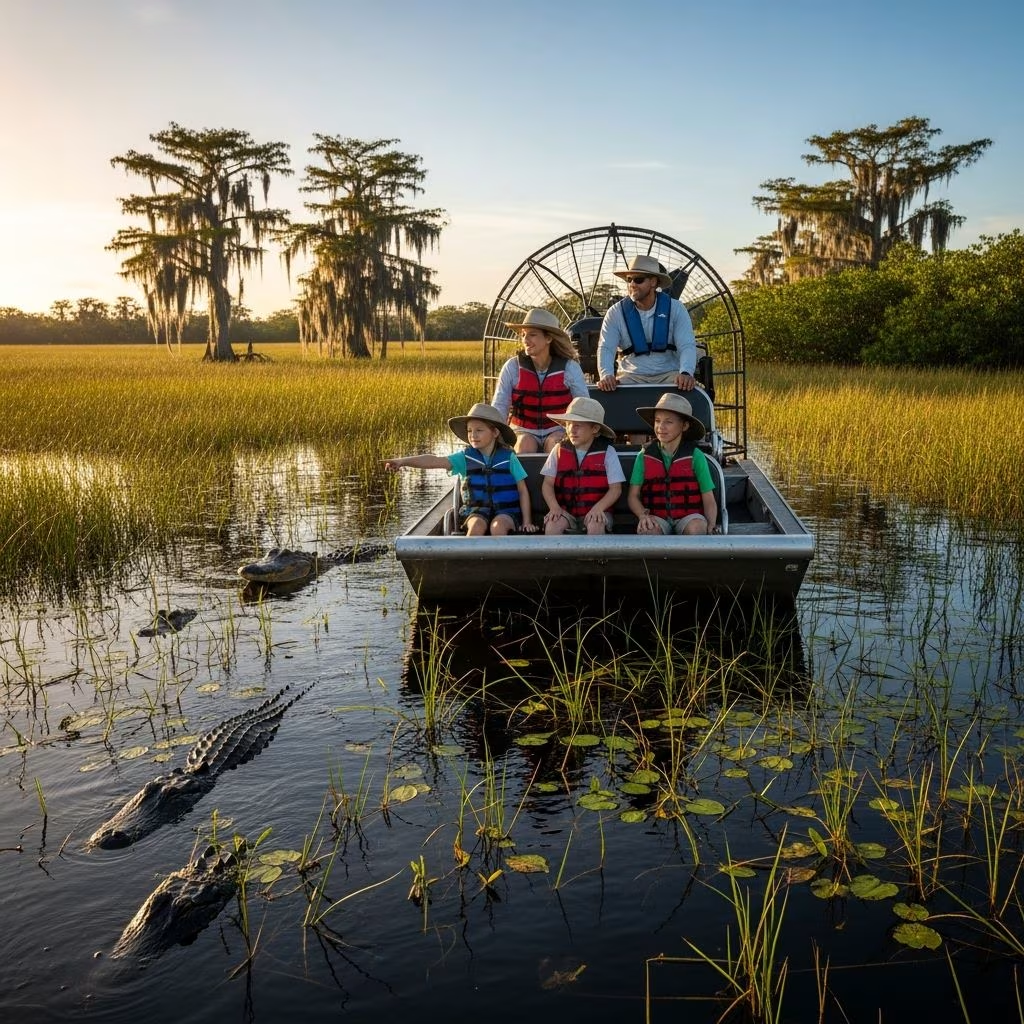
One of the most exhilarating ways to experience the Everglades with children involves exploring its waters. Airboat tours represent the quintessential Everglades activity and should not be missed when visiting with kids. These shallow-draft vessels allow access to remote areas while providing thrilling speed and maneuverability through narrow waterways.
Planning Your Airboat Adventure
Coopertown operates as the original airboat tour company and functions as an officially approved National Park partner. To minimize wait times during peak seasons, plan your visit for early morning or late evening hours when fewer tourists compete for available tours. Children typically find the combination of movement, noise, and proximity to wildlife deeply memorable, though parents should ensure younger passengers understand basic safety guidelines before departure.
Alternative Water-Based Options
Beyond traditional airboat tours, the park offers diverse water exploration possibilities. Flamingo Marina, located at the southern terminus of the park’s main road, provides guided boat tours including both 90-minute freshwater backcountry excursions and Florida Bay explorations. The Florida Bay tours offer particularly good opportunities for spotting crocodiles and manatees, making them especially rewarding for wildlife-focused families. When taking younger children on boat tours, bringing substantial quantities of snacks and water helps maintain their engagement and comfort, particularly on extended outings.
Houseboat rentals through Flamingo Marina represent another option for families seeking extended water-based immersion, allowing multiple days of exploration into Whitewater Bay. This option works best for older children or families comfortable with maritime activities.
Hiking represents one of the most affordable and rewarding ways to experience the Everglades with children. The park features numerous interpretive trails specifically designed for visitor enjoyment, and most prove short, flat, and perfect for young explorers. These paths wind through diverse habitats—from dense cypress swamps to open sawgrass marshes to pine forests—each offering distinct wildlife viewing opportunities.
Essential Trail Recommendations
Several trails have earned particular popularity with families due to their accessibility and wildlife viewing potential. The Anhinga Trail stands out as a must-do experience, offering a paved and boardwalked 0.8-mile loop through sawgrass marsh and classic Everglades environments. The boardwalk elevation provides a sense of safety while maintaining close proximity to wildlife. Visitors reliably observe alligators, turtles, wading birds, ospreys, cormorants, purple gallinules, black vultures, and occasionally snakes.
The Gumbo Limbo Trail provides a contrasting experience, winding 0.4 miles through dense forest where visitors encounter the famous Gumbo Limbo tree, affectionately known as the “tourist tree” due to its distinctive peeling red bark resembling sunburned skin. This trail offers shade and a completely different ecosystem perspective from sawgrass prairie trails.
For toddlers and families with very young children, the Bobcat Boardwalk Trail provides an excellent choice. This 0.4-mile boardwalk hike proves accessible for strollers and wheelchairs, starting from the Shark Valley Visitor Center parking area. The path winds through sawgrass slough and hardwood forest while remaining manageable for the smallest adventurers.
The Pa-hay-okee Trail deserves attention despite its brevity—just 0.2 miles of boardwalk—because of the covered observation platform midway along the route that provides expansive views of the iconic sawgrass prairie for which the Everglades are famous. Although some children find the vista initially underwhelming compared to mountain or coastal scenery, the platform offers opportunities to discuss ecological adaptation and habitat requirements while scanning for distant wildlife.
Additional worthwhile trails include the Eco Pond Trail, a half-mile loop perfectly suited for bird watching enthusiasts, and the Pinelands Trail, a 0.4-mile paved path through pine forest representing another distinct Everglades habitat.
Accessibility Considerations
Several trails accommodate strollers and wheelchairs, making them accessible for families with mobility constraints. The Guy Bradley Trail, a 1.2-mile round-trip paved path from the Flamingo Visitor Center, accommodates wheeled transportation. Parents should recognize that this route also provides vehicular access, so hiking offers exercise benefits but not necessarily solitude or a traditional trail experience.
When planning trail visits with very young children, consult with park rangers about current water levels, as these fluctuations affect trail conditions and wildlife visibility. Families should also exercise caution when placing hands or reaching toward vegetation, as water moccasins and other serpents inhabit the park.
The Shark Valley entrance offers unique experiences distinct from other park areas. A seven-mile open-air tram ride carries visitors to the Shark Valley Observation Tower, providing scenic vistas without requiring hiking. Children typically respond enthusiastically to tram rides, making this experience effective for engaging reluctant young explorers in nature appreciation. The journey through the park’s middle landscape offers photo opportunities and wildlife viewing possibilities while accommodating families with varied fitness levels.
Near the Shark Valley Visitor Center, families can rent bicycles, including specialized bikes with child seats for riders up to 40 pounds. This option combines activity with flexibility, allowing families to set their own pace and stop frequently for wildlife observation without the rigidity of a scheduled tram tour.
The Everglades National Park operates a dedicated Junior Ranger Program that transforms park visits into structured learning experiences. This initiative allows children to explore the park with their families while completing activities designed to deepen environmental understanding and engagement. The program represents one of many free activities available to park visitors, making it an excellent value addition to any family itinerary.
Participating in the Junior Ranger Program encourages children to visit different park areas, examine exhibits, watch educational films, and complete interpretive challenges. The program culminates in official recognition and typically a commemorative badge or certificate, providing tangible motivation for children to engage fully with park resources.
Understanding seasonal variations helps optimize your family visit. The park remains open year-round, but environmental conditions and wildlife activity patterns fluctuate significantly across seasons. Consultation with park rangers before planning hikes with young children proves essential, particularly regarding water levels that affect trail conditions and visibility of aquatic species.
Early morning and late evening hours provide optimal wildlife viewing, as many species remain more active during cooler temperatures. However, families with young children may struggle with the early departure times required to reach trails before dawn. Compromise approaches involve starting with high-success trails like Anhinga regardless of time, accepting somewhat reduced but still reliable wildlife observations in exchange for schedule flexibility.
Families have flexibility in choosing where to base their Everglades visit. Camping within the park appeals to outdoor-oriented families willing to accept rustic facilities, while visitors preferring conventional accommodations find options in nearby Homestead or Miami. The proximity of these towns to the park means families can structure multi-day visits combining Everglades exploration with other regional attractions.
The Everglades can accommodate visitors of all ages when appropriate precautions are followed. Boardwalked trails elevate visitors above the water and its inhabitants, boardwalks provide sturdy railings, and park rangers enforce safety regulations. However, families should recognize that the Everglades contains living wildlife including venomous snakes, alligators, and crocodiles. Supervision is essential, and visitors must maintain distance from wildlife and follow all park guidelines. Avoid allowing children to reach toward water or vegetation, and never permit unauthorized swimming.
Essential items include abundant water and snacks, particularly for boat tours where refreshments prove limited. Sunscreen, hats, and light protective clothing protect against intense Florida sun. Binoculars enhance bird and distant wildlife observation. Comfortable walking shoes with good traction prove essential for boardwalk exploration. For photography-interested families, quality cameras capture memorable wildlife moments that educational value extends long after the visit concludes.
Meaningful Everglades experiences can occur during half-day visits, but full-day or multi-day trips allow deeper engagement with diverse ecosystems and increased wildlife viewing success. Families might structure visits around a morning airboat tour and afternoon trail exploration, or dedicate entire days to specific park areas like Shark Valley or Flamingo.
Yes, hiking trails, the Junior Ranger Program, and general park access represent free activities. Visitor centers offer exhibits and films at no charge. Paid activities include airboat tours and some guided boat excursions through concessioners, but families can experience substantial Everglades engagement without significant expense through strategic planning.
The Everglades offers families unprecedented opportunities for wildlife encounters, ecosystem learning, and nature appreciation in a setting of genuine ecological significance. The combination of accessible trails, diverse water-based experiences, innovative educational programs, and reliable wildlife viewing creates experiences that resonate with children long after vacation ends. Whether your family pursues the adrenaline rush of airboat exploration, the methodical observation of boardwalk birdwatching, or the physical challenge of trail biking through cypress forests, the Everglades accommodates diverse interests and comfort levels while maintaining its role as a premier destination for family nature exploration.
