

 Travel Essentials
 Travel Essentials

Uncover the best destinations and activities across Vendée, France's coastal paradise featuring island escapes, theme parks, and charming fishing villages.
 Travel Essentials
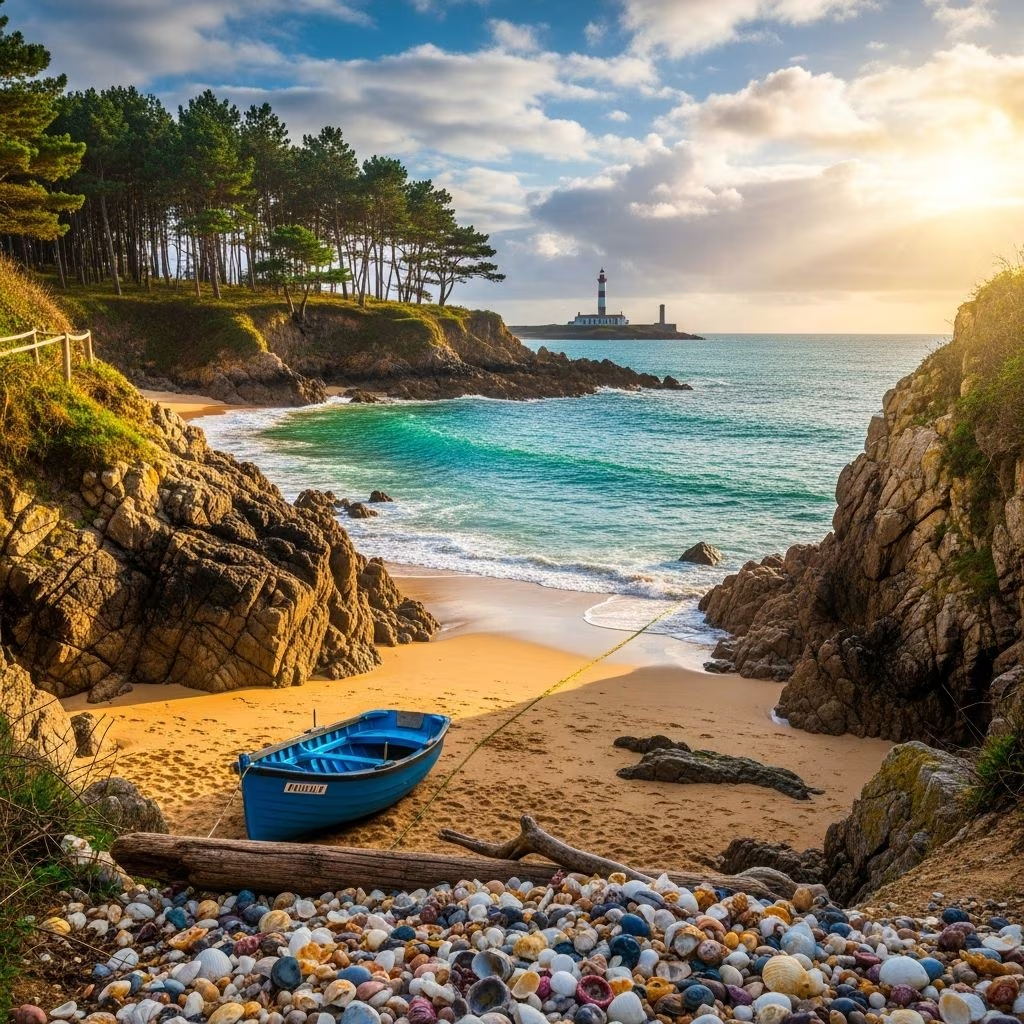
France’s Vendée region stands as one of Europe’s most diverse coastal destinations, offering visitors an extraordinary blend of natural beauty, historical significance, and contemporary entertainment. Stretching along the Atlantic coastline in western France, this remarkable area encompasses everything from pristine sandy beaches and dramatic rocky cliffs to verdant marshlands and charming historic settlements. Whether you seek adventure, relaxation, cultural enrichment, or family-friendly entertainment, Vendée delivers an unforgettable experience that captures the essence of French coastal living.
The Vendée region presents a fascinating mosaic of distinct landscapes and atmospheres. The northern sections feature gentler terrain with accessible beaches ideal for swimming and water sports, while the southern coastline boasts more dramatic geological features with elevated vantage points and rugged natural formations. Beyond the shoreline, the interior reveals lush countryside dotted with medieval architecture, traditional villages, and agricultural heritage sites that speak to centuries of French regional history.
What sets Vendée apart from other French coastal regions is its remarkable capacity to accommodate diverse travel interests. Families traveling with children discover world-class entertainment facilities, while cultural enthusiasts explore centuries-old castles and archaeological sites. Nature lovers traverse extensive cycling networks and paddle through protected waterways, while adventure seekers enjoy water sports and outdoor activities. This multifaceted appeal ensures that virtually every visitor finds compelling reasons to extend their stay.
Noirmoutier holds a special place in Vendée’s tourism landscape as an island destination that seamlessly blends natural splendor with accessible amenities. The island’s distinctive character emerges from its unique geographical position and temperate microclimate, which supports Mediterranean-influenced vegetation unusual for this northern Atlantic location. This environmental particularity creates landscapes that feel distinctly different from the mainland, offering visitors a genuine sense of escape.
The primary settlement, Noirmoutier-en-l’Île, serves as the island’s cultural heart, featuring architectural heritage including a notable fortified château that has witnessed centuries of regional history. Beyond architectural exploration, the island excels as a cycling destination, with well-maintained paths connecting charming villages and natural attractions. The surrounding salt marshes—a hallmark of the Vendée landscape—offer opportunities for learning about traditional salt harvesting techniques that sustained local economies for generations. Visitors can observe contemporary practitioners continuing these ancestral methods, creating living demonstrations of cultural continuity.
Located off the southern coast, Île d’Yeu presents an enchanting island retreat featuring quintessential French village aesthetics combined with substantial historical significance. The island’s whitewashed residential architecture, accented with colorful window shutters, creates visually striking streetscapes that exemplify traditional French coastal design. A distinctive local practice—applying leftover boat paint to residential shutters—explains the riot of colors that greet visitors exploring narrow village lanes.
The island’s most significant historical landmark is the Vieux Château, an imposing medieval fortification constructed during the tumultuous Hundred Years’ War. Guided tours conducted in multiple languages provide visitors with comprehensive historical context, explaining the fortress’s strategic importance and architectural evolution. Île d’Yeu’s cycling infrastructure proves exceptionally well-developed, with designated paths guiding enthusiasts through varied terrain. The southern coastal route particularly rewards cyclists with dramatic cliff-side vistas and opportunities to observe geological formations that have shaped the island’s character over millennia.
As the Vendée’s most prominent coastal urban center, Les Sables-d’Olonne commands attention through its commanding presence in regional tourism and culture. The town receives approximately 2,300 annual sunshine hours, positioning it among France’s sunniest coastal destinations—a climatic advantage that supports active outdoor calendars year-round. This substantial sunshine creates ideal conditions for beach activities, outdoor dining, and leisurely exploration of the extensive waterfront.
The town’s character emerges from the fascinating architectural district featuring Europe’s remarkably narrow thoroughfares. Rue de l’Enfer (Hell Street) presents one of the world’s narrowest traffic-bearing streets, measuring just 16 inches wide at certain points—a peculiar historical artifact that now attracts curious visitors. Beyond architectural oddities, the town showcases contemporary public art installations, particularly impressive shell mosaics created by artist Danielle Aubin-Arnaud. These intricate artworks, composed entirely of shells, depict maritime life, terrestrial creatures, and whimsical creations like a mailbox disguised as a monster’s mouth, adding unexpected creative dimension to urban exploration.
La Chaume, the historic fishing village within Les Sables-d’Olonne, occupies a distinctive position as the town’s oldest neighborhood. Accessible via a brief ferry crossing, this district maintains authentic maritime character despite its proximity to contemporary urban development. Traditional fishing practices continue alongside tourism infrastructure, creating an environment where heritage and modernity coexist productively.
Beyond Les Sables-d’Olonne, multiple smaller coastal settlements offer distinct experiences. Brétignolles-sur-Mer has established international recognition within surfing communities, with consistent Atlantic swells attracting dedicated practitioners. Jard-sur-Mer features the geologically significant Pointe du Payré, a distinctive headland offering elevated perspectives across the coastline. Talmont-Saint-Hilaire combines sandy beaches with medieval heritage through remnants of a castle associated with Richard the Lionheart, merging recreational and historical attractions. L’Aiguillon-sur-Mer specializes in shellfish cultivation, allowing visitors to observe aquaculture operations and purchase fresh local products.
Puy du Fou stands as the Vendée’s most significant entertainment destination and arguably one of Europe’s most sophisticated theme parks. Spanning 140 acres of carefully landscaped terrain, the facility transcends conventional amusement park parameters through its emphasis on historical authenticity and narrative-driven experiences rather than mechanical rides.
The park’s centerpiece attraction, the Cinéscénie, represents a remarkable achievement in theatrical production—a nighttime spectacular involving 2,400 local performers, 130 horsemen, and elaborate special effects orchestrated across an expansive outdoor stage. This production creates a comprehensive historical narrative encompassing centuries of French development, presented through choreographed spectacle that combines equestrian performances, pyrotechnics, and immersive staging.
Daytime attractions showcase reconstructed historical environments representing different temporal periods. Visitors traverse a meticulously recreated 18th-century Vendean village complete with period-appropriate architecture and atmospheric elements. A medieval township features costumed performers and wandering livestock, creating lived-history experiences. Fortification displays demonstrate defensive architecture from the 11th century, while architectural gardens provide peaceful contemplation spaces. The park includes thematic zones dedicated to various historical periods and cultural traditions, ensuring experiences appeal to diverse interests and age groups.
South-central Vendée encompasses the Marais Poitevin, a vast wetland complex known regionally as the “Venise Verte” (Green Venice) due to its extensive network of navigable waterways bordered by lush vegetation. This protected natural environment represents one of France’s most significant wetland ecosystems, supporting diverse bird populations and representing important biodiversity. Visitors explore the marshes via traditional flat-bottomed boats, drifting silently through shaded channels where water reflections double the visual impact of overhanging vegetation. This transportation method, borrowed from Venetian gondola traditions, allows intimate observation of wildlife while minimizing environmental disturbance.
Surrounding settlements including Fontenay-le-Comte offer medieval urban environments, with narrow streets and historic architecture providing cultural context for the natural attractions. Vouvant presents itself as a fortified village with defensive structures and traditional construction practices.
The Vendée’s extensive coastline supports comprehensive water sports infrastructure. Surfing, windsurfing, and kiteboarding flourish at specific locations where Atlantic swells and wind patterns create favorable conditions. Swimming beaches range from protected family-oriented areas to more exposed coastal sections preferred by experienced swimmers. Sailing facilities accommodate both recreational cruising and competitive activities.
Exceptional cycling networks connect coastal communities and interior destinations, offering routes accommodating various fitness levels. Dedicated paths traverse salt marshes, connect island communities, and provide elevated perspectives across agricultural regions. Mountain biking opportunities exist in less developed areas, while casual family cycling suits established pathways through established communities.
Summer months attract maximum visitation, with July and August experiencing peak occupancy across accommodations and attractions. Spring and autumn offer pleasanter temperatures, fewer crowds, and comparable sunshine hours. Winter visitation occurs primarily among dedicated outdoor enthusiasts and cultural tourists, with reduced commercial tourism infrastructure operational.
Regional road networks facilitate personal vehicle travel throughout Vendée. Public transportation including buses connects primary settlements. Ferry services provide island access. Airport facilities in nearby La Rochelle accommodate international travel.
Late spring through early autumn generally provides ideal conditions combining favorable weather with functional tourism infrastructure. June and September offer particular advantages through warmer temperatures and reduced peak-season crowds compared to July and August.
Absolutely. Puy du Fou specifically accommodates children, beaches provide safe swimming environments in designated areas, and water sports facilities offer age-appropriate instruction and activities.
Yes. Extensive dedicated cycling networks, flat terrain in many areas, and bike-rental services throughout communities make bicycle exploration highly practical and increasingly popular among visitors.
Three to five days allows meaningful engagement with primary attractions and communities. Two weeks enables comprehensive exploration of regional diversity and participation in multiple activities without rushed schedules.
