

 Travel Essentials
 Travel Essentials

Explore Extremadura's Roman heritage in Mérida and Cáceres, hike Monfragüe National Park, savor Iberian ham, and wander medieval villages in this off-the-beaten-path Spanish region.
 Travel Essentials
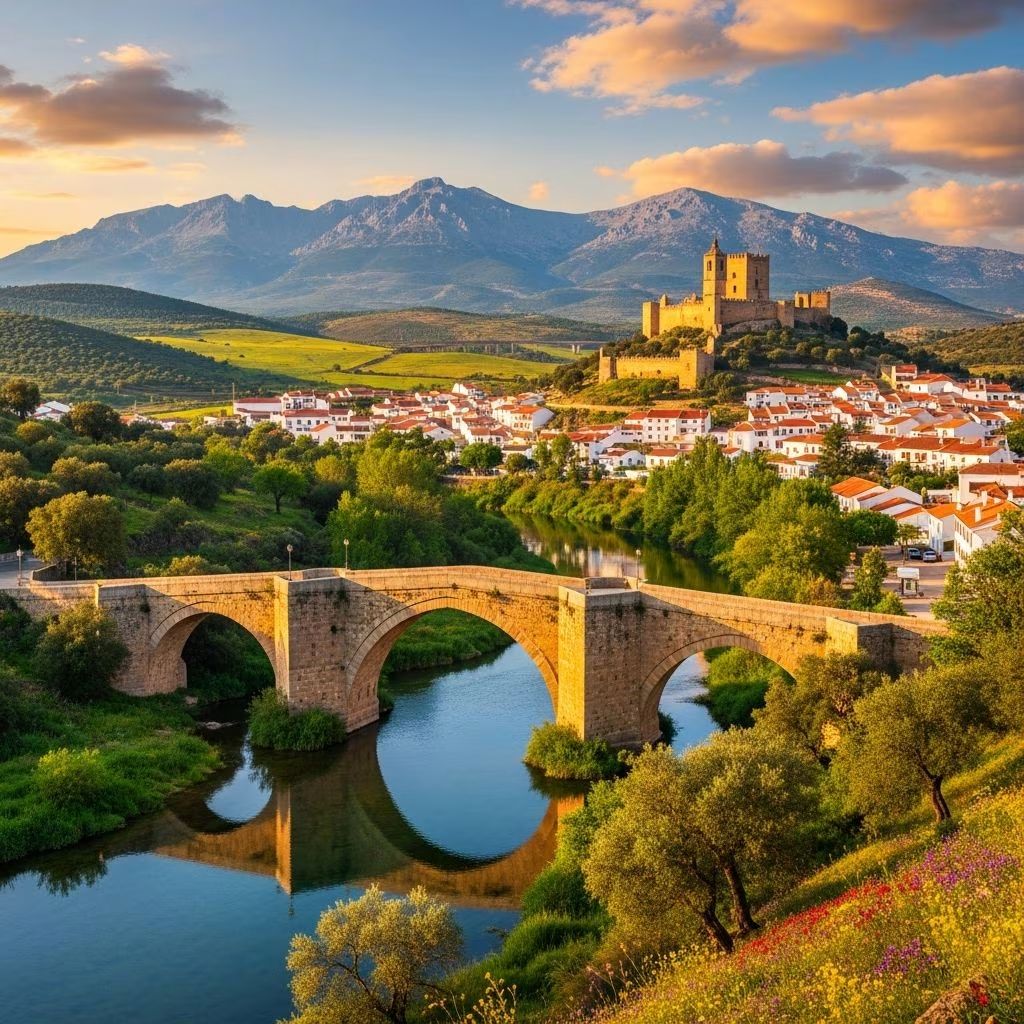
Nestled in western Spain, Extremadura spans the provinces of Cáceres and Badajoz, offering a captivating blend of ancient history, rugged natural beauty, and mouthwatering cuisine. Often overlooked by tourists flocking to Andalusia or Barcelona, this region provides an authentic Spanish experience with fewer crowds and lower costs. From the well-preserved Roman monuments of Mérida to the fairy-tale medieval streets of Cáceres, Extremadura invites travelers to step back in time while embracing its wild landscapes and local flavors.
Extremadura stands out for its UNESCO World Heritage sites, including the Old Town of Cáceres and the Archaeological Ensemble of Mérida, which showcase layers of Roman, medieval, and Renaissance architecture. The region’s two largest provinces in Spain cover diverse terrain: expansive dehesas (oak woodlands), dramatic gorges, and reservoirs perfect for outdoor pursuits. It’s also a haven for foodies, renowned for Iberian ham produced from acorn-fed pigs roaming free in the countryside. With over 60 protected natural areas, including Monfragüe National Park, it’s ideal for birdwatching, hiking, and spotting wildlife like vultures and lynxes. Spring and autumn are prime visiting seasons to avoid summer heat, with cherry blossoms lighting up Valle del Jerte in late March.
Mérida, the capital of Extremadura, was once Emerita Augusta, a thriving Roman colony. Today, its archaeological ensemble is one of Europe’s best-preserved, featuring an ancient amphitheater that once seated 15,000 spectators for gladiatorial contests and theatrical performances. Nearby, the Temple of Diana stands elegantly amid modern surroundings, while the Portico del Foro and Roman Bridge offer glimpses into daily ancient life. The Alcazaba, a fortress blending Roman, Visigothic, and Moorish influences, includes underground cisterns and defensive walls perfect for exploration.
Enhance your visit with the National Museum of Roman Art, housing exquisite mosaics, sculptures, and artifacts that bring the empire’s grandeur to life. Along the historic Vía de la Plata (Silver Route), extend your Roman adventure to sites like the Aqueduct of Los Milagros, thermal baths in Alange, and the Bridge of Alcántara. A full morning here immerses you in 2,000 years of history.
The Old Town of Cáceres, a UNESCO site since 1986, feels like a living museum with over 30 towers—more than Italy’s San Gimignano—punctuating its skyline. Cobblestone streets wind past Renaissance palaces, Gothic churches, and lively plazas ideal for sipping wine or coffee. Climb the Almohad Tower of Bujaco for panoramic views, stroll the Arco de la Estrella, and explore the Jewish quarter’s 15th-century Hermitage of San Antonio.
Remnants of the Roman colony Norba Caesarina hide in courtyards like Mayoralgo Palace, blending eras seamlessly. Evenings come alive with tapas bars; try migas extremeñas (fried breadcrumbs with chorizo and grapes) and creamy torta del Casar cheese at spots like El Figón de Eustaquio. Cáceres serves as an excellent base for day trips, its preserved walls evoking a fairy-tale ambiance.
Monfragüe National Park, a UNESCO Biosphere Reserve, captivates with its granite peaks, deep canyons, and the Tagus River splitting dramatically. Prime lookout points include La Higuerilla for vulture colonies, Mirador de la Portilla del Tiétar for river vistas, and Fuente de los Tres Caños where waters diverge. Birdwatchers spot griffon vultures, black storks, and eagles; trails range from easy walks to challenging hikes.
Other gems include the Tagus International Nature Reserve for riverside paths and the Extremadura Geological Park for mountain treks. Valle del Jerte bursts with cherry orchards in spring, while Orellana Reservoir offers watersports. A car or bike unlocks these remote areas, maximizing your adventure.
| Specialty | Description | Where to Try |
|---|---|---|
| Iberian Ham | Acorn-fed pork cured for rich, nutty flavor | Jamones y Embutidos Sierra de Monfragüe (tasting tour ~€40) |
| Torta del Casar | Spreadable sheep’s milk cheese | Local Cáceres restaurants |
| Migas Extremeñas | Fried breadcrumbs with meats and veggies | El Figón de Eustaquio |
| Local Wines | Robust reds from nearby valleys | Wine-producing villages |
Extremadura’s cuisine shines through farm-to-table experiences. Book a four-hour Iberian ham tasting at a Monfragüe farm, touring curing rooms and sampling varieties. Pair with regional wines from valleys south of the Tagus. Don’t miss olive oil tastings or lamb dishes in village inns.
Rent a car for flexibility; buses connect major towns like Cáceres, Mérida, and Plasencia. Stay in paradores (historic hotels) or boutique posadas. Budget: €100-150/day including meals and sites.
Best time: March-May or September-November for mild weather and blooms. Fly into Badajoz or Seville airports, then drive. Public transport suits cities but limits rural access. Pack layers, sturdy shoes for uneven paths, and binoculars for wildlife. Respect nature: stick to trails in parks.
Spring (cherry blossoms) and autumn avoid extreme heat; summers can exceed 40°C.
Yes, it’s low-crime with welcoming locals; standard precautions apply.
Buses link Cáceres, Mérida, Trujillo; trains to Plasencia. Taxis or tours for parks.
Iberico pigs forage acorns in dehesas, yielding melt-in-mouth flavor.
Many sites offer audio guides; apps like Travel Extremadura help.
Extremadura rewards the curious with timeless treasures and serene escapes, proving Spain’s best-kept secrets lie beyond the usual paths.
