

 Travel Essentials
 Travel Essentials

A comprehensive travel guide to Extremadura covering UNESCO sites, Roman heritage, natural reserves, and regional gastronomy for visitors seeking authentic Spanish experiences.
 Travel Essentials
Nestled in southwestern Spain, Extremadura remains one of Europe’s best-kept travel secrets. While millions flock to Barcelona, Madrid, and Andalusia, this rugged and historically rich region offers visitors an authentic Spanish experience largely untouched by mass tourism. Comprising two provinces—Badajoz and Cáceres—Extremadura spans Spain’s largest territorial expanse, yet welcomes a fraction of the international visitors that rival destinations enjoy. This geographical advantage translates into genuine cultural immersion, uncrowded archaeological sites, and exceptional value for travelers willing to venture beyond beaten paths.
Extremadura occupies a distinctive place in Spanish geography and history. Bordered by Portugal to the west and comprising Spain’s southwesternmost territory, the region has historically served as a frontier zone where Christian and Muslim cultures intersected during medieval centuries. This strategic location profoundly shaped the region’s architectural heritage, cultural practices, and economic development. Today, Extremadura represents Spain’s least developed province by some economic metrics, yet this relative lack of industrialization has paradoxically preserved medieval town centers, ancient monuments, and traditional ways of life that have vanished elsewhere.
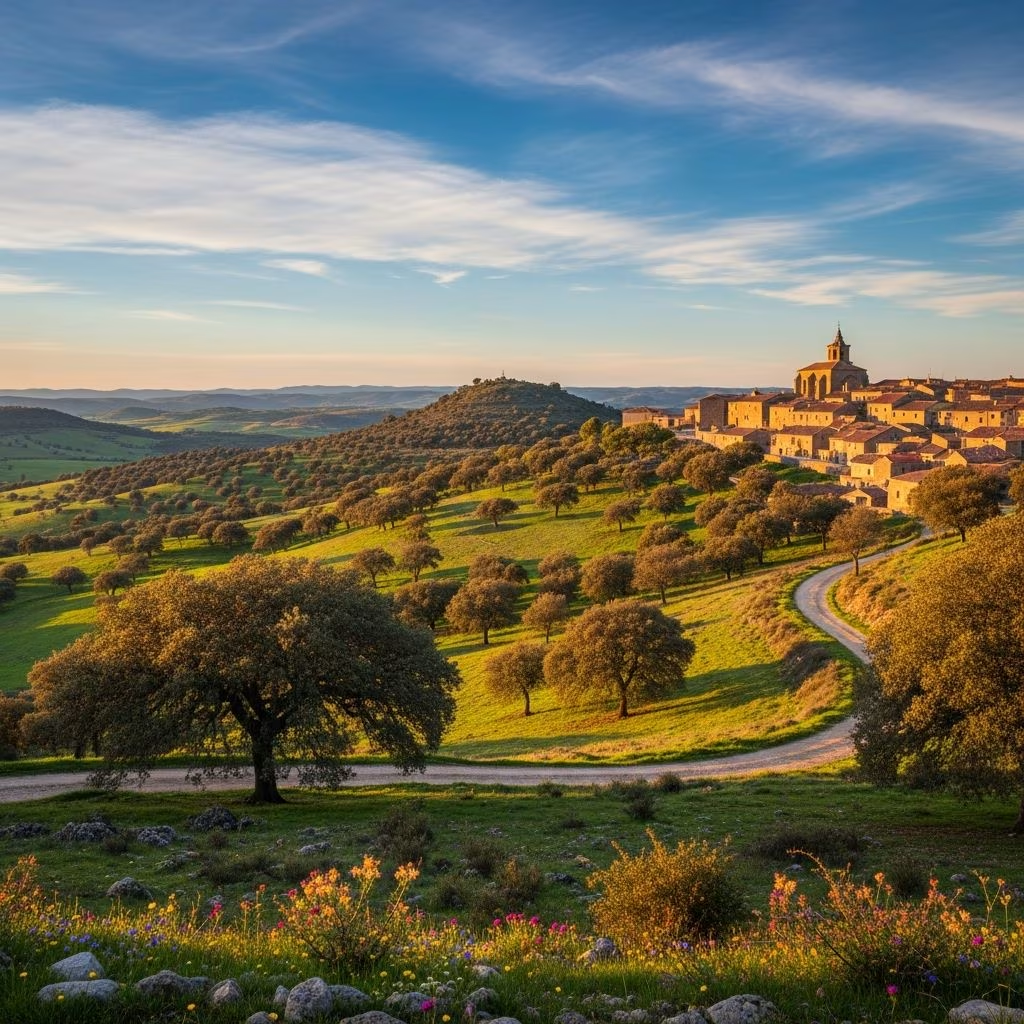
The region’s population density remains remarkably low compared to coastal Spanish provinces, creating expansive landscapes dominated by cork forests, oak savannah ecosystems, and agricultural valleys. This environmental preservation makes Extremadura exceptionally appealing to nature enthusiasts and travelers seeking respite from crowded European destinations.
Extremadura boasts three UNESCO-designated World Heritage Sites concentrated within relatively close proximity, creating exceptional value for heritage tourists. These three locations form what many guides refer to as the essential foundation for regional exploration.
The Old Town of Cáceres represents one of Spain’s finest preserved medieval urban centers. This walled city maintains architectural integrity spanning multiple centuries, with structures reflecting Christian, Islamic, and Jewish influences layered atop Roman foundations. Wandering Cáceres’ cobblestone streets reveals Renaissance palaces, fortress towers, and religious buildings showcasing architectural evolution across centuries. The Almohad Tower of Bujaco stands as a prominent landmark, while the Arco de la Estrella gateway frames dramatic views across the medieval quarter. Visitors can trace the defensive wall pathways and discover hidden courtyards containing Roman archaeological remains, such as those visible within Mayoralgo Palace’s Renaissance courtyard.
The city’s Arab House Museum preserves 12th-century Islamic architecture, offering insights into medieval Muslim cultural presence. The Old Jewish Quarter contains religious structures including the 15th-century Hermitage of San Antonio, testament to medieval religious pluralism. Beyond architectural exploration, Cáceres offers contemporary cultural experiences including hammams (traditional bathhouses), flamenco performances, and modern dining establishments alongside traditional taverns.
Mérida represents one of Spain’s most significant Roman archaeological complexes. Founded as a strategic settlement along the Vía de la Plata (Silver Route) connecting mineral-rich northern regions to southern Mediterranean trade networks, Mérida flourished as Augusta Emerita during the Roman Empire. The city preserves multiple intact Roman structures including a functioning amphitheater, Roman theater with remarkable architectural completeness, and the spectacular Aqueduct of Los Milagros spanning the Guadiana River with distinctive arches still standing after nearly two millennia.
The Museo Nacional de Arte Romano (National Museum of Roman Art) houses one of Europe’s most comprehensive collections of Roman artifacts, sculpture, and decorative elements. This museum provides essential context for understanding the broader Vía de la Plata route and Roman settlement patterns across Extremadura. Beyond Mérida itself, the Silver Route connects numerous secondary Roman sites including the thermal baths at Alange and Baños de Montemayor, the Theater at Medellín, the imposing Bridge of Alcántara, and the Arch of Cáparra, creating an extended archaeological journey across the region.
The Royal Monastery of Santa María de Guadalupe represents Extremadura’s religious and artistic apex. This Renaissance-era monastery, designated a UNESCO World Heritage Site, showcases Mudéjar architectural elements—a distinctive Spanish style blending Islamic geometric patterns with Christian design principles. The monastery’s monastery complex includes ornate cloisters, spectacular interior decoration, and significant religious artwork. Beyond architectural importance, Guadalupe holds deep spiritual significance within Spanish Catholicism and continues functioning as an active religious community.
Travelers with limited time can experience Extremadura’s essential character within three days by focusing on the three UNESCO sites. This concentrated itinerary typically bases visitors in either Cáceres or Mérida, utilizing these hub cities for accessing all three major heritage destinations within manageable travel distances (typically one to two hours between locations). Three days allow approximately 1.5 days in Cáceres for thorough old town exploration, one full day in Mérida for Roman sites and museum visits, and a half-day excursion to Guadalupe.
Extended visits enable integration of secondary heritage towns, natural reserves, and deeper engagement with regional culture. A five-day itinerary typically incorporates Trujillo alongside the core triangle, adding another significant medieval plaza and fortress complex. Seven-day trips allow dedicated time for Monfragüe National Park exploration, including bird watching opportunities and wildlife observation, plus visits to wine-producing villages and authentic rural settlements preserving traditional Extremaduran lifeways.
Two-week visits enable comprehensive provincial coverage across both Badajoz and Cáceres, with flexibility for multiple day trips from primary bases, deeper cultural engagement within communities, and experiential activities beyond standard sightseeing. This timeframe accommodates participation in local festivals (when coinciding with travel dates), extended natural area hiking, and thorough exploration of regional gastronomy through market visits and cooking experiences.
Beyond historical monuments, Extremadura’s natural environment constitutes a major travel draw. Three designated Biosphere Reserves protect distinctive ecosystems and provide outdoor recreation opportunities.
Monfragüe National Park preserves cork forests and rugged terrain hosting diverse bird populations, particularly raptors and migratory species. The park features established hiking trails, panoramic viewpoints, and designated bird-watching locations accessible to visitors without specialized equipment. Guided nature tours typically cost €45-65, while self-guided exploration remains free.
La Siberia encompasses forested valleys and water features creating landscape diversity, while the Tejo/Tajo International Biosphere Reserve along the Portuguese border protects riverine ecosystems and traditional agricultural landscapes. These reserves enable outdoor activities ranging from casual hiking to serious wildlife photography and ecological research participation.
The dehesa—Spain’s distinctive oak savannah ecosystem—characterizes much of Extremadura’s lower-altitude terrain. These managed landscapes traditionally supported cork and acorn production while maintaining ecological value and pastoral beauty.
Regional gastronomy reflects centuries of agricultural tradition and cultural heritage. Extremaduran cuisine emphasizes acorn-fed ibérico pork, distinctive cheeses, and preparation methods largely unchanged for generations.
| Signature Dishes | Description | Regional Significance |
|---|---|---|
| Jamón Ibérico | Air-cured pork from acorn-fed black Iberian pigs | Premium delicacy commanding premium prices; local production remains artisanal |
| Torta del Cásar | Soft, spreadable cheese made from Extremaduran sheep’s milk | Protected Denomination of Origin; uniquely regional product |
| Migas Extremeñas | Bread-based dish with pork, garlic, and paprika | Traditional shepherd and laborer food reflecting rural heritage |
| Caldo de Córdoba | Hearty soup combining vegetables and meat stocks | Regional comfort food reflecting agricultural calendar |
Extremaduran dining costs 30-40% less than equivalent quality in Madrid or Barcelona, creating exceptional culinary value. Local markets showcase seasonal produce, artisanal cheeses, and cured meats at prices substantially below major urban centers. Visitors can participate in market exploration, sample regional wines from emerging vineyard regions, and dine in family-run establishments preserving traditional preparation methods.
Regional bus networks connect major destinations at €5-15 per journey, providing budget-friendly transportation for travelers without rental vehicles. Car rental costs approximately €35-50 daily, offering flexibility for visiting multiple sites and exploring rural areas inaccessible by public transit. Train service connects larger cities including Plasencia, Cáceres, Badajoz, and Mérida, though schedules prove less frequent than bus routes.
Mid-range accommodation ranges from €40-80 nightly, providing comfortable three-star hotel experiences in primary cities. Rural guesthouses and agrarian tourism properties offer immersion in traditional village life at comparable rates. Five-to-seven day itineraries can consolidate accommodation in two primary bases (typically Cáceres and Mérida), eliminating daily hotel changes while maintaining proximity to multiple attraction clusters.
Daily travel costs average €80-140 per person when including mid-range accommodation, local transportation, meal expenses, and major site admission fees. This represents exceptional European travel value, particularly when compared to Mediterranean or northern European destinations commanding significantly higher daily expenditures. The concentration of UNESCO sites within limited geographic territory means visitors access world-class heritage without accumulating excessive transportation costs.
Beyond the primary triangle, several additional towns merit inclusion in extended itineraries. Trujillo features a prominent medieval plaza dominated by an impressive fortress and palace architecture, accessible within 45 minutes from Cáceres. Zafra combines fortified medieval architecture with Renaissance additions and serves as a convenient stop for travelers approaching from Seville or southern Spain. Badajoz, the provincial capital, offers contemporary cultural institutions alongside historical sites for travelers seeking urban amenities.
Extremadura experiences Mediterranean climate characteristics with hot summers and mild winters. Spring (April-May) and fall (September-October) offer ideal conditions—comfortable temperatures enabling extended outdoor exploration without summer heat intensity. Winter months (November-February) bring occasional rain but rarely inclement weather preventing sightseeing. Summer (July-August) features intense heat potentially limiting midday activities, though early morning and evening exploration remains pleasant. The thermal baths historically scattered throughout the region—Alange and Baños de Montemayor—provide seasonal respite during warmer months.
Spring (April-May) and autumn (September-October) provide ideal conditions with comfortable temperatures and lower summer crowds. These seasons enable full-day outdoor exploration without excessive heat.
Yes, regional bus networks connect all major destinations adequately for heritage tourism. Visitors basing in Cáceres or Mérida can access primary sites via day trips using public transportation, though rental vehicles provide greater flexibility for visiting secondary destinations and natural reserves.
Absolutely. The region combines cultural attractions, outdoor activities, and safe communities welcoming to families. Medieval town exploration, national park hiking, and local cuisine experiences appeal across age groups.
Extremadura maintains more limited tourism infrastructure than coastal regions, requiring more independent planning. However, this relative underdevelopment preserves authentic experiences and reduces tourist congestion at major sites.
Spanish remains the primary language throughout Extremadura. English proficiency increases in hotel and tourist-oriented establishments within larger cities, though rural areas and traditional dining establishments predominantly operate in Spanish.
Extremadura represents European travel at its most authentic—world-class historical sites accessible without overwhelming crowds, distinctive regional culture remaining largely unmodified by mass tourism, and exceptional value within a continent increasingly dominated by expensive destination choices. The region’s three UNESCO World Heritage Sites alone justify extended visits, while natural landscapes and regional gastronomy provide dimensions beyond standard heritage tourism. For travelers seeking alternatives to overcrowded Mediterranean destinations, Extremadura offers Spanish authenticity wrapped in rugged landscapes and centuries of layered history.
