

 Travel Essentials
 Travel Essentials

Explore fado music's rich history, emotional depth, and the best venues across Portugal to experience this soulful Portuguese tradition.
 Travel Essentials
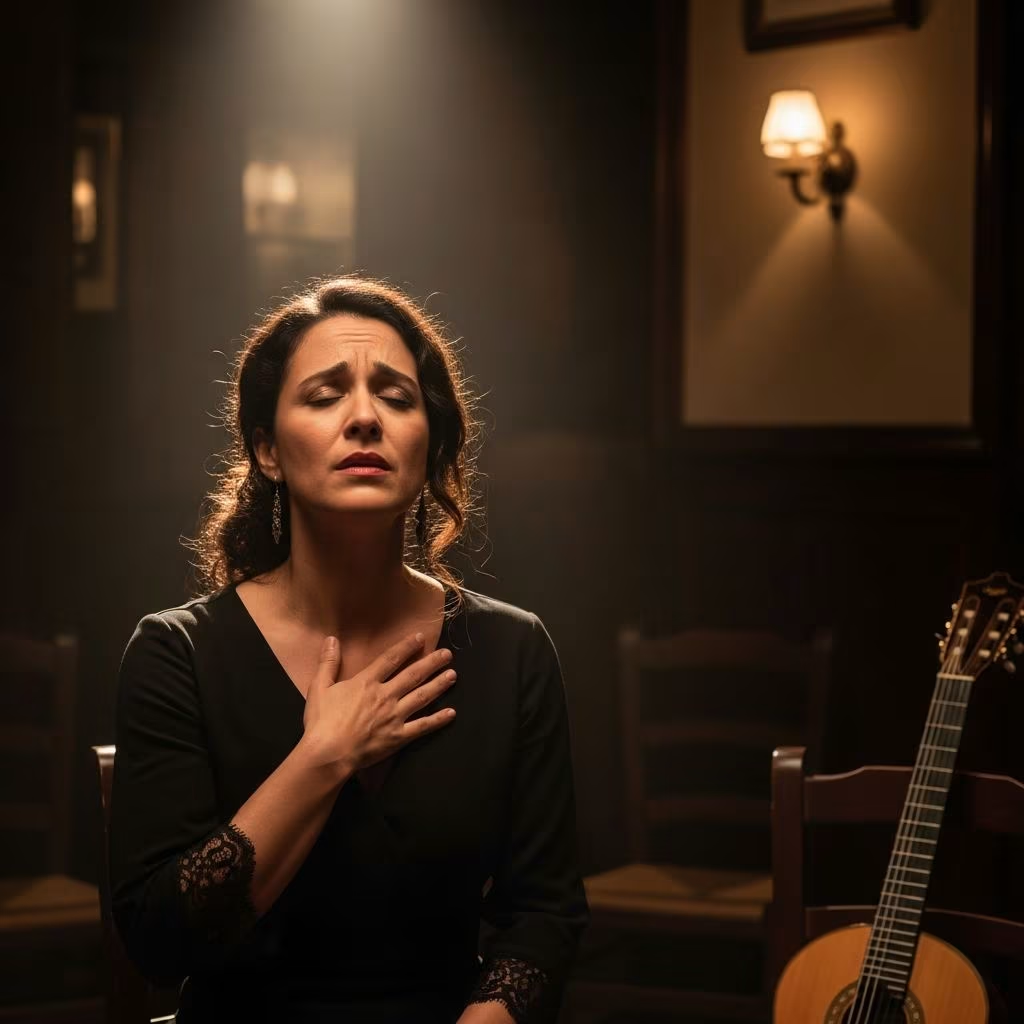
Fado represents far more than a musical genre; it embodies the emotional landscape of Portuguese culture and the human experience itself. This melancholic style of folk music captures the essence of longing, nostalgia, and yearning that defines the Portuguese spirit. The genre is characterized by its mournful, sorrowful quality that speaks to universal emotions of loss and longing.
At its core, fado is inextricably linked to the Portuguese concept of saudade — a profound feeling of longing and loss that transcends simple sadness. This untranslatable emotional state forms the backbone of fado performance, where audiences often find themselves overwhelmed by a sudden wave of melancholy even when they cannot understand the Portuguese lyrics. The music itself becomes a language of the soul, speaking directly to feelings that words alone cannot capture.
Fado is the musical expression of Lisbon, born from the streets and neighborhoods of Portugal’s capital city. Though its roots run deep throughout Portugal, Lisbon remains the spiritual home of fado, where the tradition continues to flourish in intimate venues and cultural spaces.
The geographical origins of fado trace back to specific neighborhoods in Lisbon, with Mouraria standing out as the acknowledged birthplace of this musical tradition. Walking through Mouraria today, visitors encounter a striking fado statue that marks the historical significance of this humble neighborhood in the development of Portugal’s most recognizable musical export. The neighborhood’s role in fado’s emergence reflects how the music arose from working-class communities and evolved as an authentic expression of everyday life and hardship.
As fado evolved over centuries, it developed distinct characteristics and regional variations. Today, two primary types of fado exist: traditional fado and Fado Canção, each with its own musical characteristics and cultural significance. This evolution reflects how fado adapted to changing times while maintaining its essential emotional core and connection to Portuguese identity.
An authentic fado performance follows a carefully developed format that has remained relatively consistent through generations. The typical arrangement features a single performer—a fadista—accompanied by at least two musicians. The instrumental ensemble typically includes an acoustic guitar and a 12-string Portuguese guitar, each contributing distinct textures to the overall sound. This trio configuration allows for intimate expression while providing rich musical accompaniment.
In a traditional fado house, the atmosphere carries profound importance to the experience. Performances occur in dimly lit venues known as casas de fado (traditional restaurants with live shows) or tascas (taverns). The lighting, décor, and spatial arrangement all contribute to creating an environment where the audience becomes enveloped in what might be called a “respectful but surprisingly warm silence”. This silence is not empty or awkward; rather, it represents a shared emotional space where performers and listeners connect through music.
A typical fado house dinner-show presents performances almost always in trio format, with musicians singing three to four Portuguese fado songs during a ten-minute set, followed by breaks lasting twenty to thirty minutes. The music continues for several hours, with traditional Portuguese cuisine served between sets, creating an integrated gastronomic and musical experience.
Visitors to Portugal have multiple options for engaging with fado, each offering distinct advantages depending on their interests and time constraints:
Lisbon’s geography is inseparable from fado culture, with specific neighborhoods serving as historical and contemporary hubs for the tradition.
Alfama functions as the historic heart of Lisbon’s fado scene, particularly around Rua dos Remédios where live music performances occur every night. This ancient neighborhood’s narrow streets, traditional architecture, and deep connection to working-class history make it the natural center for fado experiences. Walking through Alfama during evening hours reveals the persistent vibrancy of fado culture through numerous venues presenting performances to both tourists and locals.
Bairro Alto represents the neighborhood that nurtured fado’s modern rise, home to longstanding family-run fado houses and venues offering options at every price point. This district’s role in fado’s evolution demonstrates how the tradition spread beyond its original working-class origins to become accessible across socioeconomic levels.
Mouraria maintains significance as fado’s original birthplace, marked by the commemorative fado statue and featuring a handful of relaxed music spots that preserve the genre’s authentic, community-oriented character.
Mesa de Frades stands as one of Lisbon’s most reputable casas de fado, situated in the heart of Alfama within a building that once functioned as a chapel. This historical context adds a layer of reverence to performances, creating an almost sacred atmosphere during shows. Regular performances feature accomplished fadistas who deliver consistently high-quality interpretations of the tradition.
Casa da Amália occupies Amália’s former residence, now serving as a museum that hosts fado concerts three times weekly in the garden. This venue offers a unique opportunity to combine museum visitation with live performance, allowing visitors to connect with the life and legacy of one of fado’s greatest practitioners.
A Baiuca represents the opposite end of the venue spectrum—tiny and perpetually packed, this women-owned Alfama tasca presents a less polished show while maintaining professional musicianship. The informal atmosphere and smaller scale make it arguably the closest contemporary experience to what fado venues felt like during the tradition’s early years, providing authenticity that upscale venues cannot replicate.
Real Fado caters to those seeking the fado experience without dining commitments, hosting one-hour concerts at fixed, unconventional venues including a bar, an underground water reservoir, and a concept store. This innovative approach demonstrates fado’s ability to transcend traditional venues while maintaining its essential character.
Clube Lisboa Amigos do Fado in Chelas offers a relaxed neighborhood fado experience through Sunday matinees featuring snacks, beers, and conversation that quiets when performers begin. This community-focused venue preserves fado’s grassroots character, welcoming local enthusiasts rather than prioritizing tourist experiences.
While Lisbon dominates fado’s contemporary scene, the tradition has expanded throughout Portugal. Fado Maior do Porto represents the finest fado experience outside the capital, functioning as a typical tavern in Porto’s historic Miragaia neighborhood. This intimate venue showcases the unique characteristic of presenting Portugal’s two distinct fado types—traditional fado and Coimbra fado—through performances by different artist groups.
Casa da Guitarra in Porto offers fado performances in a space that simultaneously functions as a shop for Portuguese string instruments. From 6 PM onward, the venue transforms into a small auditorium where visitors listen to fado surrounded by traditional instruments, with concerts lasting approximately one hour including an intermission featuring Port wine service.
Destino Fado, located in an elegant 19th-century noble hall, provides performances by recognized fadistas while educating audiences about fado’s origins. These performances pair emblematic songs with glasses of Port wine and traditional pastries, creating a comprehensive Portuguese cultural experience.
Beyond permanent venues, fado enthusiasts can experience the tradition through organized festivals that bring performances to public spaces. Festival Caixa Alfama, held in late September, transforms Lisbon’s oldest neighborhood with a two-day celebration featuring trending fadistas. Public spaces including cruise terminals and small squares become performance venues, though festival settings may not provide ideal acoustic conditions for fully appreciating fado’s subtleties. Nevertheless, audiences typically observe exemplary behavior, making these events accessible celebrations of Portuguese musical heritage.
Attending a fado performance requires specific etiquette and preparation. Popular venues fill quickly, particularly small, intimate spaces. Booking at least one week in advance is advisable for the most sought-after establishments. Some venues allow walk-in visits during off-peak hours when tourist crowds have diminished but performances continue until late evening.
Cost varies significantly based on venue type and offerings. Upscale establishments with full dining experiences charge approximately €70 per person, while tavern-style venues may offer performances with minimal food service at more modest prices. Budget considerations should align with desired experience quality and comfort level.
Arriving with cultural context enhances appreciation of performances. Understanding the concept of saudade, the historical origins of fado, and the role of specific legendary performers enriches emotional connection to the music. Many venues offer introductions to fado culture before performances begin.
Saudade represents a uniquely Portuguese emotional state combining longing, loss, nostalgia, and yearning that defies direct translation. Fado music provides the primary artistic vehicle for expressing this complex feeling that permeates Portuguese culture.
While understanding lyrics adds depth, the musical and emotional content transcends language barriers. Even non-Portuguese speakers report feeling overwhelmed by emotional responses to performances despite not comprehending specific words.
Though Lisbon remains fado’s cultural center, the tradition is practiced throughout Portugal. Porto, Coimbra, and other cities maintain active fado scenes with dedicated venues and performers.
Dress codes vary by venue, but generally smart casual attire is appropriate. Upscale restaurants hosting fado may require slightly dressier clothing, while tavern-style venues accommodate casual dress.
Yes, numerous venues offer concert-only performances without dining commitments, as well as festival appearances, intimate home performances, and unconventional venue experiences.
