

 Travel Essentials
 Travel Essentials

Comprehensive guide to visiting the Falkland Islands, covering transportation, wildlife viewing, accommodations, and adventure opportunities in this remote sub-Antarctic archipelago.
 Travel Essentials
Nestled in the South Atlantic Ocean, the Falkland Islands represent one of Earth’s most pristine and remote destinations. This archipelago, comprising two substantial landmasses and hundreds of smaller islands, offers intrepid travelers an unparalleled opportunity to experience untamed wilderness, extraordinary wildlife encounters, and a unique cultural landscape shaped by isolation and history. Whether you arrive via expedition cruise or dedicated flight, the Falklands promise an adventure unlike anywhere else on the planet.
The Falkland Islands consist of East Falkland and West Falkland as the primary islands, accompanied by an extensive network of smaller islands scattered throughout the archipelago. East Falkland serves as the primary entry point for most visitors, hosting Stanley, the territory’s capital and only established town. The islands stretch across the sub-Antarctic region, creating a landscape characterized by rugged terrain, windswept plateaus, and dramatic coastal formations.
Stanley, often described as more quintessentially British than many towns in Britain itself, functions as the cultural and administrative heart of the Falklands. This compact settlement provides essential services, accommodations, and restaurants while maintaining an authentic frontier atmosphere. Beyond Stanley lies the vast expanse of “the camp”—local terminology for any area outside the capital—where remote settlements, working farms, and pristine natural environments dominate.
The optimal period for Falkland Islands exploration spans from November through February, when summer weather patterns provide milder conditions and maximum wildlife activity. During these months, temperatures reach their warmest, though “warm” remains relative in this sub-Antarctic location. The extended daylight hours facilitate extended exploration and photography opportunities.
Accessing the Falklands presents logistical considerations distinct from conventional tourism destinations. Most international visitors arrive through one of two primary routes:
Upon arrival at Mount Pleasant Airport, budget approximately one to two hours for immigration processing. Ground transportation into Stanley requires advance booking through established providers to ensure seat availability, with costs typically ranging from modest to substantial depending on transfer method selected.
Navigating the Falklands demands flexibility and local knowledge. The territory maintains limited road infrastructure, with established routes concentrated on East Falkland. Most independent exploration necessitates hiring four-wheel-drive vehicles, essential for traversing challenging terrain where conventional vehicles frequently become immobilized.
The Falkland Islands Government Air Service (FIGAS) operates as an aerial taxi system rather than traditional airline. This innovative approach schedules flights based on passenger demand, utilizing small eight-seater Islander aircraft that provide extraordinary scenic vistas while connecting remote settlements and islands. FIGAS flights offer an adventure in themselves, flying at modest altitudes with frequent stops at various islands, effectively transforming transportation into guided island tours.
Vehicle rental costs typically range from £300 for daily hire, with pricing adjusting for multiple passengers or extended excursions. Experienced local drivers come highly recommended, as their expertise navigating difficult terrain and knowledge of island routes prove invaluable. Alternatively, experienced four-wheel-drive operators offer comprehensive guided tours combining transportation with interpretation and wildlife access.
The Falkland Islands function as a global wildlife sanctuary, hosting extraordinary concentrations of marine and avian species found nowhere else on Earth. The archipelago supports five distinct penguin species, enormous albatross populations, and thousands of breeding seabirds creating one of the planet’s most significant ornithological regions.
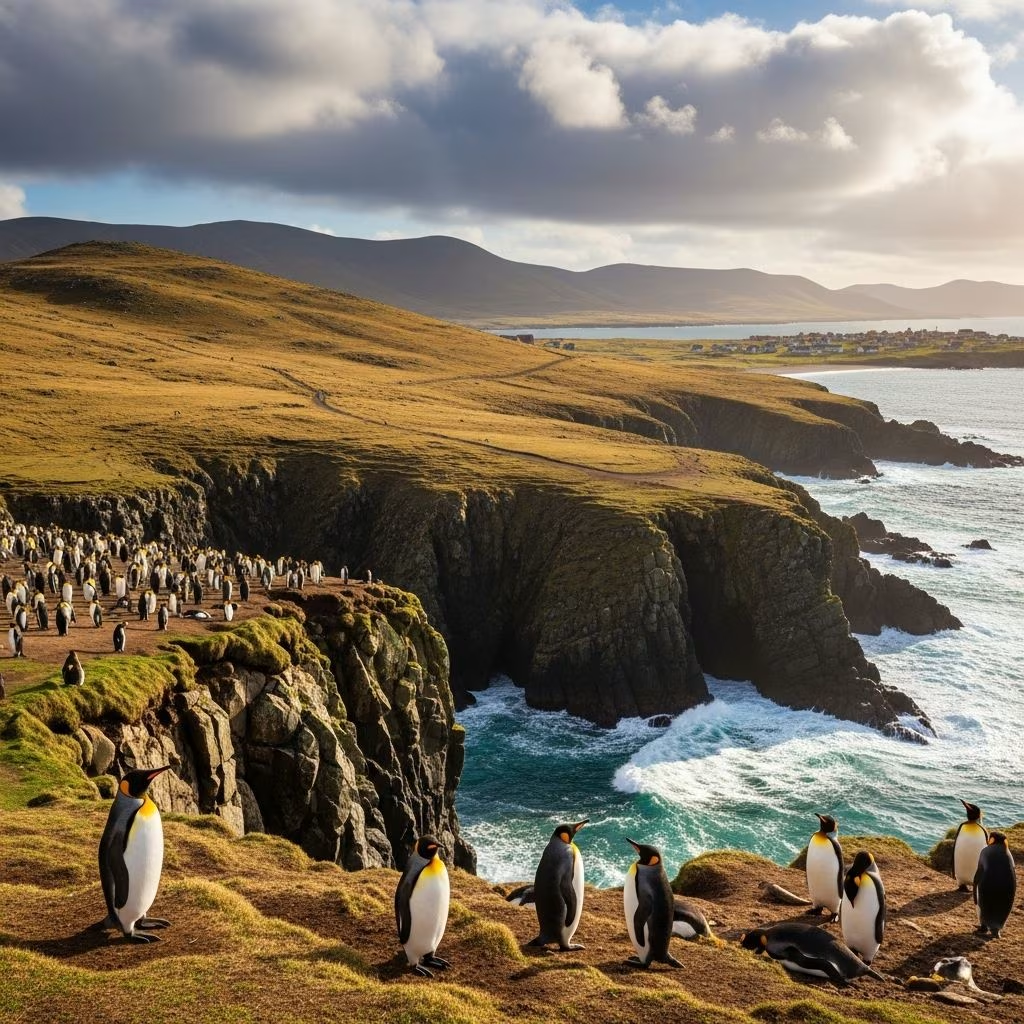
Penguin viewing represents the primary wildlife attraction for most visitors. Volunteer Beach on East Falkland hosts the largest King penguin colony throughout the Falklands, where visitors can observe thousands of these magnificent birds in their natural habitat. Guided tours typically permit four-hour interactions, allowing extended observation and photography. Gypsy Cove provides alternative access to substantial Magellanic penguin rookeries, offering equally compelling experiences with different species.
Contrary to visitor expectations regarding sub-Antarctic geography, the Falklands feature numerous white sand beaches hosting diverse marine life. Elephant Beach extends for four miles along the northeastern coastline, renowned for extensive dolphin populations and pristine sand. Carcass Island, positioned northwest of the main archipelago, presents additional white sand beaches accompanied by opportunities for observing sea lions, elephant seals, and breeding seabirds.
Beyond penguins, the Falklands host over 200 avian species, including multiple albatross varieties, petrels, and endemic species found exclusively within the archipelago. The unique sub-Antarctic flora, adapted to extreme wind and limited growing seasons, creates distinctive landscapes rewarding botanical enthusiasts and landscape photographers alike.
Accommodations range from comfortable hotels and lodges in Stanley to basic facilities and farmstay experiences throughout the islands. Stanley offers the widest selection of lodging options, restaurants, and services, though availability requires advance booking, particularly during peak season. The Lookout Lodge and similar establishments facilitate tour arrangements and provide local expertise.
Dining experiences reflect the islands’ isolation and British heritage, with seafood, locally-raised lamb, and traditional British cuisine dominating menus. Self-catering options prove practical for extended island explorations, particularly when combining with camping or farmstay accommodations.
| Expense Category | Approximate Cost Range |
|---|---|
| Airport transfers (bus) | £22 |
| Vehicle rental (daily) | £300+ |
| Guided penguin tours | Variable by operator |
| FIGAS flights | Variable by destination |
| Accommodation (per night) | Budget to moderate range |
Visitors from most nations require valid passports, though specific visa requirements vary by nationality. Comprehensive travel insurance specifically covering remote destinations and potential evacuation scenarios comes highly recommended given the islands’ isolation. Medical facilities in Stanley provide emergency care, though serious conditions may require transportation to South America.
Internet access exists in Stanley and major settlements, though reliability varies significantly. Mobile phone coverage follows similar patterns, with limited service outside established areas. Planning accordingly ensures realistic expectations regarding communication capabilities.
Stanley’s Christ Church Cathedral, distinguished by its iconic whalebone arch, represents the southernmost Anglican cathedral in the world. The Historic Dockyard Museum documents the islands’ maritime heritage, while 1982 Liberation Memorial commemorates the Falkland Islands War and its profound impact on the territory. Goose Green, site of significant 1982 conflict, preserves remnants of wartime history scattered throughout this small settlement.
Beyond wildlife observation, the Falklands offer hiking along dramatic coastal trails, photography expeditions across windswept landscapes, and opportunities for remote island exploration. The absence of crowds and minimal light pollution create ideal conditions for stargazing and landscape photography during evening hours.
November through February represents the optimal visiting period, offering improved weather conditions and maximum wildlife activity during the Southern Hemisphere summer season.
International flights arrive at Mount Pleasant Airport, with onward connections available via commercial airlines or expedition cruises from South America.
Many smaller islands charge per-passenger landing fees; visitors should contact individual island owners before visiting to determine requirements and costs.
The Falklands host five penguin species, extensive albatross populations, dolphins, sea lions, and over 200 bird species throughout the archipelago.
Yes, independent travel is entirely feasible with advance planning regarding transportation, accommodations, and vehicle rental arrangements.
