

 Travel Essentials
 Travel Essentials

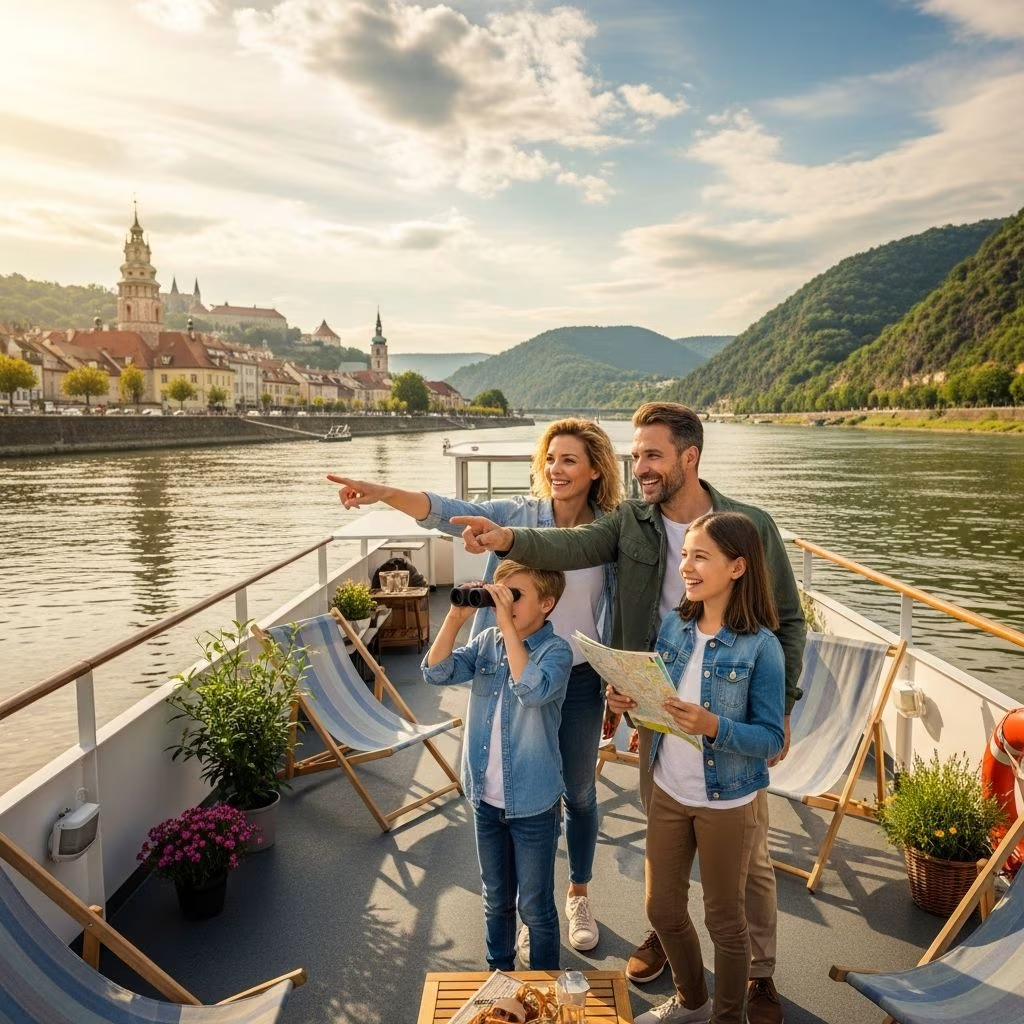
Discover how a multi-country Danube River cruise combines cultural exploration, recreational activities, and family-friendly accommodations for an unforgettable European vacation.
 Travel Essentials
Planning a family vacation that combines cultural enrichment, adventure, and relaxation presents a significant challenge for travel planners. The Danube River, flowing through ten countries and connecting major European capitals, offers an ideal solution for families seeking to experience multiple destinations without the logistical complexity of traditional land-based touring. This guide explores how modern river cruise experiences have evolved to accommodate families, providing structured yet flexible itineraries that appeal to both children and adults.
River cruises have traditionally attracted mature travelers seeking cultural experiences in intimate settings. However, cruise operators have recognized the growing demand for multigenerational travel experiences and have redesigned their offerings accordingly. Contemporary family river cruises now incorporate dedicated children’s programming, flexible activity options, and onboard amenities that appeal to younger passengers while maintaining the sophisticated atmosphere adults expect.
The shift toward family-friendly river cruising reflects broader travel industry trends. According to industry data, approximately 35% of river cruise passengers now include families with children, a significant increase from previous decades. This demographic shift has prompted operators to develop specialized itineraries, train crew members in family engagement, and create activity portfolios that serve diverse age groups simultaneously.
A typical eight-day river cruise through Central Europe traverses approximately 600 kilometers of waterway, incorporating stops in four distinct nations. This particular routing originates in Bavaria, Germany, and concludes in Budapest, Hungary, incorporating intermediate stops in Austria and Slovakia. The duration of eight days represents the optimal balance between providing sufficient time for meaningful cultural immersion while maintaining the novelty and excitement that sustains children’s interest throughout the journey.
The geographic positioning of ports along this route creates natural clustering of related experiences. Sequential stops allow families to observe regional transitions—from Alpine Bavarian landscapes to Austro-Hungarian cultural spheres—without extended travel days that typically interrupt family travel flow.
River cruise logistics eliminate several pain points associated with traditional family vacations. Unlike land-based tours requiring daily hotel changes, vehicle transfers, and repeated packing and unpacking cycles, river cruises provide a single accommodation base that moves overnight while passengers sleep. This operational structure significantly reduces travel fatigue, particularly relevant for families managing multiple schedules and energy levels.
Professional cruise staff handle all logistical elements—transportation between ship and excursion sites, meal coordination, and activity scheduling—allowing family members to focus on experience rather than logistics management. This delegation of organizational responsibilities represents a meaningful quality-of-life improvement during vacation periods.
| Travel Aspect | River Cruise Model | Traditional Land Tour |
|---|---|---|
| Accommodation Changes | None (one ship) | Multiple hotel check-ins/outs |
| Transportation Management | Crew-handled | Family-managed |
| Meal Coordination | Integrated onboard | Individual restaurant searches |
| Activity Organization | Pre-arranged options | Self-planned itineraries |
Modern family river cruises recognize that single-activity programming satisfies neither young children seeking physical engagement nor older family members pursuing cultural depth. Consequently, sophisticated operators employ tiered activity structures offering simultaneous options across different intensity and interest levels.
Typical afternoon programming includes simultaneously offered activities such as physically demanding cycling excursions, guided cultural tours, nature-based exploration experiences, and onboard recreational options. This parallel-path approach enables family members to pursue individually appropriate activities while maintaining group cohesion through shared evening experiences and meals.
Professional activity coordinators receive specialized training in child engagement, safety protocols, and adult supervision techniques. These facilitators transform potentially routine sightseeing into interactive learning experiences—converting a palace visit into a historical costume experience or a village exploration into an archaeological investigation.
The journey begins in Bavaria, a region renowned for Alpine landscapes, traditional architecture, and distinctive cultural practices. The first ports of call typically include Passau and nearby locations, providing immediate exposure to authentic Bavarian environments without requiring extensive travel from embarkation points.
These initial destinations introduce families to the region’s characteristics through carefully calibrated experiences. Atmospheric old-town exploration allows flexible pacing, while specialized excursions such as forest canopy walks provide novel physical experiences distinct from typical urban sightseeing. Refreshment stops at traditional Bavarian establishments—breweries, taverns, restaurants—offer cultural sampling through everyday regional practices rather than staged performances.
Austria represents the cruise’s cultural heart, with Vienna serving as the primary destination for many itineraries. Vienna’s position as a former imperial capital creates abundant opportunities for historically-grounded learning. Palaces, museums, and architectural landmarks provide visual education about European history, monarchy, and artistic development.
Family-focused programming at Austrian destinations often incorporates interactive elements that extend beyond passive observation. Costume experiences, hands-on craft demonstrations, and specialized children’s museum programming transform historical sites into participatory learning environments. Musical and theatrical elements—marionette shows, strudel-making classes, musical performances—engage multiple sensory modalities, improving retention and enjoyment.
Bratislava, Slovakia’s capital, often receives less international tourist attention than neighboring Vienna despite offering distinctive cultural experiences. This relative accessibility creates advantages for family travelers—fewer crowds, more authentic local interaction opportunities, and genuine rather than commercialized cultural exposure.
Slovak programming typically emphasizes authentic regional experiences: traditional farming practices, regional cuisine exploration, folk traditions, and natural environment appreciation. These activities provide meaningful cultural comparison points, helping younger family members develop sophisticated understanding of European cultural diversity.
Budapest, the final major destination, serves as the itinerary’s climactic experience. This dual-city (Buda and Pest separated by the Danube) presents remarkable visual drama, particularly during evening illuminations when architectural landmarks create stunning nighttime spectacle.
Programming in Budapest often includes panoramic city tours emphasizing photographic opportunities, cultural performances (particularly Hungarian music traditions), and culinary exploration (traditional goulash preparation and dining). Evening experiences—viewing illuminated landmarks from the river, attending farewell receptions, enjoying final shipboard dinners—create memorable conclusion experiences that reinforce positive journey associations.
Successful family river cruises employ sophisticated activity segmentation, recognizing that children within even narrow age bands possess vastly different capabilities and interests:
Food experiences represent significant components of river cruise family programming. Unlike land-based travel where families must navigate unfamiliar restaurant systems and potential dietary accommodation challenges, river cruises provide integrated meal services addressing diverse preferences and requirements.
Contemporary family-focused cruises offer multiple dining options—formal dining experiences, casual buffet services, and specialty restaurants—providing flexibility matching variable family appetites and preferences. Culinary programming often includes interactive food experiences: cooking demonstrations, traditional cuisine preparation classes, regional specialty tastings.
These integrated food experiences accomplish multiple objectives simultaneously: children gain exposure to cultural practices through food traditions, adults enjoy sophisticated culinary experiences, and families create shared memories around meals and food preparation.
River cruises recognize that evening hours present concentrated family time opportunities. Sophisticated programming during these periods—theatrical performances, interactive entertainment (karaoke nights), themed dinners, outdoor deck experiences—strengthens family connections while providing relaxation after active daytime exploration.
Evening entertainment balances adult sophistication with child accessibility, ensuring families enjoy simultaneous rather than parallel experiences. This inclusive programming philosophy distinguishes modern family river cruises from earlier models requiring separate adult and children’s activities.
River cruise cabins are notably smaller than ocean-going cruise accommodations, requiring families to manage limited space efficiently. Contemporary ships incorporate thoughtful design elements—fold-away furnishings, efficient storage, modular furniture—maximizing functionality within space constraints. Families with young children may choose to book connecting cabins, providing private spaces for children while maintaining adult privacy.
Family river cruises employ comprehensive safety protocols and supervision structures. Trained staff members oversee children during organized activities, while parents maintain responsibility during free exploration periods. Clear communication regarding supervision responsibilities prevents misunderstandings and ensures appropriate oversight levels.
Families need not participate in all offered excursions. Strategic selection—choosing 2-3 daily activities rather than attempting all options—prevents exhaustion and maintains enthusiasm. Onboard recovery time allows families to rest, explore the ship, and engage in spontaneous activities matching immediate preferences.
Multi-country river cruises through Central Europe represent sophisticated family vacation solutions combining logistical convenience with meaningful cultural experiences. By eliminating transportation complexity, providing professional activity coordination, and offering simultaneous programming serving diverse interests and capabilities, modern river cruises enable families to explore remarkable destinations while maintaining group cohesion and individual satisfaction.
The Danube River’s geographic positioning, cultural significance, and accessibility create ideal conditions for family exploration. Whether families prioritize active adventure, cultural immersion, or balanced experience combinations, contemporary river cruise programming accommodates diverse vacation philosophies while maintaining operational efficiency and safety standards.
For families seeking vacation experiences transcending typical beach or theme-park models, river cruising through Central Europe offers compelling alternatives: authentic cultural exposure, natural beauty appreciation, professional activity facilitation, and protected family time in intimate settings. These elements combine to create vacation experiences that strengthen family relationships while expanding members’ geographic knowledge and cultural perspectives.
