

 Travel Essentials
 Travel Essentials

Discover India's most revered temples featuring stunning architecture, spiritual significance, and cultural heritage spanning centuries of devotion.
 Travel Essentials
India’s spiritual landscape is defined by its extraordinary collection of temples, each representing centuries of devotion, artistic mastery, and religious significance. These sacred structures attract millions of pilgrims and travelers annually, offering profound spiritual experiences alongside remarkable architectural achievements. From the towering gopurams of South India to the intricate carvings of central India, temples serve as repositories of faith and cultural heritage.
South India hosts some of the subcontinent’s most iconic religious structures, where Dravidian architectural principles reach their pinnacle. These temples showcase distinctive features including towering gateway towers, elaborate stone carvings, and vast courtyards designed to accommodate thousands of devotees.
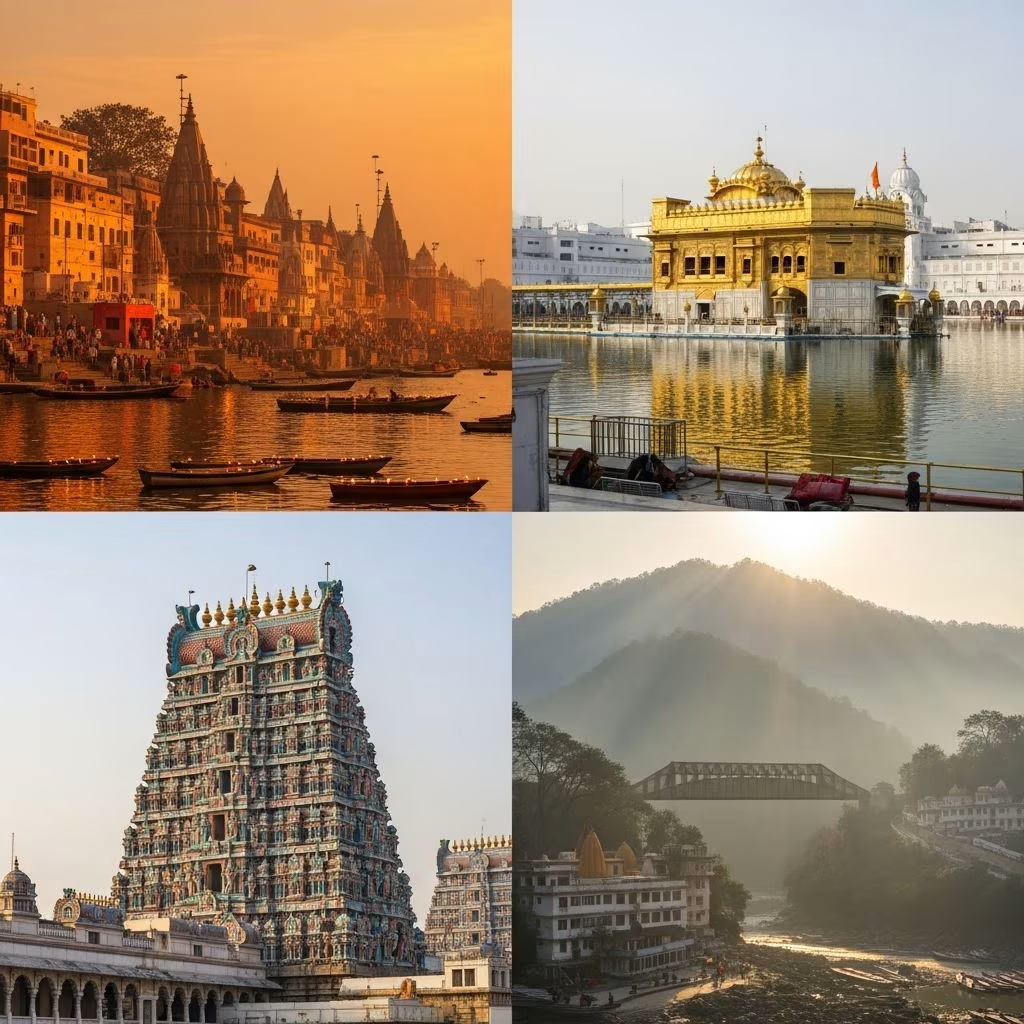
Located in Madurai, Tamil Nadu, the Meenakshi Amman Temple stands as a testament to 17th-century South Indian craftsmanship. Built during the Nayak period, this sprawling complex features 12 towering gopurams adorned with over one thousand statues depicting Hindu deities, demons, and mythological figures. The temple’s vibrant aesthetic combines religious devotion with artistic expression, creating an atmosphere where the sacred and the artistic converge seamlessly. The intricate carvings and prismatic sculptures tell stories from ancient Hindu texts, making every corner an educational journey through mythology.
The Venkateshwara Temple in Tirupati, Andhra Pradesh, holds the distinction of being India’s most visited and recognized temple. This sacred site receives millions of devotees annually who seek blessings from Lord Vishnu. The temple’s significance extends beyond spiritual devotion—it represents an important cultural institution where worshippers make substantial financial and personal offerings, including the symbolic donation of hair as an act of reverence.
Beyond South India, other regions preserve equally magnificent temples that showcase different architectural traditions and artistic expressions.
The temples of Khajuraho in Madhya Pradesh represent a unique artistic approach to spiritual architecture. The Kandariya Mahadeva Temple stands as the largest and most impressive structure within this complex. These monuments feature distinctive erotic sculptures alongside traditional religious carvings, reflecting a comprehensive approach to depicting human experience within sacred spaces. The three vertical layers of the Kandariya Mahadeva Temple contain hundreds of figures in various positions, demonstrating remarkable sculptural achievement and challenging conventional Western perspectives on temple decoration.
The Virupaksha Temple dominates the archaeological landscape of Hampi, Karnataka, with its massive gopuram towering above the surrounding terrain. This ancient structure represents centuries of worship and architectural evolution, serving as both a spiritual center and a window into past kingdoms’ artistic capabilities.
Northern India contributes distinct architectural and spiritual traditions to India’s temple heritage.
The Golden Temple in Amritsar, Punjab, represents a different religious tradition within India’s diverse spiritual landscape. Founded in 1573 by Guru Ram Das, the fourth of ten Sikh gurus, this gurdwara (Sikh place of worship) serves approximately 21 million Sikhs worldwide. The gleaming structure floats serenely within the Amrit Sarovar (Pool of Nectar), the sacred tank that inspired the city’s name. Day and night, pilgrims throng this revered space, creating an atmosphere of continuous devotion and spiritual connection.
Northern mountain regions host important pilgrimage destinations. The Ma Vaishno Devi Temple, situated atop the Trikuta Mountains in Jammu and Kashmir, attracts millions of pilgrims annually who undertake challenging journeys to reach this sacred site.
Eastern regions maintain their own distinctive temple traditions reflecting local history and architectural evolution.
The Jagannath Temple in Puri, Odisha, opened in 1161 and showcases Kalinga architectural traditions. This temple exemplifies the synthesis of Hindu, Dravidian, and regional architectural styles, creating a unique aesthetic that has influenced temple design for centuries. The temple’s elevation of 213 feet and its grand construction demonstrate the engineering capabilities of medieval India.
Understanding temple architecture enhances appreciation for these structures’ spiritual and artistic significance.
Indian temples function as more than architectural monuments—they serve as centers of spiritual practice and cultural continuity. Pilgrimage traditions connect devotees to ancient religious practices while maintaining contemporary relevance. The physical act of visiting these temples, performing rituals, and experiencing sacred spaces creates spiritual connections spanning generations.
Many temples hold special significance within Hindu theological frameworks. Several are designated Jyotirlinga temples—particularly sacred shrines dedicated to Lord Shiva—representing important pilgrimage destinations within Hindu cosmology.
Modern tourism intersects with traditional spirituality at Indian temples. Visitors encounter functioning religious spaces where daily rituals continue alongside tourist activities. This dynamic creates unique challenges and opportunities for preserving authenticity while accommodating growing visitor numbers.
Successful temple visits require understanding local customs, appropriate dress codes, and timing. Many temples maintain specific visiting hours, and some restrict access to certain areas. Photography policies vary significantly between temples, and respectful behavior remains paramount in these active worship spaces.
| Temple Region | Architectural Style | Primary Features | Key Example |
|---|---|---|---|
| South India | Dravidian | Tall gopurams, intricate carvings, temple tanks | Meenakshi Amman Temple |
| Central India | Khajuraho | Erotic sculpture, vertical towers, detailed reliefs | Kandariya Mahadeva |
| North India | Himalayan/Sikh | Mountain settings, golden ornamentation, simplicity | Golden Temple |
| Eastern India | Kalinga/Odia | Curvilinear towers, narrative carvings, regional styles | Jagannath Temple |
Indian temples transcend their function as places of worship—they represent living connections to centuries-old traditions, artistic achievements, and spiritual philosophy. Whether experiencing the towering gopurams of Meenakshi Amman Temple, the intricate carvings of Khajuraho, or the serene sanctity of the Golden Temple, visitors encounter tangible expressions of India’s religious and cultural identity.
These sacred structures continue evolving while maintaining connections to their historical roots. They accommodate millions of pilgrims and tourists annually while preserving rituals and practices that have sustained communities for generations. Visiting Indian temples offers opportunities for spiritual exploration, architectural appreciation, and cultural immersion, making them essential destinations for anyone seeking to understand India’s multifaceted civilization.
