

 Travel Essentials
 Travel Essentials

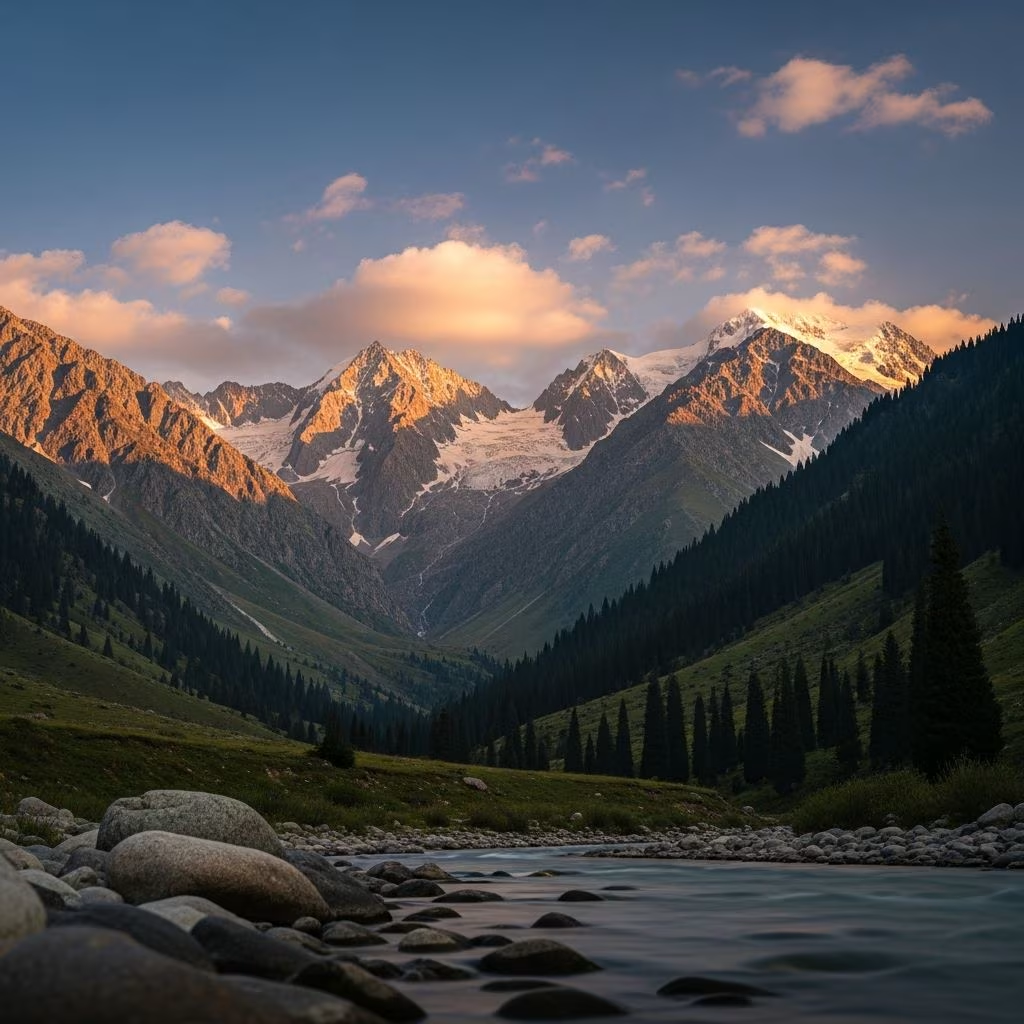
Explore the stunning Fan Mountains in Tajikistan: turquoise lakes, jagged peaks, and remote villages await adventurers seeking untouched natural wonders.
 Travel Essentials
The Fan Mountains in Tajikistan stand as one of Central Asia’s most captivating destinations, offering a mesmerizing blend of towering peaks, vibrant turquoise lakes, and serene valleys that seem untouched by time. Nestled within the greater Pamir-Alai range, this region draws trekkers, photographers, and nature enthusiasts eager to experience raw, high-altitude beauty far from crowded tourist paths.
Spanning the Zeravshan and Yaghnob river valleys, the Fan Mountains rise dramatically to altitudes exceeding 5,000 meters, with Pik Chimtarga at 5,489 meters as the highest point. These mountains form a natural amphitheater of granite spires, glaciers, and alpine meadows, where seasonal wildflowers carpet the landscape in summer. The area’s unique geology, shaped by tectonic forces over millions of years, creates sheer cliffs and deep gorges that challenge even seasoned mountaineers.
Key highlights include the chain of vivid lakes such as Iskanderkul, Alauddin, and Kulikalon, each reflecting the surrounding snow-capped summits like mirrors. These water bodies not only provide stunning visual spectacles but also serve as vital water sources for local ecosystems and nomadic herders.
Tajikistan’s Fan Mountains boast diverse trails catering to various fitness levels. Beginners might start with day hikes around Iskanderkul Lake, while experts tackle multi-day expeditions crossing high passes.
For those inspired by broader Pamir explorations, combining Fan treks with Pamir Highway segments enhances the adventure, linking to high-altitude lakes like Karakul at 4,000 meters.
Spring brings avalanches and blooming edelweiss, while summer (July-September) offers stable weather for trekking, with temperatures ranging from 10-25°C daytime. Wildlife includes elusive snow leopards, ibex, and golden eagles soaring above meadows teeming with marmots.
Local flora supports traditional Tajik herbal medicine; wild garlic, thyme, and sea buckthorn berries thrive here, harvested by villagers for teas and preserves.
Villages like Penjikent and Artuch serve as gateways, where Tajik and Yaghnobi communities welcome visitors with shashlik barbecues and plov rice dishes cooked over open fires. Homestays in mud-brick homes provide insights into Ismaili traditions, with intricate carpet weaving and storytelling around chy (tea) sessions.
Many treks incorporate yurt stays, where Pamiri-style accommodations feature thick felt walls and solar-powered lighting, fostering authentic interactions amid starry nights.
Gaining access requires a GBAO permit for border areas and trekker registration. Fly into Dushanbe or Samarkand, then drive 4-6 hours to trailheads via marshrutka minibuses or shared taxis. Guided tours are recommended for navigation and altitude acclimatization.
| Trek Difficulty | Duration | Max Altitude | Best Season |
|---|---|---|---|
| Easy | 1-2 days | 2,500m | Jun-Oct |
| Moderate | 3-5 days | 3,500m | Jul-Sep |
| Advanced | 7+ days | 4,500m+ | Jul-Aug |
The Fan Mountains rival the Alps for photographic drama. Dawn at Kulikalon Lakes captures pink-hued peaks mirrored perfectly, while golden hour at Pass of Seven Lakes bathes the scene in ethereal light. Drone pilots must note restricted zones near military outposts.
Iconic shots include the ‘dragon’s back’ ridges of Chimtarga and the vertigo-inducing drops into Arduch meadows, where wild horses roam freely.
Altitude sickness is a risk above 3,000 meters; ascend gradually and carry Diamox. Weather shifts rapidly—pack Gore-Tex layers, crampons for glaciers, and a satellite communicator. Water purification tablets are crucial, as glacial streams harbor giardia.
Leave No Trace principles are vital: bury waste, avoid single-use plastics, and support local economies by hiring guides from villages. Over-tourism is minimal, preserving the pristine environment.
Penjikent, with its ancient Sogdian ruins, buzzes as a supply hub. Marguzor Lakes nearby offer gentler introductions. From Artuch, chairlifts whisk hikers to alpine zones, easing the ascent.
Extend your trip along the M41 Pamir Highway, traversing 1,200km from Dushanbe to Osh. Stops include Khorog’s botanical gardens—one of the world’s highest—and hot springs at Bibi Fatima. Wakhan Corridor treks parallel Afghanistan’s borders, revealing Hindu Kush vistas.
Ak-Baital Pass at 4,655 meters challenges drivers, while Karakul Lake’s stark beauty complements Fan’s lushness.
July to September offers the most stable weather and open trails, though June shoulder season sees fewer crowds and blooming landscapes.
While solo hiking is possible on marked paths, guides ensure safety, provide cultural context, and handle logistics—essential for multi-day routes.
Moderate fitness suffices for most; daily ascents of 800-1,200m require cardiovascular endurance and prior hiking experience.
Yurts, guesthouses in valleys, and homestays abound; book ahead in peak season.
Yes, at passes over 4,000m—hydrate, acclimatize, and monitor symptoms like headaches or nausea.
As climate change melts glaciers and tourism grows, responsible exploration sustains this gem. Support conservation via local NGOs and opt for low-impact travel to keep the Fan Mountains a timeless treasure for future generations.
