

 Travel Essentials
 Travel Essentials

Explore Faro's medieval old town, Ria Formosa park, deserted islands, and vibrant marina in this comprehensive guide to Portugal's Algarve gem.
 Travel Essentials
Faro stands as the understated heart of Portugal’s Algarve region, blending rich history, natural beauty, and laid-back coastal vibes. Unlike flashier resort towns, this city offers an authentic Portuguese experience with its walled old quarter, expansive lagoon park, and nearby barrier islands. Visitors find a perfect base for day trips, cultural immersion, and outdoor adventures, all accessible via its international airport.
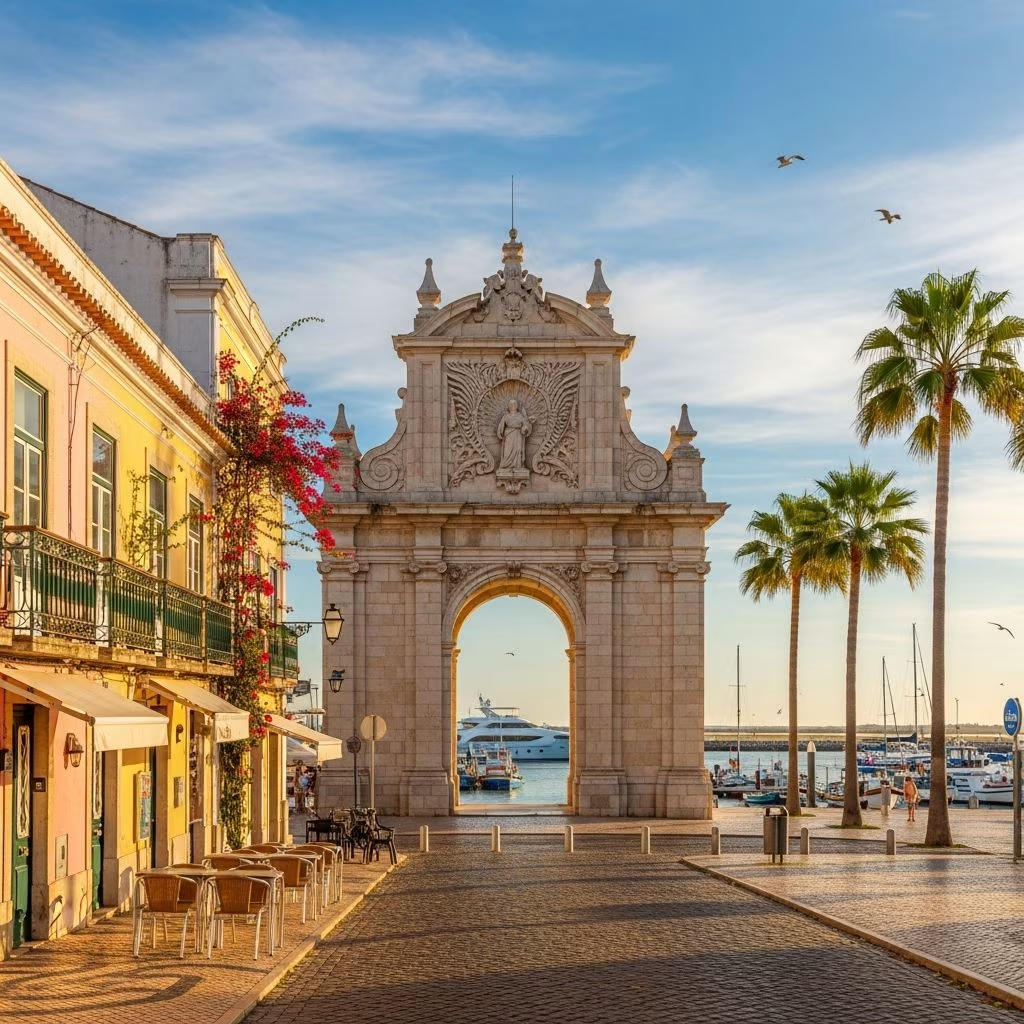
The beating pulse of Faro lies within its ancient walls, known as Cidade Velha or Vila Adentro. These fortifications, first erected by Romans and fortified by Moors from the 8th to 15th centuries, encircle a maze of narrow, whitewashed alleys fragrant with orange blossoms. Entry points like the neoclassical Arco da Vila, rebuilt after the 1755 earthquake, lead to a compact world of architectural jewels.
At the center, Largo da Sé plaza captivates with its cobbled charm, surrounded by key landmarks. The 15th-century Sé Cathedral dominates, featuring a gilded baroque interior, ornate organ, and a climbable tower offering sweeping views over terracotta rooftops to the lagoon beyond. Entry includes access to an attached museum and a chilling bone chapel adorned with over 1,000 skulls and femurs from local monks, arranged in haunting patterns.
Nearby, the Bishop’s Palace (Paço Episcopal) dazzles with intricate blue-and-white azulejo tiles depicting biblical scenes. Across the square, City Hall (Câmara Municipal) adds Renaissance elegance. For deeper history, the Municipal Museum in a former convent displays Roman mosaics, including a vivid portrait of sea god Oceanus, alongside prehistoric artifacts from the region.
Just beyond the city, Parque Natural da Ria Formosa stretches 18,000 hectares of marshes, lagoons, and dunes—a biodiversity hotspot. This protected area shelters flamingos, herons, and tiny seahorses, serving as a vital migratory bird stopover. Traditional fishing methods persist here, with wooden stake nets (xávega) hauling in seasonal catches.
Boat tours from Faro Marina depart regularly, navigating channels to spot wildlife. Longer excursions reach remote spots for clam harvesting or oyster tasting on traditional boats. Marine biologist-led trips with Ocean Vibes reveal year-round dolphins and spring whale migrations, including rare orca sightings.
| Park Activity | Duration | Highlights |
|---|---|---|
| Standard Boat Tour | 1-2 hours | Birdwatching, lagoon scenery, island glimpses |
| Clam-Picking Trip | 3 hours | Hands-on seafood harvest, Culatra Island |
| Whale-Watching | 4 hours | Dolphins, March-April whales, biologist guide |
Faro’s southern horizon beckons with barrier islands shielding the lagoon. Ilha Deserta (Barreta Island), a 6km uninhabited sandbar, boasts Portugal’s southernmost point at Cabo de Santa Maria lighthouse. Its dunes and calm waters invite sunbathing, swimming, and beachcombing, reachable by 20-minute ferry.
Neighboring Ilha da Culatra hosts a resilient fishing community amid shell middens dating back millennia. Praia do Farol offers wild beaches, while village paths lead to eateries serving ultra-fresh fish. Ferries also connect to Praia de Faro, a busier 5km stretch backed by dunes and beach bars, ideal for watersports.
Faro Marina buzzes with palm-lined promenades, yachts, and market stalls hawking drinks and crafts. Stroll to watch ferries depart or planes glide overhead from the adjacent airport. Nearby Manuel Bivar Garden provides shaded benches amid fountains, perfect for people-watching.
Shopping thrives on Rua de Santo António, lined with boutiques and souvenirs. Forum Algarve mall offers chain stores and cinema. For culture, Igreja do Carmo impresses with twin gilded towers and an adjacent bone chapel, while Igreja da Misericórdia showcases 18th-century tiles.
Faro’s food scene shines with Algarve bounty. Harborside spots grill sardines, cataplana stews simmer clams in wine, and oysters plucked from Ria Formosa arrive shucked tableside. Vegan options abound in the old town, from plant-based cafés to markets selling regional cheeses and olives.
Try pastel de nata at beach kiosks or fado dinners echoing traditional laments. Markets like Largo de São Pedro brim with figs, almonds, and medronho liquor. Wine lovers sample Algarve vintages at nearby quintas.
Faro Airport (FAO) handles low-cost flights Europe-wide; a 15-minute bus reaches the center. Walk the compact city or use trams/buses. Ferries to islands run year-round, more frequently in summer (June-September).
Lodging spans from old town guesthouses (€50-100/night) to marina hotels with pools. Best times: spring/autumn for mild weather, fewer crowds. Budget €100-150/day per person including meals and activities.
| Transport Option | Cost | To |
|---|---|---|
| Airport Bus | €2.25 | City Center (15 min) |
| Island Ferry | €4-10 RT | Ilha Deserta/Culatra |
| Train to Tavira | €3 | 40 min east |
Use Faro as a hub for nearby gems. Train to Tavira (40 min) for castle views and river beaches. Bus to Fuseta (20 min) for quaint fishing vibes. Venture to Estoi’s Roman villa mosaics or Albufeira’s cliffs (1 hour bus).
The N2 road starts nearby, tempting road trippers with scenic routes through Portugal’s interior.
Yes, its authentic charm, low crowds, and Ria Formosa access make it ideal for history and nature lovers over party beaches.
2-3 days for city sights and islands; extend for park tours.
Praia de Faro for amenities, Ilha Deserta for seclusion.
Very safe; well-lit with lively bars.
Yes on island beaches; lagoons are calmer for snorkeling.
Faro thrives on sustainable tourism—support local fishers, stick to trails in the park, and avoid single-use plastics on islands. This ensures its quiet allure endures for future travelers.
