

 Travel Essentials
 Travel Essentials

Essential strategies for visiting the Faroe Islands on a tight budget, including accommodation, transport, dining, and activity recommendations.
 Travel Essentials
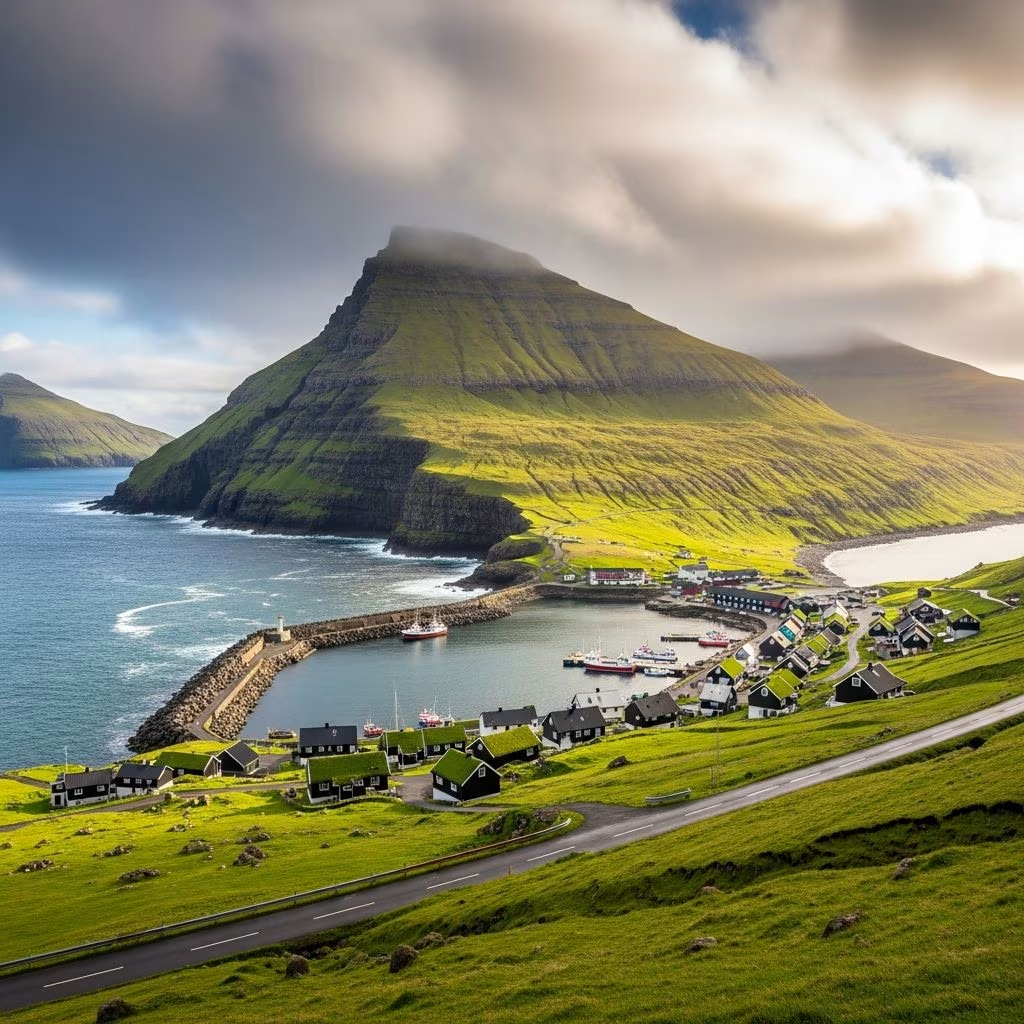
The Faroe Islands stand as one of Europe’s most captivating destinations, where dramatic cliffs plunge into the Atlantic Ocean and picturesque villages cling to impossibly steep hillsides. Despite their reputation as an expensive Nordic destination, savvy travelers can experience the islands’ unparalleled natural beauty and rich cultural heritage without exhausting their travel budgets. Understanding where to allocate limited resources and where to find genuine savings is essential for making the most of a trip to these remote islands.
Successful budget travel to the Faroe Islands begins long before arrival. The timing of your visit fundamentally impacts what you’ll spend. Traveling during peak season—particularly July and August—means competing with thousands of other visitors for accommodations and activities, which drives prices upward across every category. Off-season travel, particularly in spring and autumn, provides significantly better value while still offering pleasant weather for exploration.
Advance booking represents one of the most effective cost-reduction strategies available. Whether arranging flights, securing accommodation, or booking specialized tours, early commitments typically yield substantially lower rates than last-minute decisions. Planning with a group further reduces per-person expenses, as accommodation costs can be split and transportation fares negotiated.
Getting to the Faroe Islands constitutes a major expense component that varies dramatically based on your routing strategy. While flights attract attention, ferry travel from Denmark offers a more atmospheric and economical alternative. The ferry departing from Hirtshals in northern Denmark takes approximately 30 hours to reach Tórshavn but costs considerably less than air travel. This extended journey also provides the psychological benefit of gradual transition to the islands’ remote character.
Once on the islands, transportation options span a spectrum of affordability. Road tripping using a rental vehicle provides comfortable mobility when costs are distributed among companions. Gasoline taxes remain relatively low in the Faroe Islands, making fuel economical by Nordic standards. However, travelers must budget for tunnel tolls—ranging from 100 to 450 kr (roughly $7-30 USD) for return passages—when accessing certain islands via sub-sea routes.
For the most budget-conscious travelers, hitchhiking offers the ultimate money-saving approach, though it requires flexibility regarding timing and destinations. The Faroese population demonstrates genuine hospitality, and drivers frequently make detours to accommodate hitchhikers’ specific needs. While this transport method demands patience and adaptability, it connects travelers directly with local culture while eliminating transportation costs entirely.
Public transport networks provide reliable connections across the islands without requiring vehicle rental. A 4-day public transport card costs 500 kr, making individual journeys—such as the Tórshavn to Gásadalur route at 350 kr—economical when accumulated. Students with valid identification receive 20% discounts on both bus and ferry tickets. Even more remarkably, all red municipal buses operating within Tórshavn are completely free for everyone.
Accommodation represents the largest budget category for most travelers, yet multiple options exist below luxury price points. Hostels provide the most economical shared accommodations, with Giljanes Hostel—the only dedicated hostel in the islands—offering dorm beds from approximately 100 DKK during off-season periods up to 300 DKK during summer months. Budget-focused private rooms cost around 900 kr for two people, while basic self-catering apartments and Airbnb-style rentals range from 500-2500 kr depending on season and location.
Camping emerges as an exceptional budget strategy for those willing to embrace outdoor living. Local campsites charge as little as 100 kr per night while occupying genuinely scenic locations with views of islands, mountains, and coastal waters. This approach requires advance kit preparation and remains weather-dependent, making it less suitable for winter visits. However, for spring through autumn travelers, camping transforms accommodation into one of the trip’s most affordable categories while simultaneously enhancing the wilderness experience.
When booking accommodations, seasonal flexibility proves invaluable. Prices fluctuate dramatically between peak summer months and quieter periods, with off-season rates often representing 40-60% savings compared to July and August premiums.
Food costs in the Faroe Islands reflect their remote location and limited agricultural production, yet travelers possess multiple strategies for managing meal expenses. Coffee costs approximately 30 kr, while basic sandwiches run about 55 kr. Full-service restaurant dinners for two parties range from 750-900 kr, and bar beers cost around 55 kr per pint.
Self-catering dramatically reduces food budgets. Travelers utilizing accommodations with kitchen facilities can prepare meals at local supermarket prices, substantially undercutting restaurant expenses. Weekly shopping for basic groceries and staple foods costs considerably less than eating prepared meals for every occasion.
Specialized food experiences need not obliterate budgets. Affordable fishing excursions lasting approximately 4 hours allow participants to catch their own meals while experiencing local maritime culture. These outings provide genuine engagement with traditional Faroese livelihoods while creating memorable meals at fraction of restaurant costs. Similarly, visits to local heritage farms and spinning facilities often include tastings of regional produce and traditional spirits at modest price points.
The Faroe Islands’ primary attractions—dramatic landscapes, hiking trails, and coastal scenery—are substantially free or low-cost. Numerous hiking opportunities exist throughout the islands, with trail access fees ranging from 100-500 kr depending on route difficulty and guide inclusion. Premium trails typically incorporate professional guides justifying their higher costs.
Boat tours represent genuine value despite their cost. The Original Vestmanna Sea Cliffs tour, operating year-round, provides exceptional access to dramatic geological formations at reasonable prices. At approximately 70 USD per adult, this guided experience delivers memorable encounters with the islands’ most striking natural features. Children aged 2-13 receive substantial discounts at roughly 35 USD.
Cultural attractions such as heritage farms charge modest entrance fees—approximately 23 USD per adult with children under 12 entering free. These facilities offer insights into traditional island life, agricultural practices, and cultural heritage without requiring expensive tours or extensive time commitments.
| Activity Type | Estimated Cost (DKK) | Budget-Friendly Approach |
|---|---|---|
| Hiking | 100-500 | Self-guided trails on public land |
| Boat Tours | 400-600 | Book during off-season |
| Cultural Sites | 100-300 | Visit heritage farms with free entry for children |
| Public Transport | 500 (4-day pass) | Purchase multi-day passes |
The Faroe Islands offer exceptional free activities that shouldn’t be overlooked. Walking coastal trails, photographing dramatic seascapes, exploring village streets, and observing local life require no expenditure while delivering authentic engagement with island culture. Many travelers report that their most memorable experiences involved spontaneous wandering rather than organized activities.
Public libraries in towns like Tórshavn provide free Wi-Fi and cultural insights. Visiting local markets, bakeries, and community gathering spaces connects travelers with authentic daily island life without requiring tickets or fees. The islands’ accessibility via free municipal buses within Tórshavn enables extended exploration of the capital region without additional transportation costs.
Traveling as a coordinated group substantially reduces per-person expenses across multiple categories. Vehicle rental costs distributed among four to six passengers become negligible compared to individual car hire. Accommodation expenses decrease when sharing hotel rooms or splitting private rental apartments. Restaurant meals can be shared to maximize value and reduce individual bill amounts. Group boat tours and specialized experiences often qualify for volume discounts not available to individual travelers.
Hitchhiking provides completely free transportation, though it requires flexibility. Public transport passes offer excellent value for independent travelers, particularly the 4-day option at 500 kr covering buses and ferries.
Yes, the islands maintain a functional public transportation network of buses and ferries reaching most major attractions. Certain sites like Saksun Village lack direct bus connections but remain accessible via alternative methods.
Camping works well during warmer months (spring through autumn) at campsites charging approximately 100 kr nightly. Winter camping proves challenging due to weather conditions but remains technically possible.
One week provides sufficient time to experience major attractions and natural features while keeping total costs manageable. This timeframe allows exploration of multiple islands, hiking experiences, and cultural engagement without rushing.
Navigating the Faroe Islands on a budget requires intentional planning but remains entirely feasible. Prioritize off-season travel, book accommodations and experiences well in advance, and embrace self-catering and public transportation. Allocate resources toward signature experiences like boat tours and hiking while seeking free cultural and natural attractions. Traveling with companions amplifies savings through shared expenses. The islands’ remarkable landscapes and authentic culture remain accessible to budget-conscious travelers willing to prioritize experiences over luxury accommodations and restaurant dining.
