

 Travel Essentials
 Travel Essentials

Explore Fener and Balat, historic districts in Istanbul brimming with Ottoman architecture, religious sites, and modern creativity. Uncover their multicultural past and tips for an unforgettable visit.
 Travel Essentials
Nestled along the shimmering waters of the Golden Horn, Fener and Balat stand as captivating testaments to Istanbul’s layered history and enduring cultural diversity. These adjacent neighborhoods, often overlooked by mainstream tourists, offer a mesmerizing blend of ancient religious landmarks, vividly painted Ottoman-era homes, and a burgeoning scene of artisanal shops and cozy eateries. Once vibrant hubs for Greek Orthodox, Sephardic Jewish, and Armenian communities, they now pulse with local life, street art, and subtle gentrification, making them ideal for immersive urban exploration.
Fener and Balat’s story is intrinsically tied to Istanbul’s role as a crossroads of empires. After the Ottoman conquest of Constantinople in 1453, Sultan Mehmed II strategically resettled non-Muslim populations here to revitalize the city. Fener became the heart of the Greek Orthodox community, hosting the Ecumenical Patriarchate, the spiritual center of Eastern Orthodoxy, which remains active today. This neighborhood flourished with grand schools, churches, and prosperous merchant homes, reflecting its status as a bourgeois enclave.
Adjacent Balat emerged as a refuge for Sephardic Jews fleeing the Spanish Inquisition in 1492. Welcomed by the Ottomans, they established synagogues, schools, and thriving workshops, transforming the area into one of Europe’s largest Jewish quarters. Armenians and Bulgarians later added their imprints with churches and community buildings. This mosaic of faiths—churches, synagogues, and mosques standing side by side—exemplifies centuries of relative tolerance amid empire.
The 20th century brought profound changes. The 1955 pogroms targeted Greek properties in Fener, accelerating emigration. Similarly, Balat’s Jewish population dwindled due to industrialization along the Golden Horn, the rise of Israel, and economic shifts. Rural migrants from Turkey’s Black Sea region repopulated both areas, preserving the neighborhoods’ authenticity while introducing new cultural dynamics. Today, UNESCO heritage efforts and Turkish media productions have sparked restorations, breathing fresh life into over a hundred structures.
These sites, combined with Byzantine relics like the Fethiye Camii (formerly Theotokos Pammakaristos), create a living timeline of religious overlap.
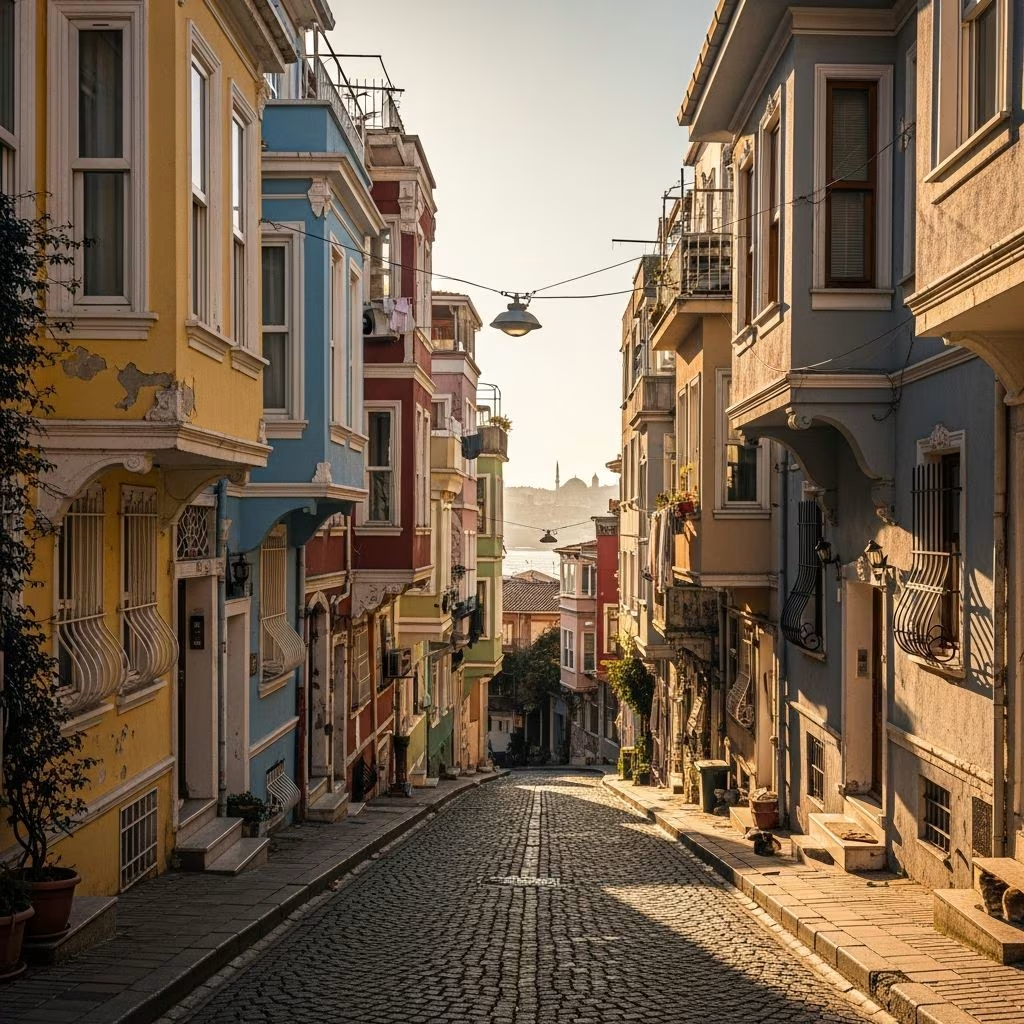
No visit is complete without marveling at Balat’s famous rainbow houses. Cascading down steep, cobbled lanes in hues of pink, turquoise, yellow, and green, these restored Ottoman row homes have become Instagram icons. Yet they represent more than aesthetics: they’re part of community-led revitalization efforts countering decades of neglect.
Wandering Fener’s maze-like streets reveals peeling plaster on wooden mansions, iron balconies overflowing with flowers, and laundry fluttering between buildings. The atmosphere shifts from contemplative in Fener’s church-lined alleys to lively in Balat’s bazaar-like vibe, where children play and elders chat on stoops. Street cats, a quintessential Istanbul feature, add whimsical charm.
Since the 2000s, Fener and Balat have evolved into creative hotspots. Artists repurpose old workshops into galleries displaying contemporary Turkish works alongside Ottoman ceramics. Vintage shops brim with retro radios, sepia postcards, and brassware, appealing to collectors seeking authentic finds away from tourist traps.
Culinary delights abound. Sample flaky borek pastries stuffed with spinach or cheese from hole-in-the-wall bakeries. Street vendors press fresh pomegranate juice, while cafes serve Turkish coffee amid mismatched chairs and chalkboard menus. Trendy spots blend Eastern Turkish flavors with global twists, like menemen breakfasts or simit sandwiches. For a sweet fix, hunt for lokum (Turkish delight) in neighborhood confectioners.
| Neighborhood | Must-Try Eats | Best Time |
|---|---|---|
| Fener | Fresh simit and çay | Morning for local vibe |
| Balat | Borek and pomegranate juice | Afternoon for markets |
The rise of Turkish TV series filmed here has boosted popularity, drawing hip cafes and boutiques without overwhelming the local feel.
Reaching Fener and Balat is straightforward. From Eminönü, take a 20-30 minute ferry across the Golden Horn to Fener İskelesi, or hop on the T5 tram to Balat stops. Start in Fener for historical depth, then descend into Balat for color and energy. Allocate 4-6 hours, wearing comfortable shoes for hilly terrain.
Gentrification poses risks, with rising rents displacing longtime residents. Yet, restoration projects balance preservation with vitality, ensuring these neighborhoods remain authentic. Community initiatives promote sustainable tourism, inviting mindful visitors to contribute positively.
Yes, these areas are generally safe during daylight, with a friendly local presence. Stay aware in quieter alleys after dark.
Most are open; synagogues require rabbi approval. Check timings, as services may close sites.
Early morning or late afternoon offers golden light. Climb Vodina Caddesi for panoramic views.
Ferries and trams run frequently; use an Istanbulkart for ease.
Less crowded, more local, with a focus on minority histories versus imperial icons.
Fener and Balat encapsulate Istanbul’s soul: resilient, colorful, and profoundly human. Venture beyond the Hagia Sophia crowds to experience the city’s true multicultural heartbeat.
