

 Travel Essentials
 Travel Essentials

Navigate the Fergana Valley's cultural riches, artisan traditions, and local markets while experiencing genuine Central Asian hospitality away from tourist crowds.
 Travel Essentials
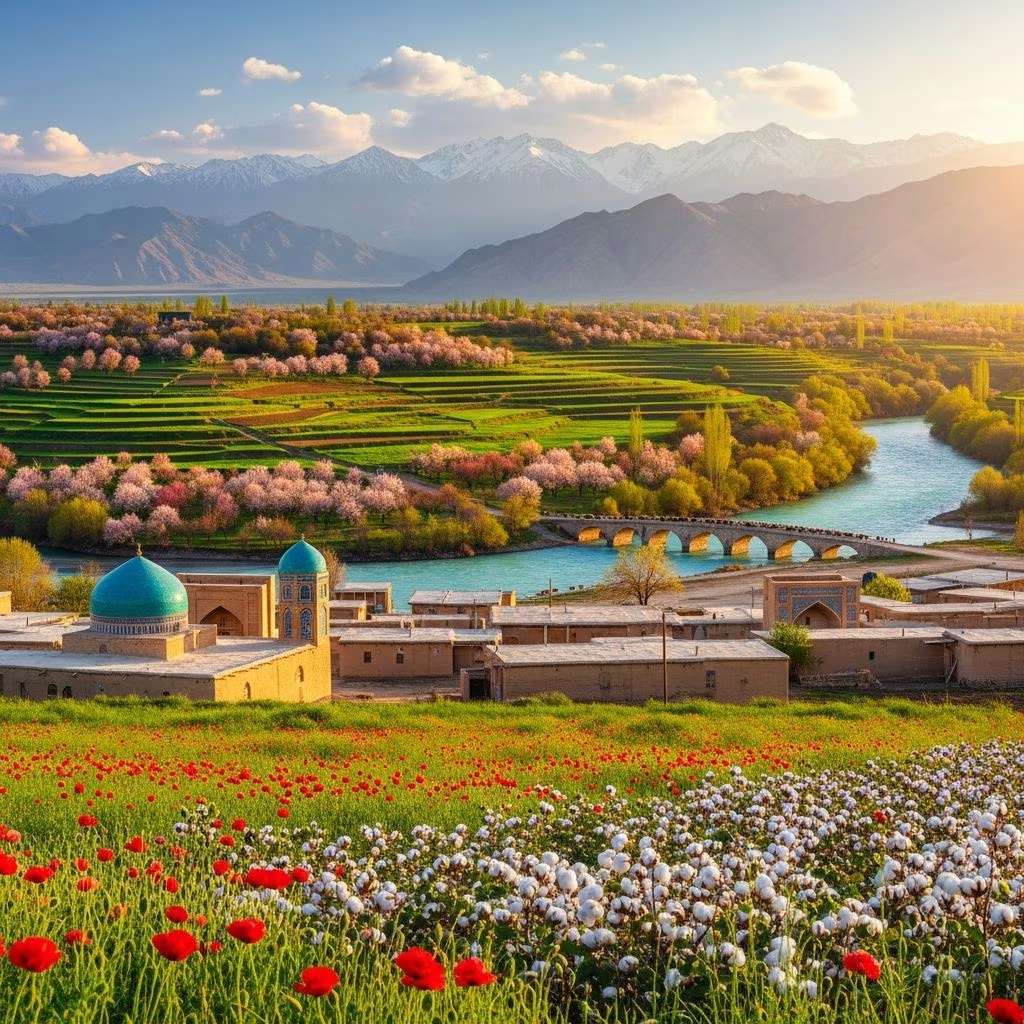
Nestled between the imposing Tian Shan mountains to the north and the Gissar-Alai ranges to the south, the Fergana Valley represents one of Central Asia’s most distinctive geographical features. This fertile crescent stretches across eastern Uzbekistan and encompasses one of the region’s most densely populated areas, yet it remains relatively unexplored by international travelers compared to more famous Silk Road destinations. The valley’s landscape reveals gently rolling terrain punctuated by agricultural expanses, creating a patchwork of cultivation that has sustained communities for centuries.
Historically, the valley earned recognition as the agricultural and cultural nucleus of Uzbek civilization. The region’s prosperity derived from extensive cotton fields, flourishing fruit orchards, and a thriving sericulture industry that produced some of Central Asia’s finest raw silk. Today, this heritage remains visible in the valley’s economy, lifestyle, and architectural landscape, making it an authentic destination for travelers seeking genuine cultural immersion rather than polished tourist attractions.
Unlike the well-established tourism infrastructure found in Samarkand or Bukhara, the Fergana Valley maintains an understated character that appeals to explorers prioritizing authentic encounters with local communities over commercialized experiences. The region’s modest international profile means visitors often find themselves among the sole tourists at historical sites, wandering through ancient mosques and medressas with only locals as company.
Strategic timing significantly enhances the Fergana Valley experience. Spring months from April through early June present ideal conditions, as the valley undergoes a dramatic transformation. During this season, dormant fields burst into vibrant color as flowers bloom prolifically and crops reach their verdant peak. Spring weather remains mild and pleasant, avoiding both the intense summer heat and winter’s cold temperatures.
Autumn, spanning September through November, offers complementary advantages. This season marks the harvest period, when the valley’s agricultural bounty reaches maturity. Visitors can participate in the excitement of harvest activities while sampling fresh seasonal produce including pomegranates, melons, and other regional specialties. Autumnal temperatures trend cooler and more comfortable than summer months, making extended exploration more feasible.
Summer heat intensifies significantly across the valley, potentially limiting outdoor activities to early morning and late afternoon hours. Winter weather, while generally milder than northern regions, introduces cold temperatures and occasional precipitation that may complicate regional travel via mountain passes.
Situated in the valley’s eastern reaches, Andijon holds the distinction of being Uzbekistan’s oldest city, with documented history extending back to the ninth century. This ancient settlement gained international prominence as the birthplace of Zahiruddin Babur, founder of the Mughal dynasty that ruled much of South Asia for centuries. The city encapsulates the valley’s character through its juxtaposition of traditional and modern elements: contemporary shopping centers and restaurants coexist alongside traditional bazaars, religious sites, and contemplative medressas.
Primary cultural attractions include the Babur Literary Museum, which chronicles the life and accomplishments of this significant historical figure. The Jome Mosque and adjoining Medressa represent architectural treasures that survived the devastating 1902 earthquake largely intact, qualifying as remarkable examples of resilient Islamic architecture. Visitors should prioritize exploring the Eski Bazaar in the old town quarter, where merchants and craftspeople conduct business in time-honored fashion, particularly in sections dedicated to traditional handicrafts where artisans forge knives and produce traditional kitchenware.
For those seeking larger-scale commercial experiences, the Jahon Bazaar operates as the valley’s most expansive marketplace, offering comprehensive selections of regional goods and authentic local atmosphere.
Margilon has sustained its reputation as the valley’s primary center for silk production for generations. The Yodgorlik Silk Factory welcomes visitors on guided tours priced at 50,000 som (approximately US$4.15), providing intimate exposure to traditional silk-making methodologies. The factory demonstrates the intricate ikat technique, an ancient dyeing and weaving process wherein separate silk thread bands receive individual dye treatments before weaving, creating complex patterns through this labor-intensive methodology.
Beyond industrial production, Margilon’s Kumtepa Bazaar stands out as one of the valley’s most vibrant markets, featuring colorful merchandise displays and genuine local commerce. The bazaar area also encompasses several religious structures worthy of attention, including the Said Ahmad Haji Medressa and the Hudoyoron Hoji Mosque. The factory maintains a shop housed within a converted mosque building, offering exceptional opportunities for acquiring authentic silk products and textiles.
Kokand emerged historically as the valley’s dominant political center, earning the epithet “City of Winds” through local tradition. The Khudayar Khan Palace represents the city’s most prominent architectural achievement, serving as the eighteenth-century residence of the ruling khans during the period when Kokand controlled the entire valley. The palace showcases exceptional architectural merit through its intricate courtyard designs and elaborately decorated ceiling work that demonstrates sophisticated aesthetic sensibilities.
The Juma Mosque contributes another significant landmark, notable for distinctive wooden support columns that reflect unique construction approaches. Additional sites of interest include the Dakhmai Shahan necropolis, which serves as the burial complex for historical rulers and offers insights into regional funerary practices and historical hierarchies.
Rishton functions as the valley’s recognized ceramic production hub, where traditional pottery craftsmanship continues through family workshops and small-scale production facilities. This city represents the epicenter of Uzbekistan’s handicraft ceramic industry, with artisans maintaining ancestral techniques passed through generations. Visitors can observe craftspeople at work, witness the transformation of raw clay into finished vessels, and purchase directly from producers, ensuring authenticity and supporting local artisans economically.
Namangan’s historical significance derives partly from its substantial collection of Islamic religious structures, with historical records indicating the city once supported over six hundred mosques. Although this era of abundance has diminished, impressive religious buildings remain, including the Khoja Amin Mausoleum and the Mullah Kyrgyz Medrassa situated near the city’s central bazaar. The contemporary Otavalikhon Tur Mosque, recently converted to accommodate an art gallery, demonstrates the valley’s adaptive approach to heritage preservation and cultural evolution.
The daily Ozbekistan train departing Tashkent at 8:07 AM provides the most reliable transportation corridor to the valley, following a route through Kokand, Margilon, and terminating at Andijon, with journey duration approximating four to five hours. This rail service offers comfortable seating, opportunities for countryside observation while traversing mountain passages and tunnels, and a return departure from Andijon at 4:00 PM. The journey provides an enjoyable introduction to the valley’s geography and rural landscape.
Alternative road transportation via the Kamchik Pass, the sole vehicular crossing between the capital and the valley, requires approximately five hours including strategic stop opportunities. This pass represents a historically significant strategic route at 2,268 meters elevation, offering panoramic vistas of the Western Tian Shan mountain range.
Shared taxis constitute the primary mechanism for navigating between valley cities, offering economical transportation that operates on a fill-and-depart schedule. Journey durations from Fergana (the regional transportation hub) include approximately thirty minutes to Margilon, one hour to Rishton, two hours to Kokand, ninety minutes to Namangan, and ninety minutes to Andijon. This network ensures accessibility to all major destinations while maintaining low operational costs.
A three-day itinerary permits exploration of the valley’s principal highlights, encompassing Kokand’s Khudayar Khan Palace, Margilon’s silk heritage sites, and Rishton’s ceramic traditions. This condensed schedule suits travelers with limited time availability but provides necessarily selective experiences.
Extended visits lasting five to seven days enable deeper cultural penetration, including lesser-known destinations such as Andijon and surrounding villages, traditional market explorations, artisan workshop visits, and authentic interactions with local communities. This duration permits unhurried engagement with cultural sites and meaningful social connections with residents.
Fergana City, the valley’s capital, maintains excellent restaurant infrastructure catering to diverse culinary preferences. The autumn season particularly rewards food-focused visitors through abundant fresh fruit availability, including locally cultivated pomegranates and melons representing seasonal delicacies unavailable elsewhere. Local cafés throughout the valley provide authentic venues for sampling regional dishes while observing quotidian social activities and community interactions.
The Fergana Valley retains the character of an emerging tourism destination, attracting relatively modest international visitor volumes compared to established Silk Road destinations. This developmental stage preserves authentic cultural experiences and genuine local hospitality while avoiding the commercialization pressures evident in more famous tourism centers. Travelers frequently encounter themselves as the sole foreigners at historical sites, creating opportunities for unmediated cultural observation and authentic interactions with residents who maintain traditional lifestyles and perspectives.
Three days accommodate the principal attractions, while five to seven days enable comprehensive exploration and meaningful cultural immersion.
Summer months bring intense heat, while winter introduces cold temperatures and precipitation that may complicate travel logistics. Spring and autumn represent optimal seasons.
Yes, independent travelers can navigate the valley using trains and shared taxis, though organized tours provide structured itineraries and cultural context.
The valley maintains authentic cultural experiences with minimal tourism commercialization, genuine local hospitality, and traditional artisan practices.
Kokand, Margilon, Rishton, and Andijon represent the primary destinations offering distinct cultural and commercial attractions.
The Fergana Valley represents a profound departure from conventional tourism infrastructure, offering instead genuine cultural immersion within authentic communities maintaining traditional values and practices. Its geographic position between mountain ranges has historically positioned it as Central Asia’s agricultural and cultural foundation, a status reflected in contemporary artisan traditions, bustling markets, and architectural heritage. For travelers prioritizing authentic experiences over polished attractions, the valley fulfills aspirations for meaningful cultural engagement and connections with local populations largely untouched by mass tourism development.
